Human orientation
Average score: the breed attaches itself to the family, but remains independent. Actual behavior depends on socialization.
THE PAW CATALOG
Origin: Afghanistan; patronage of Great Britain
This is an ancient breed of greyhound that probably originated in the mountainous regions of Afghanistan. It was also called Tazi or Balkh greyhounds. Soldiers were brought to England around 1900, and imports increased after the First World War. The modern type developed primarily in Europe and the USA.
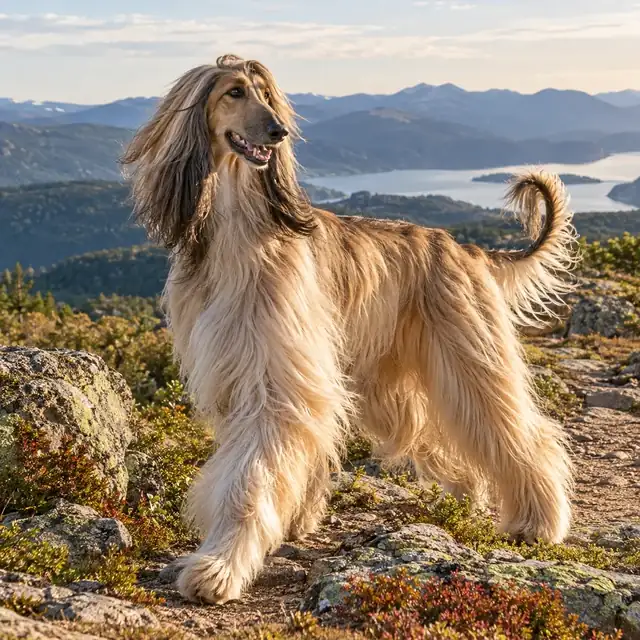
The Afghan Hound is a tall, elegant Hound with a long, silky coat. Independent, proud, but attached to his family. Needs a large safe space for running, patience in training and constant care of the coat.

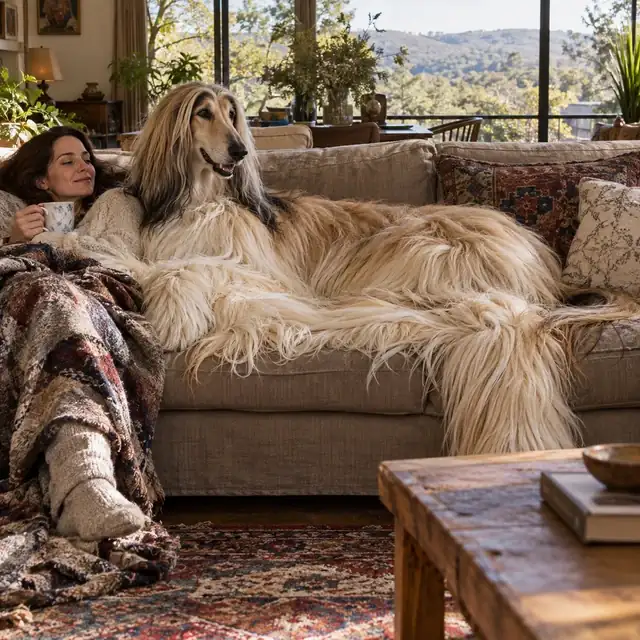
Suitable for people who are ready to walk every day and take care of their fur. At home, he is calm and gentle, but his strong hunting instinct requires a fence or a leash. Independent character is not for every owner.
A healthy adult dog needs about an hour or two of activity each day, including the opportunity to run around in a fenced area. Greyhound can jump a considerable height, so the fence should be high. The load of puppies and elderly dogs is adjusted with the veterinarian.
Smart, but strong-willed and stubborn. Rough methods do not work: patience, motivation and short sessions are required. Calling is unreliable, so free running is allowed only in a fenced area.
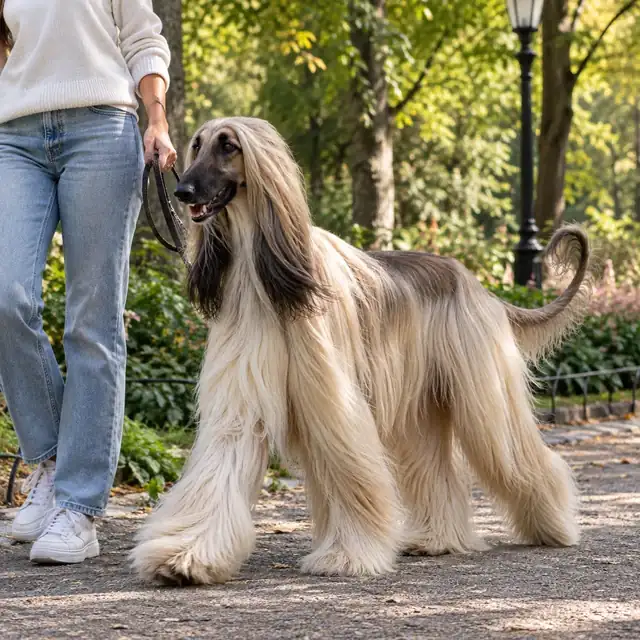
The long, silky coat needs bathing and brushing about twice a week or more, otherwise it will tangle. Claws are regularly trimmed and teeth are brushed.
Usually calm, but does not like rough treatment. An adult monitors the contact, and the rules of a calm game are explained to the child. The dog needs a place to rest.
Usually gets along with other dogs. A strong hunting instinct works on small animals and fast-moving cats, so the introduction is carried out carefully.
Estimates help compare breeds. For zooaggression, 5/5 means less tendency to aggression towards dogs. The behavior and health of a particular dog depend on many factors.
Average score: the breed attaches itself to the family, but remains independent. Actual behavior depends on socialization.
Low score: the independence of the breed makes training difficult. Patience and interesting tasks for the dog are required.
Average rating for compatibility: the Afghan Hound usually gets along well with dogs, and the attitude towards small animals is evaluated separately.
In the British cohort, the median lifespan of the breed was 11.1 years. Among the described breed risks: bloating or stomach upset. The examination of the parents is confirmed with the veterinarian.
Low rating: Long, silky coat needs brushing and bathing at least twice a week.
Bloating or twisting of the stomach is an emergency condition to which deep-chested breeds are prone. Know the signs: unsuccessful attempts to vomit, distended stomach, restlessness; in this case, go to the vet immediately. Other breed risks include hypothyroidism and hereditary necrotizing myelopathy. Afghan Hounds are also sensitive to anesthesia, so the breed is reported before anesthesia.