Human orientation
Average score: Airedale terrier is attached to the family, but independent. Behavior depends on upbringing.
THE PAW CATALOG
Origin: Great Britain
Bred over 150 years ago in the Eire Valley in Yorkshire to hunt rodents along the banks. Its size was increased by crossing with otter hounds and bull terriers. During the First World War, Airedale Terriers served as police dogs, messengers and rescue dogs. Australian breeders have been working on his character for about fifty years.
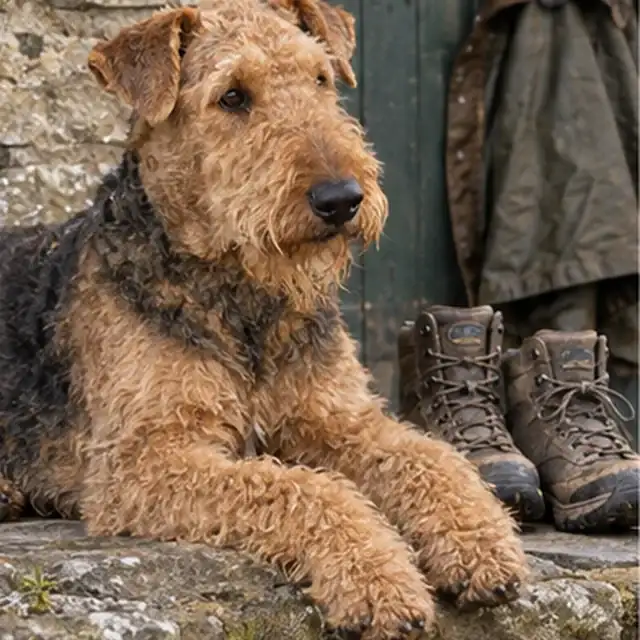
The Airedale Terrier is the largest of the terriers: 56-61 cm at the withers, with a stiff, often wavy coat of black-tan or gray color. Confident, sociable and a quick learner, but bored by repetition. Needs daily jogging, family companionship and regular trimming.
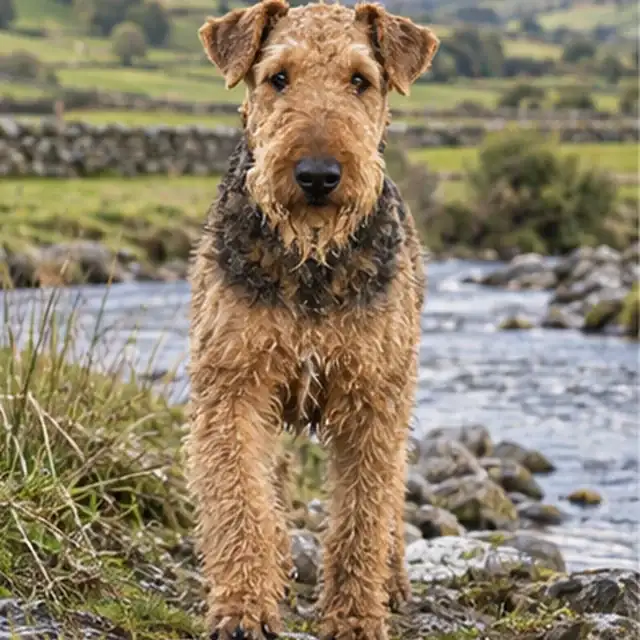
Daily walks with the opportunity to run and lots of attention are needed. Likes to dig, so a separate sand corner is useful. Attaches to the whole family and can be a protector when feeling danger.
A daily walk with the opportunity to run off-leash in a safe place, as well as play and attention. Without it, he begins to dig and get bored.
Learns quickly, but loses interest in monotony, so classes should be short and varied. Some dogs are softer, others are tougher in character and require firmer discipline.
The wool is combed at least once a week, bathed as needed, and cut or trimmed at least twice a year. Smoother wool collects less dirt than curly wool. Teeth are brushed regularly.
Usually reliable, friendly and sociable with children. Size and energy require supervision when playing with toddlers.
Usually sociable with dogs, but the terrier character can manifest itself in arguments. Rodents and small animals are perceived as prey.
Estimates help compare breeds. For zooaggression, 5/5 means less tendency to aggression towards dogs. The behavior and health of a particular dog depend on many factors.
Average score: Airedale terrier is attached to the family, but independent. Behavior depends on upbringing.
Average score: learns quickly, but gets bored with repetition.
Average score: usually sociable, but the terrier instinct towards small animals remains.
In the British cohort, the median lifespan of the breed was 12.0 years. Among the described breed risks: hip dysplasia; examination of the parents is confirmed with the veterinarian.
Average score: weekly combing and cutting or trimming at least twice a year are required.
Hip dysplasia is listed among the risks of the breed. Joint screening is recommended, and the breeder is asked for the results of examinations of both parents.