Human orientation
Contact with the family can be moderate: the dog is friendly, but independent in work. The actual behavior depends on the socialization and experience of the particular dog.
THE PAW CATALOG
Origin: Austria
The breed originated in the middle of the 19th century in Austria from crossing larger hounds with dachshunds to reduce the size of the dog. It was valued by German aristocrats, and in the 1880s such a dog accompanied Crown Prince Rudolph of Habsburg on hunting trips to Egypt and Turkey. She knows how to follow the cold trail of a shot deer and also works on wild boar, hare and fox. The FCI classifies the breed as Group 6, Section 2.
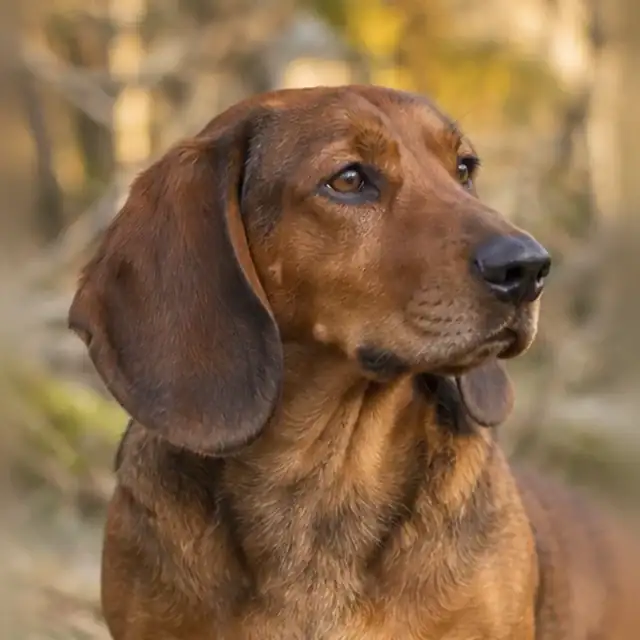
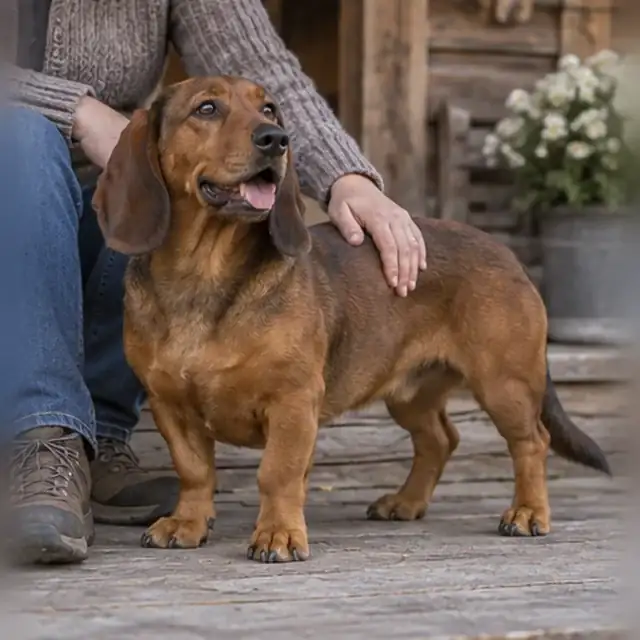
The Alpine Dachshund is a squat but sturdy Austrian Hound bred for trail work in the mountains. Fearless, friendly and clever, he mostly lives with hunters. It requires a load corresponding to its structure and constant weight control.
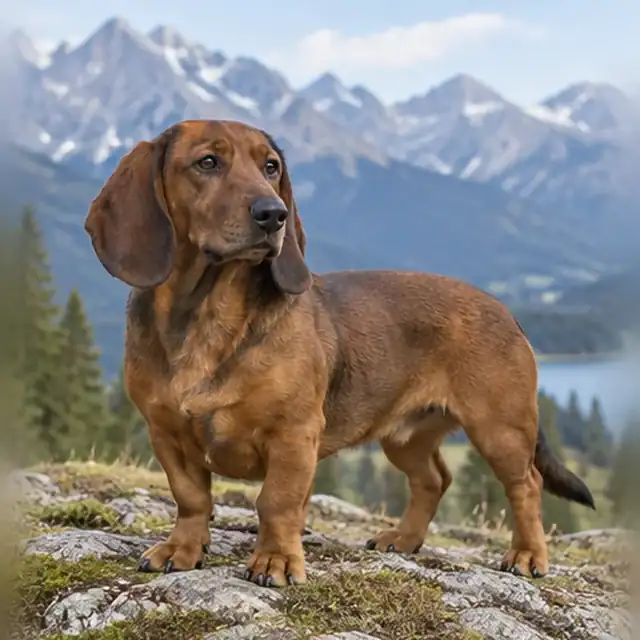
This is primarily a hunting dog, and most of them live with hunters. As a companion, it is suitable for people who like long walks in the forest and are not afraid of a strong hunting instinct. A city apartment without olfactory tasks and movement quickly becomes a limitation for him.
A healthy adult dog is suitable for long walks in the area, olfactory tasks and short activities. Due to the long body on short legs, jumping from stairs and sofas is limited. The load of puppies and elderly dogs is adjusted with the veterinarian.
The dog is smart, but independent: the trail smells more interesting than the team. Therefore, the call is practiced on a long leash, and olfactory tasks are used as a reward. Short sessions, patience and constant rules give a better result than long repetition of the same thing.
The smooth dense coat needs brushing about once a week, and more often during shedding. After walking through the forest, the skin is checked for ticks, and the ears are checked for dirt. Be sure to watch your weight: a long body on short legs does not tolerate extra kilograms well.
Most dogs are friendly with children, but an adult should monitor the contact. The rules of calm play are explained to the child, not to lift the dog by its front paws and not to pull its ears, and the dog is left a separate place for food and rest.
Usually gets along with other dogs and pets, but the hunting instinct is strong, so it can perceive small animals as prey. Acquaintances are carried out gradually and under supervision.
Estimates help compare breeds. For zooaggression, 5/5 means less tendency to aggression towards dogs. The behavior and health of a particular dog depend on many factors.
Contact with the family can be moderate: the dog is friendly, but independent in work. The actual behavior depends on the socialization and experience of the particular dog.
Average learnability rating: "Alpine Dachshund" learns with a clear regimen, short, consistent exercises, and constant repetition.
An average score means that contact with other dogs and pets requires an individual assessment. The hunting instinct is strong, so early socialization is important.
There is no comparable survival estimate for the breed in the British cohort used. The absence of the mentioned risk does not prove the absence of hereditary diseases, so the results of the parents' examinations should be clarified with the veterinarian.
High score: The coat is brushed about once a week, and regular ear, claw and skin checks take little time. The biggest concern is weight control.
Common hereditary diseases of the breed are not described in detail, so you should rely on the list of examinations recommended by the club. Ask the breeder for documented results of both parents.
A long body on short legs requires careful weight control and caution with jumps. Lameness, back pain, or reluctance to move require a veterinary examination.
During routine examinations, the veterinarian evaluates the eyes and the heart; the frequency of special inspections is determined by the recommendations of the club and the veterinarian.