Human orientation
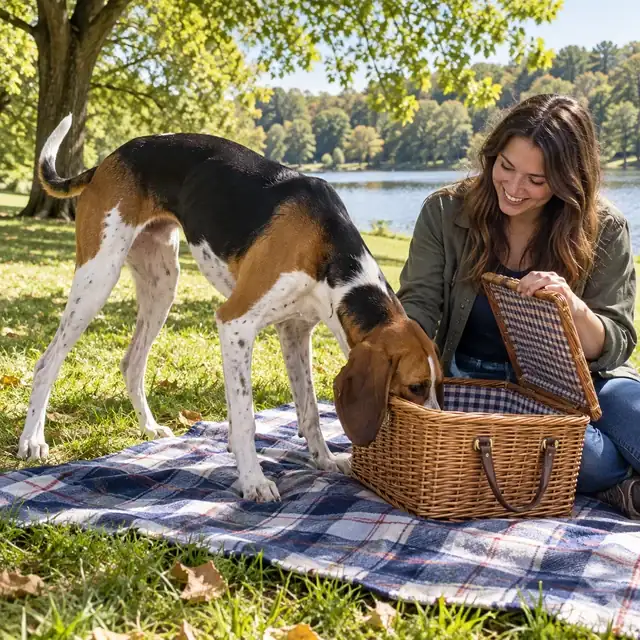
Contact with the family can be moderate: the dog is gentle, but independent and loves to follow. The actual behavior depends on the socialization and experience of the particular dog.
THE PAW CATALOG
Origin: United States of America
The ancestors of the American Foxhound are English hounds, which were brought to Virginia and Maryland in the middle of the 17th century. They were first used to destroy foxes attacking livestock, and later for sport hunting. Crossbreeding with French and Irish hounds made the dogs lighter, taller and faster. George Washington is mentioned among the owners. The AKC recognized the breed in 1886. This is the Virginia state dog.
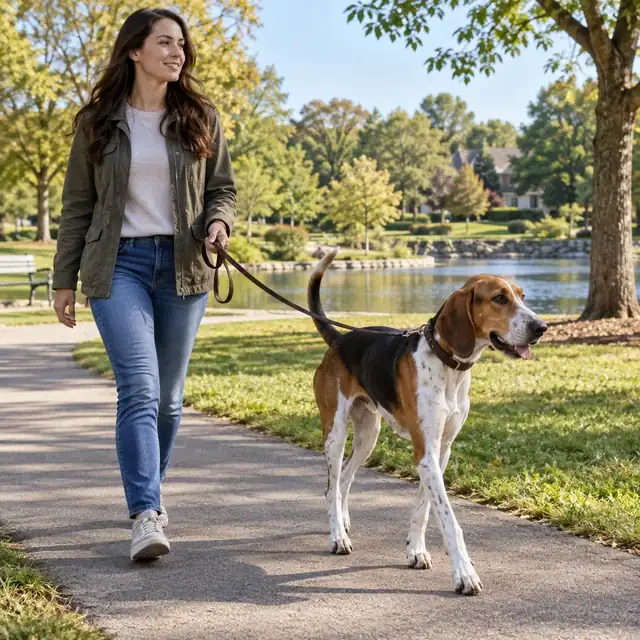
The American Foxhound is a fast pack hound with a strong interest in scents. At home, he is gentle and good-natured, but stubbornly follows the trail, so he needs space, company and reliable control on walks. His voice is loud, musical, and this is a problem for city life.

It is more suitable for a country house with a large area where the dog can run and work with its nose. Without movement and company, she gets bored, becomes destructive and turns on her voice. It is better if there is another dog nearby, because the breed is used to a pack.
A healthy adult dog needs at least an hour or two of active movement every day, olfactory tasks and a place to run safely in a fenced area. Without movement, she gets bored and can damage things. The load for puppies and elderly dogs is adjusted with the veterinarian.
Foxhound is independent and persistent, so training requires patience and stable rules. Calling is practiced on a long leash, and olfactory games are used as a reward. Short sessions, valuable treats, and repetition produce results, and pressure discourages.
The short, smooth coat needs to be brushed with a stiff brush about four times a week, and more often during shedding. They bathe only when necessary. Ears, teeth, claws, skin and weight are regularly checked.
Usually gets along well with children, but an energetic dog can knock a kid off his feet in a game, so an adult monitors the contact. The rules of calm behavior are explained to the child, and a separate place is left for the dog to eat and rest.
The pack origin makes the breed friendly to other dogs. Cats and small animals are introduced gradually, under supervision, because the hunting instinct can work. Early socialization helps.
Estimates help compare breeds. For zooaggression, 5/5 means less tendency to aggression towards dogs. The behavior and health of a particular dog depend on many factors.
Contact with the family can be moderate: the dog is gentle, but independent and loves to follow. The actual behavior depends on the socialization and experience of the particular dog.
Average score: The American Foxhound breed requires a clear regimen and regular repetitions, as well as patience and short exercises.
High Score: The breed usually gets along well with other dogs due to its pack history. The attitude towards cats and small animals is evaluated separately, and early socialization is important.
There is no comparable survival estimate for the breed in the British cohort used. Among the described breed risks: hip dysplasia. The examination of the parents is confirmed with the veterinarian.
High rating: the short coat is brushed about four times a week, and the rest of the care is easy. The main expenditure of time falls on activity and olfactory work.
Hip dysplasia is mentioned as a possible risk. Parents are examined by X-ray, and the need for examinations is determined by a veterinarian. Among other issues that occur in the breed, ear infections and dental diseases are described.