Human orientation
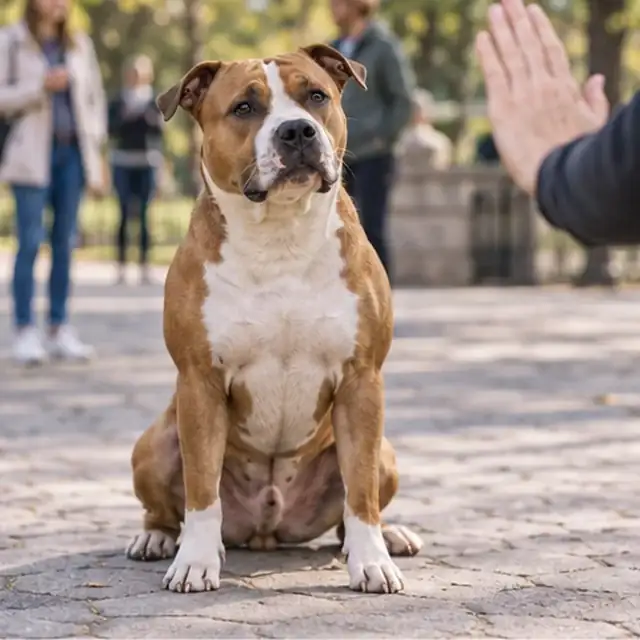
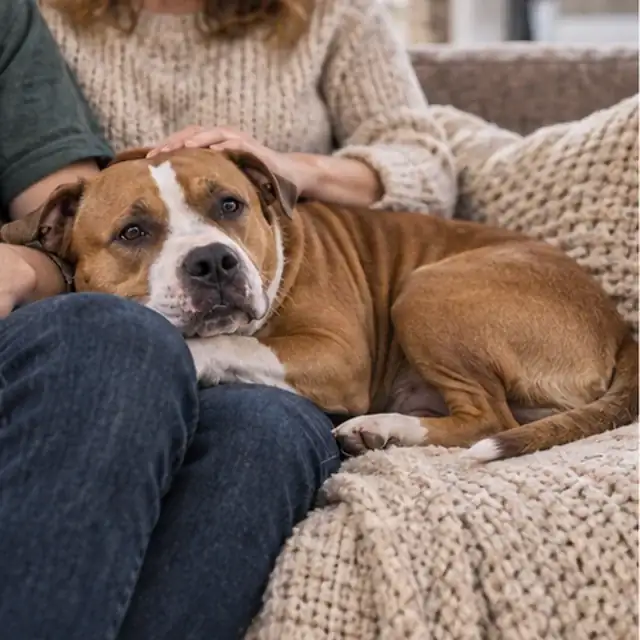
High Score: The American Staffordshire Terrier is usually very attached to people. Actual behavior depends on the dog's socialization and experience.
THE PAW CATALOG
Origin: United States of America
The breed was bred in the USA for work and company life, and its ancestors belong to the bull terrier type family. Since that time, separate lines have developed in different countries, which differ in temperament. Some states have restrictions on keeping such dogs, so you should check local regulations before purchasing.
The American Staffordshire Terrier is a medium-sized, strong and muscular dog that is very attached to people. Confident and affectionate in the family, but energetic and stubborn, so it needs consistent education. Early socialization, control of excitement and responsible behavior of the owner in public places are important.

It is suitable for people who are ready to devote a lot of time to a dog: it is very human-oriented and does not tolerate loneliness well. A happy life requires daily walks, play and structured activities. Without clear rules and occupation, he can become obsessive or dominant.
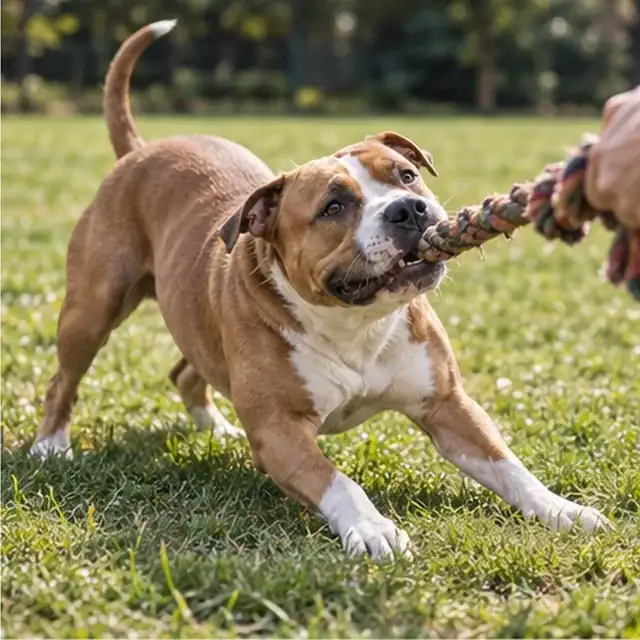
A healthy adult dog needs daily walks, play and structured activities: olfactory tasks, pulling games according to the rules, obedience. The energy level is moderate, but without movement and mental effort, he becomes nervous. The load of puppies and elderly dogs is adjusted with the veterinarian.
The dog tries to please, but needs a clear regime and patience: the rules should be constant, and the activities should be short and varied. Reward learning works better than pressure. Calling and calm behavior on a leash are practiced from the puppy age, and excitement is learned to be restrained gradually.
The short, smooth coat needs to be brushed about once a week, and more often during the shedding period. They are bathed as needed, their nails are regularly trimmed, their ears are cleaned, and their skin is examined for irritation or allergies. Watch your weight: extra pounds put a strain on the joints.
He usually gets along well with children, especially if he grows up in a family, but due to his strength and energy, contact must take place under the supervision of an adult. The rules of quiet play are explained to the child, and the dog is given a separate place for food and rest.
Some dogs are reactive to other dogs, so early socialization and careful familiarization are necessary. Cats and small animals are evaluated separately, and contacts are monitored first. Supervision is also necessary for the game between dogs.
Estimates help compare breeds. For zooaggression, 5/5 means less tendency to aggression towards dogs. The behavior and health of a particular dog depend on many factors.
High Score: The American Staffordshire Terrier is usually very attached to people. Actual behavior depends on the dog's socialization and experience.
Average score: training the American Staffordshire Terrier breed requires a clear regimen and regular repetition. The owner will need patience, motivation and short, consistent exercises.
An average score means that contact with other dogs requires an individual assessment. The attitude towards cats and small animals is evaluated separately, and early socialization is important.
In the British cohort, the median lifespan of the breed was 12.5 years (small sample: 94 deaths). Among the described breed risks: dysplasia of the hip joints, allergic skin diseases, heart diseases. The examination of the parents is confirmed with the veterinarian.
High score: The short coat is brushed about once a week, and regular skin, ear and claw inspections take little time.
Joint diseases, especially of the hips and knees, are common in the breed. Weight control and moderate regular exercise help preserve joints. The veterinarian determines the need for examinations.
Allergic skin diseases, in particular atopic dermatitis, occur frequently. Symptoms: itching, redness, licking paws. Diagnosis and treatment are prescribed by a veterinarian.
Heart disease is mentioned in the breed profile as a possible risk. A preventive examination includes listening to the heart, and the need for examinations of the parents is clarified with the breeder and veterinarian.