Human orientation
Contact with the family can be moderate: the dog becomes attached to one person. The actual behavior depends on the socialization and experience of the particular dog.
THE PAW CATALOG
Origin: United States of America
The breed originated in Wisconsin in the 19th century, probably from English and Irish water spaniels, curly-haired retrievers, poodles, and other breeds. It was used for hunting waterfowl and small game. Numbers fell as hunting habits changed, but the Wolf River Kennel helped preserve the breed. UKC recognized it in 1920, AKC - in 1940. Since 1985, it has been the state dog of Wisconsin. The breed remains rare.
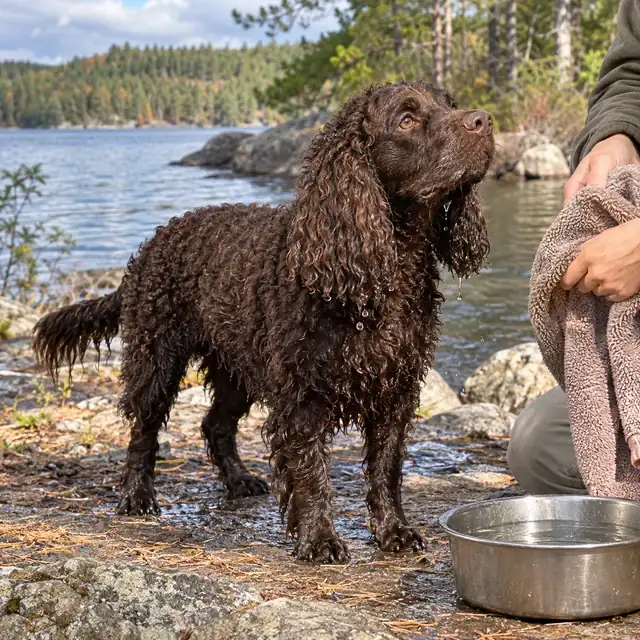
The American Water Spaniel is a small, curly-haired hunting dog bred to work on water and in thickets. Attaches to one person, likes to be the center of attention and is often loud. Needs movement, ear drying and coat care.
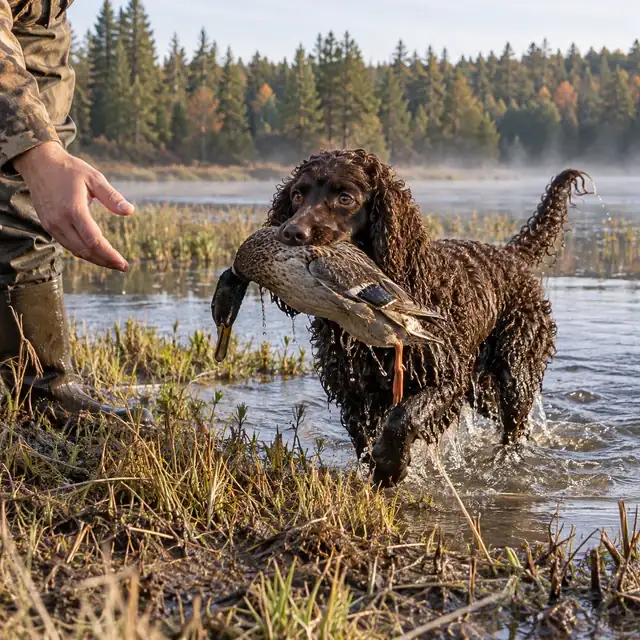
Can live in an apartment if he gets enough exercise, but does best near water and someone who works with him. He is closely attached to one family member, can be loud and needs attention. It can protect food, so from a puppy age, a calm attitude to the bowl is practiced.
A combination of walking, swimming, searching and short activities is suitable for a healthy adult spaniel. He shows himself well in dexterity and freeball. The load of puppies and elderly dogs is adjusted with the veterinarian.
The dog is smart, but matures late and can stubbornly defend its own opinion. A variety of activities, consistent demands, and generous rewards work best. Calling, swimming and fetching can be trained as a game. It is worth practicing a calm attitude towards food and toys.
The curly double coat needs brushing about twice a week, and more often during shedding. After bathing in water bodies, she is dried, and the ears are carefully checked and dried, because long ears are easily inflamed. Teeth, claws, skin and weight are regularly examined.
Usually gets along well with children, but some lines can be more bossy, so an adult monitors the contact. The rules of quiet play are explained to the child, and the dog is given a separate place for food and rest.
Acquaintance with other dogs and pets is carried out gradually. Work background and hunting motivation affect compatibility, particularly with birds and small animals.
Estimates help compare breeds. For zooaggression, 5/5 means less tendency to aggression towards dogs. The behavior and health of a particular dog depend on many factors.
Contact with the family can be moderate: the dog becomes attached to one person. The actual behavior depends on the socialization and experience of the particular dog.
High Score: The breed is usually quick to learn commands and willing to work with humans. Short, varied activities with rewards without coercion work.
An average score means that contact with other dogs and pets requires an individual assessment. Hunting background is important to consider and early socialization helps.
There is no comparable survival estimate for the breed in the British cohort used. Among the described breed risks: hip dysplasia, degenerative myelopathy, eye diseases. The examination of the parents is confirmed with the veterinarian.
The wool is combed about twice a week, and after water, both the wool and the ears are dried. Activity and water activities add time to the usual care.
According to OFA surveys, approximately 8% of dogs of the breed had hip dysplasia. Parents are examined by X-ray, and the need for examinations is determined by a veterinarian.
Degenerative myelopathy is a progressive lesion of the spinal cord, which is usually manifested in adulthood by weakness of the hind legs. There is a genetic test, so ask the breeder about the results of the parents.
Among eye diseases, breeds describe cataracts and progressive retinal atrophy. They are detected by eye examination, so before buying, they ask for the results of eye tests of both parents.