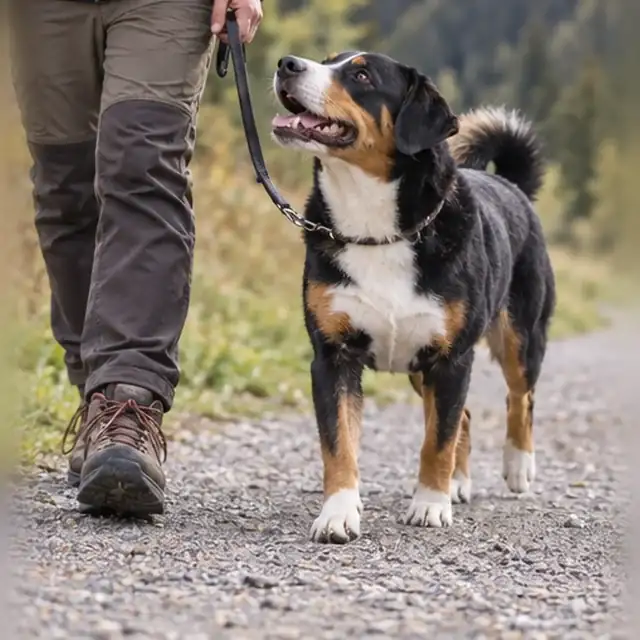
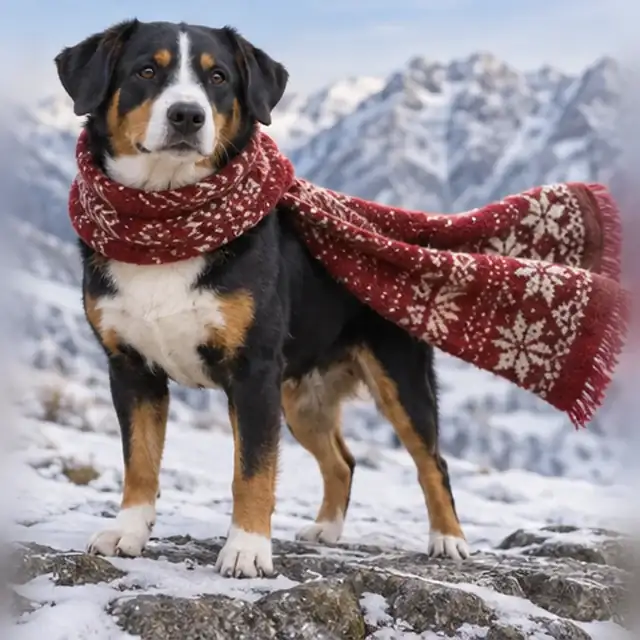
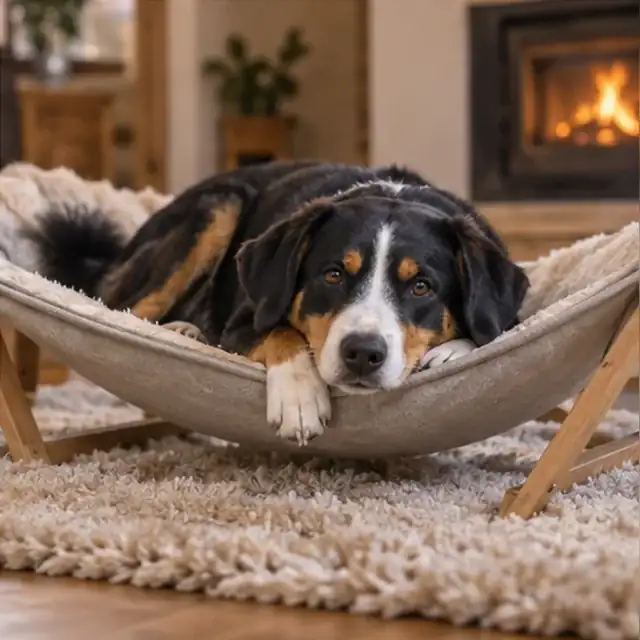
Human orientation
Average score: The breed is attached to the family, but independent, and the watchdog instinct requires socialization. Actual behavior depends on the dog's experience.
THE PAW CATALOG
Origin: Switzerland
The breed originates from the Swiss canton of Appenzell and is one of the four Swiss Sennenhunds. It was traditionally used for grazing cattle and guarding the yard. The first mentions of the breed date back to the 1890s, and the first standard appeared in 1914.
The Appenzeller Sennenhund is a lively tricolor Swiss dog with a curled up tail. Intelligent, energetic and attached to his family, he has strong herding and guarding instincts. Requires daily activity, tasks and a calm, consistent hand.
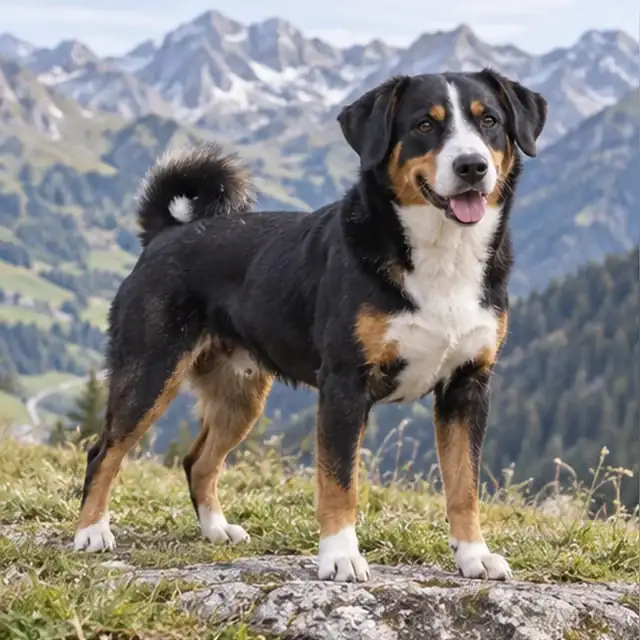
Suitable for an active family with a yard or the opportunity to take long walks every day. Without tasks and movement, he gets bored, barks and can start to "feed" people. The guarding instinct is strong, so socialization and clear rules are needed.
A healthy adult dog needs long walks and an hour of active play or activity every day. No matter how much you run, you also need a mental load. The load of puppies and elderly dogs is adjusted with the veterinarian.
Smart and hardworking, but sensitive to a rough tone. Positive reinforcement, short sessions and a variety of tasks (obedience, agility, search, shepherd games) give the best results. The instinct to pinch the heels in children and animals is corrected from an early age.
Short dense wool is combed once or twice a week, more often during seasonal shedding. They bathe as needed. Claws are regularly trimmed and teeth are taken care of.
Tied to his family, but herding instinct can be manifested in attempts to "collect" babies. Therefore, an adult monitors contact, and active games with children are conducted according to the rules.
With socialization, he usually lives peacefully with other dogs and cats that grew up with him. Small animals such as rabbits, rodents and birds are not advised to be kept around because of their instincts.
Estimates help compare breeds. For zooaggression, 5/5 means less tendency to aggression towards dogs. The behavior and health of a particular dog depend on many factors.
Average score: The breed is attached to the family, but independent, and the watchdog instinct requires socialization. Actual behavior depends on the dog's experience.
Average score: the dog is smart, but needs a clear regime and a variety of tasks. The owner needs patience and consistency.
Average score: contact with other dogs and cats depends on socialization, and keeping small animals in the house is not recommended.
The British cohort does not provide a comparable survival estimate for the Appenzeller Sennenhund breed. The absence of the mentioned risks does not prove the absence of hereditary diseases, and parents should be checked in any case.
High rating: the short coat is combed once or twice a week, and the rest of the care is simple.
Breed screening: dysplasia of the hip and elbow joints, eye diseases, spine and heart problems are described for the breed. Ask the breeder for documentary results of examinations of both parents.
Musculoskeletal system: growth and load should correspond to age. Lameness, pain, or reluctance to move require a veterinary examination. Jumping from a height for an adult dog is reduced.
A preventive examination includes an evaluation of the eyes and heart. Among the conditions described for the breed is also gastric volvulus, so know its signs: unsuccessful attempts to vomit, distended stomach, restlessness; then go to the doctor immediately.