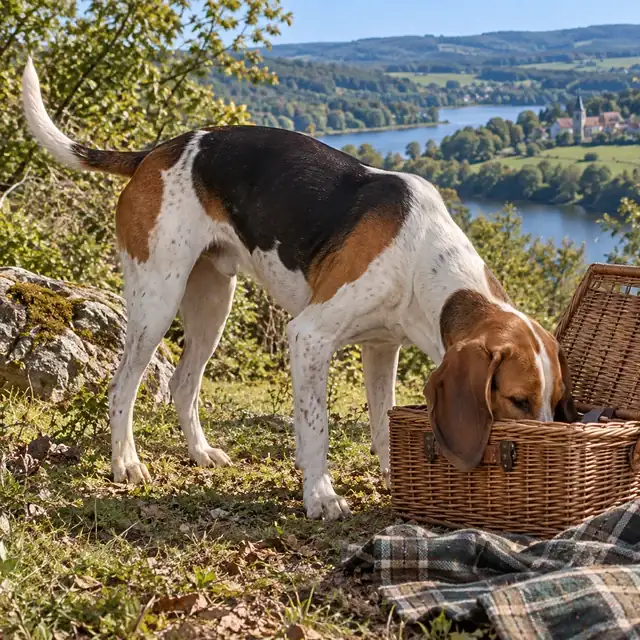
Human orientation
Moderately high score: the breed is sociable, but works independently. Actual behavior depends on socialization.
THE PAW CATALOG
Origin: France
Originally from Artois in northern France, where he worked in packs. A similar dog is mentioned in a letter of 1609. In the 19th century, crossbreeding with British hounds almost supplanted purebred dogs, and the Second World War almost destroyed the breed. In the 1970s, enthusiasts restored her from several dogs. It is currently recognized by FCI and UKC.
The Artois Hound is a strong pack French Hound with a loud melodious voice. Persistently follows the trail, hardy and sociable. Needs lots of movement, safe space and reliable calling.
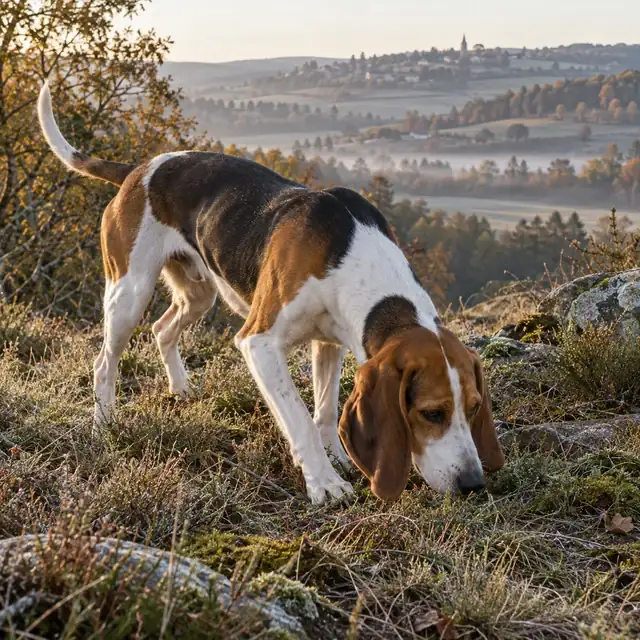
It is more suitable for a country house with a large fenced plot. Loud, works well in a pack. In an apartment with neighbors, it can be problematic because of a loud voice. Bored without movement and company.
A healthy adult dog needs long walks, runs and sniffing every day. Safe free running only in a fenced area. The load of puppies and elderly dogs is adjusted with the veterinarian.
Persistent, tends to follow the scent and ignore commands. Olfactory games, valuable treats and short activities work. Calling is practiced on a long leash, and free running is allowed only in a safe area.
The short thick coat is combed about four times a week. After walks, the skin and ears are examined. Claws are regularly trimmed and teeth are brushed.
Usually sociable, but strong and energetic. An adult monitors the contact, and the rules of a calm game are explained to the child. The dog needs a place to rest.
A strong pack instinct makes it usually peaceful with other dogs. The breed was used on small game, deer and wild boar, so small animals can be perceived as prey.
Estimates help compare breeds. For zooaggression, 5/5 means less tendency to aggression towards dogs. The behavior and health of a particular dog depend on many factors.
Moderately high score: the breed is sociable, but works independently. Actual behavior depends on socialization.
The rating is average, because there is a lack of comparative data on the "Artois hound" breed. Actual behavior depends on upbringing, socialization and experience.
Average rating: "Hound of Artois" usually gets along with dogs, but the attitude towards small animals depends on the hunting instinct and needs to be checked.
The British cohort does not provide a comparative survival estimate for the Artois Hound breed. The absence of the mentioned risks does not prove the absence of hereditary diseases, and parents should be checked in any case.
High score: the coat is combed several times a week, and the rest of the care is simple. The main expenditure of time falls on movement.
Breed Screening: Little is known about the health of this rare breed. Ask the breeder for documentary results of examinations of both parents and current recommendations of the club.
Musculoskeletal system: growth and load should correspond to age. Lameness, pain, or reluctance to move require a veterinary examination. Paws are examined after long walks.
A preventive examination includes an evaluation of the eyes, heart, and ears. Long hanging ears are cleaned and dried.