Human orientation
The dog becomes attached to the family, but expresses it discreetly. The attitude towards strangers depends on socialization, so acquaintances with guests are conducted calmly.
THE PAW CATALOG
Origin: Australia
The breed appeared at the beginning of the 19th century in Australia. There are two versions about its founder: one names Thomas Simpson Hall, who around 1830 crossed herding dogs from the north of England with dingoes, the other - the cattleman Timmins from Bathurst. The dogs were too rough with the cattle, so a blue merle collie was added to them. The descendants gave the modern type of the breed. FCI classifies her as group 1.
The Australian Cattle Dog is a strong, hardy herding dog, bred to work with cattle on large open spaces. He is alert, devoted to one or two people and reserved with strangers. Needs complex tasks and daily movement, otherwise the working instinct is directed to the home, children and passers-by.
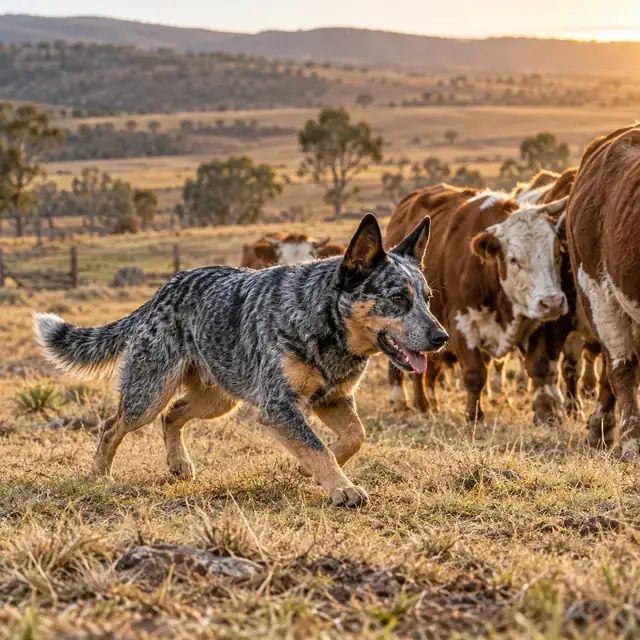
Suitable for people who love movement and are ready to work with a dog every day. Boredom or space constraints quickly lead to biting, leg jerking, and barking. The Kettle Dog has a hard time being alone for a long time, but it's great to go hiking and play sports with it.
An adult healthy dog needs daily long walks, running and mental tasks. A simple walk in the yard is not enough. A veterinarian selects the load for puppies and older dogs.
Training requires consistency and patience: the dog is smart and will quickly understand what you allow and what not. Short, varied activities that give him a challenge work best. Calling, control over the bite and calm behavior in everyday life are practiced separately, because the shepherd's habit of pinching the heels requires the attention of the little one.
The coat is short, with a dense undercoat, so it is enough to comb it once a week, and more often during shedding. It is rarely bathed when it is really dirty. Watch the ears, claws, teeth and weight, because an active dog quickly loses shape if you reduce the load.
An adult controls the dog's interaction with children. The breed is prone to "herding" small children, which can turn into pinching or barking. The rules of calm contact are explained to the child, and a separate place is left for the dog to eat and rest.
Acquaintance with other dogs and pets is carried out gradually. Working origin and herding motivation affect compatibility: the dog can chase moving targets. Care should always be taken with cats and small animals.
Estimates help compare breeds. For zooaggression, 5/5 means less tendency to aggression towards dogs. The behavior and health of a particular dog depend on many factors.
The dog becomes attached to the family, but expresses it discreetly. The attitude towards strangers depends on socialization, so acquaintances with guests are conducted calmly.
The breed learns well with consistent training, and short reward sessions produce better results than forceful compulsion. The dog quickly learns both good and bad, so the owner must be consistent.
An average score means that the attitude towards other animals should be evaluated individually. The herding instinct drives the chase, so early socialization and control during play are important.
In the British cohort, the median lifespan of the breed was 14.0 years (small sample, 50 deaths). Among the described breed risks: hip dysplasia, progressive retinal atrophy, hearing impairment. The examination of the parents is confirmed with the veterinarian.
The wool is combed approximately once a week, more often during shedding. The care itself is simple, but high activity adds daily walks and mental tasks.
Hip dysplasia is mentioned in the breed profile as a possible risk. The parents are checked according to the recommendations of the club, and the need for examinations is determined by the veterinarian.
Progressive retinal atrophy eventually leads to vision loss. It is determined by visual inspection, and there are DNA tests for the breed, so ask the breeder for results.
Hearing impairment, in particular congenital deafness, occurs in dogs of this breed and is detected by the puppy hearing test. Ask the breeder to explain how the puppies and parents were tested.