Human orientation
The breed is usually very attached to the family and seeks contact. The actual behavior depends on the socialization and experience of the particular dog.
THE PAW CATALOG
Origin: Australia
The breed originated in Australia at the end of the 19th century from the crossing of Australian and Yorkshire terriers. In Sydney, it was first called the Sydney silky terrier, because it was intended primarily for life in the city. The Australian National Kennel Club recognized the breed in 1958, the AKC the following year. In the FCI classification, it belongs to group 3, section 4 (miniature terriers).
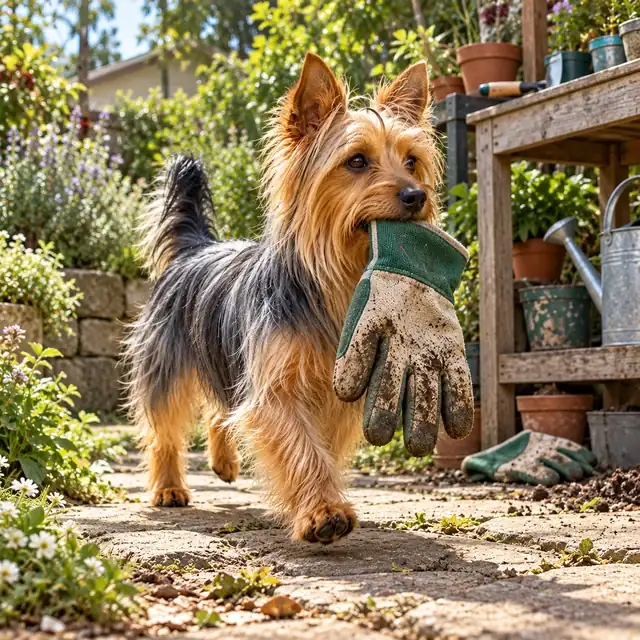
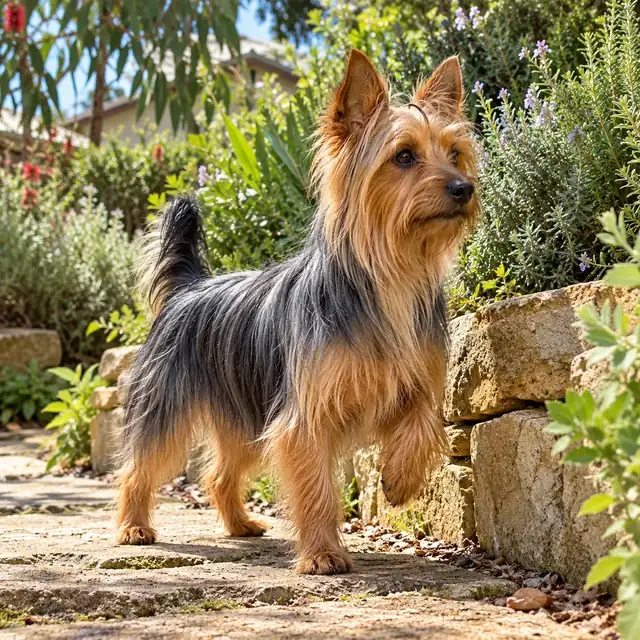
The Australian Silky Terrier is a compact companion dog with a long straight silky coat and typical terrier vivacity. Tied to his family, alert and loud, he learns quickly, but can stubbornly defend his own opinion. It needs regular brushing and safe walks, because the small size does not cancel the hunting instinct.
Suitable for living in an apartment if he walks every day and has classes. By temperament, it is a real terrier: it loudly announces about strangers, likes to dig and chase small animals, and does not like to be alone for a long time with nothing to do. A reliable fence is needed in the yard, and a leash on the walk.
Daily walks, olfactory tasks and short games are enough for a healthy adult dog. He is energetic, but less tireless than many terriers. For puppies and elderly dogs, the load is agreed with the veterinarian.
The dog learns quickly, but independence and stubbornness make themselves felt if the classes are boring or too long. Short fun sessions with rewards work best. Calling is trained separately, because the terrier's excitement can lead it to prey, and calm behavior so that barking does not become a habit.
The long straight coat needs to be brushed about four times a week, otherwise it gets matted. The coat should be long, but not touching the floor, and it is usually trimmed on the face and ears. Check your eyes, ears, teeth and claws regularly, and keep your weight in check.
The dog is attached to its own, but small and does not tolerate rough handling, so with small children adult supervision is required. The child is taught not to pick him up without supervision, not to pull his hair and not to wake him up. A separate place for eating and sleeping helps to avoid conflicts.
Acquaintance with other dogs is carried out gradually. Terrier instinct makes small animals potential prey, so rodents, birds and cats are separated as needed, and early socialization is not delayed.
Estimates help compare breeds. For zooaggression, 5/5 means less tendency to aggression towards dogs. The behavior and health of a particular dog depend on many factors.
The breed is usually very attached to the family and seeks contact. The actual behavior depends on the socialization and experience of the particular dog.
The breed learns well with consistent training. Short sessions with rewards without coercion work, and boredom and monotony cause stubbornness.
An average score means that the attitude towards other animals needs individual assessment. The terrier's hunting instinct and early socialization determine how the dog behaves with small animals.
In the British cohort, the breed's median lifespan was 13.3 years, but the sample was small, with 45 deaths. Among the described risks: dislocation of the patella, eye diseases. The examination of the parents is confirmed with the veterinarian.
The wool is combed approximately four times a week, and more often during an active coat change. Regular skin, ear, eye and claw examinations are added to this basic schedule.
A condition where the kneecap is out of place is mentioned in the breed profile as a possible risk. It is manifested by periodic limping or "bouncing". The veterinarian determines the need for examinations of the parents and the dog itself.
Eye diseases are mentioned in the profile as a possible risk, without specifying the diagnoses. Therefore, before the purchase, they ask for the results of eye examinations of both parents, and the adult dog is examined on the advice of a veterinarian.