Human orientation
High score: the breed is friendly and sociable. The actual behavior depends on the socialization and experience of the particular dog.
THE PAW CATALOG
Origin: France
Barbet, or the French water dog, has been known since the 16th century, when it retrieved French birds from the marshes. During the world wars, the population was greatly reduced, but at the end of the 20th century, the breed recovered. Barbet is considered the ancestor of the poodle and the Newfoundland. AKC recognized the breed in 2020.
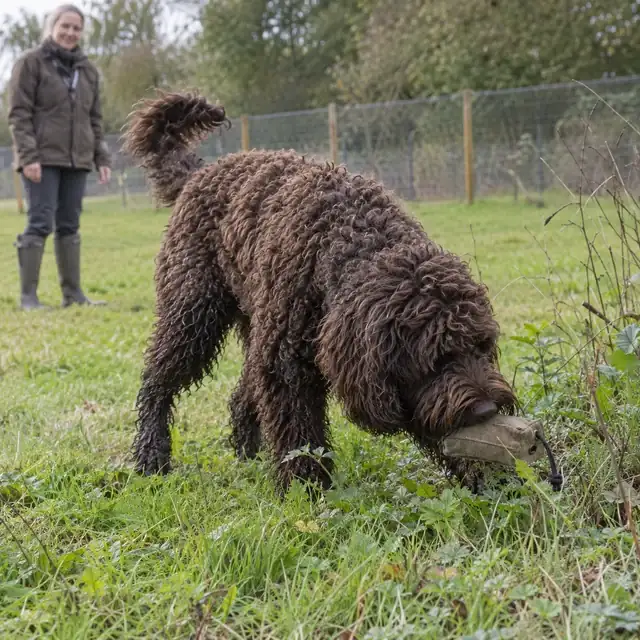
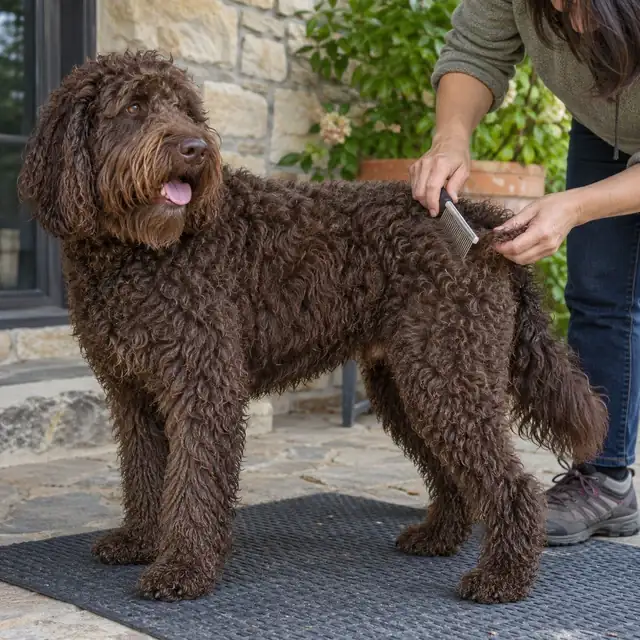
Barbet is a French water dog with thick curly hair. Friendly, smart and sociable, loves water. Requires regular brushing, moderate loads and mental tasks.

Suitable for active people who like walks near the water. Attached to the family and sociable, loves attention. Thick wool means that the dog overheats quickly in the summer.
A healthy adult dog needs daily active walks, and the ideal exercise is swimming. Without water, a few walks and games in the area will do. Due to the thick wool, it is not suitable for running in the heat. The load of puppies and elderly dogs is adjusted with the veterinarian.
Intelligent and willing to work. Positive reinforcement and mental tasks such as search, fetch, and water activities work best. Without activities, he gets bored and can become excessively noisy.
Thick, curly wool is combed to the skin, otherwise it will form tangles. Bathing is regular, the wool is cut to about 8-12 cm and dried in the air to form curls. Claws are often trimmed, teeth and ears are cleaned.
Usually friendly to children and the elderly. An adult monitors the contact, and the rules of a calm game are explained to the child. The dog needs a place to rest.
Usually gets along with other dogs. Acquaintance with small animals is carried out gradually. Early socialization helps.
Estimates help compare breeds. For zooaggression, 5/5 means less tendency to aggression towards dogs. The behavior and health of a particular dog depend on many factors.
High score: the breed is friendly and sociable. The actual behavior depends on the socialization and experience of the particular dog.
Barbet dogs respond well to consistent training with rewards; long boring classes and forced coercion do not work.
Average score: contact with other dogs and animals needs to be evaluated and early socialization is important.
There is no comparable survival estimate for the breed in the British cohort used. Among the described breed risks: epilepsy, progressive retinal atrophy, allergic skin diseases. The examination of the parents is confirmed with the veterinarian.
Low rating: A thick, curly coat needs daily brushing and regular trimming.
Epilepsy is among the possible risks of the Barbet breed. Find out from the breeder if there have been seizures in the line, and at the first attacks, go to the vet.
Progressive retinal atrophy is a hereditary eye disease that can lead to blindness. Regular eye exams and DNA testing of the parents, if available, help avoid problems.
Allergic skin diseases are mentioned as a possible risk. Symptoms: itching, redness, licking paws. Diagnosis and treatment are prescribed by a veterinarian. Other frequent problems include ear infections.