Human orientation
Average score: the breed is loyal to its owner, but reserved with strangers and works independently. Actual behavior depends on socialization.
THE PAW CATALOG
Origin: Germany
The breed was bred in Germany at the beginning of the 20th century to track wounded animals in steep mountains. The Bavarian Mountain Hound Club was founded in Munich in 1912 and is the only recognized breed club in the country. Dogs are bred primarily as working dogs.
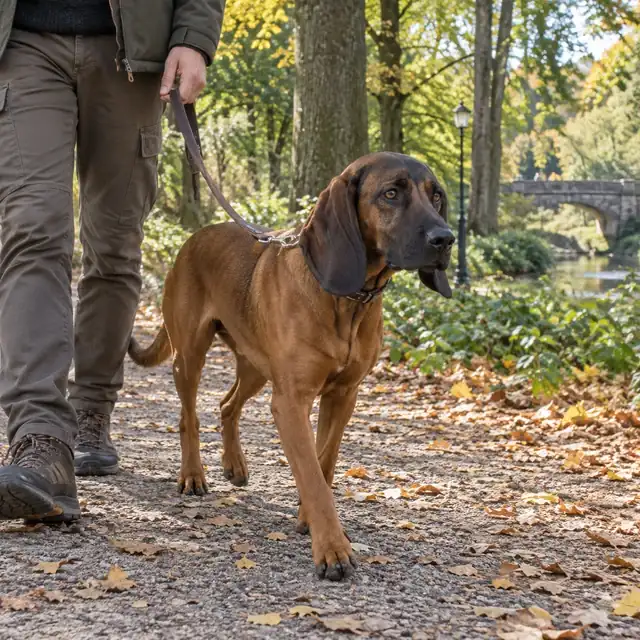
The Bavarian Mountain Hound is a medium-sized specialized hound for searching for wounded animals in mountainous terrain. Calm, devoted to the owner and restrained with strangers. Needs olfactory work, space and an attentive owner.

More suitable for a hunter or a person who works with a dog every day. He cannot live in a cage or on a chain: he needs company and movement. Without classes, he gets bored and becomes destructive.
A healthy adult dog needs significant physical and mental stress: sniffing, long walks, space to run, preferably behind a high fence. The load of puppies and elderly dogs is adjusted with the veterinarian.
Intelligent and learns fairly easily with consistency and positive reinforcement. Sniffing, tracking, and short lessons work best. The call is practiced on a long leash.
The short, dense, stiff coat is combed regularly. Strong and fast-growing claws are trimmed and ears are inspected frequently to prevent sulfur build-up and infection.
Usually calm, but reserved. An adult monitors the contact, and the rules of a calm game are explained to the child. Dogs leave their resting place.
Usually peaceful with other dogs. The hunting instinct is strong, so small animals can be perceived as prey.
Estimates help compare breeds. For zooaggression, 5/5 means less tendency to aggression towards dogs. The behavior and health of a particular dog depend on many factors.
Average score: the breed is loyal to its owner, but reserved with strangers and works independently. Actual behavior depends on socialization.
The breed learns well with consistent training and positive reinforcement.
Average score: contact with other dogs is usually normal, and small animals are evaluated separately due to their hunting instinct.
There is no comparable survival estimate for the breed in the British cohort used. Among the described breed risks: hip dysplasia, epilepsy. The examination of the parents is confirmed with the veterinarian.
Medium-high grade: Coat is combed regularly and ears and claws need attention.
Hip dysplasia is mentioned in the breed profile as a possible risk. Ask the breeder for the results of the evaluation of the hips of both parents, and the need for examinations is determined by the veterinarian.
Epilepsy is mentioned among the possible risks of the Bavarian Mountain Hound breed. The breeder is asked about cases of convulsions in the line, and the first attack is a reason to immediately consult a veterinarian.