Human orientation
High score: Bernese Mountain Dogs are usually very attached to their people, although each individual's behavior depends on socialization and experience.
THE PAW CATALOG
Origin: Switzerland
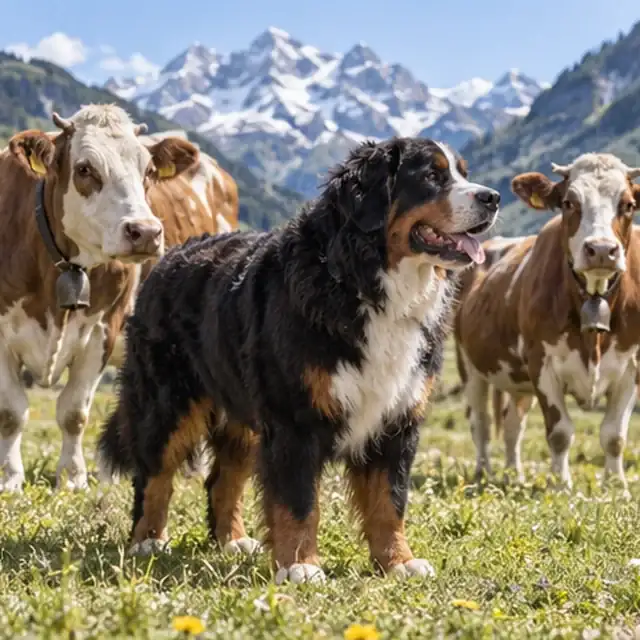
The breed comes from Swiss farms, where dogs herded cows, drove milk carts and guarded the yard. By the end of the 19th century, the population was greatly reduced, so in 1907 a club was founded to save the breed. Bernese were not brought to the United States until 1926, and the AKC registered the first in 1937.
The Bernese Mountain Dog is a large tricolor Swiss dog with long, thick fur. Calm, good-natured and very attached to his family. Requires moderate exercise, daily grooming, and readiness for the shorter-than-average lifespan and health risks of a large breed.

Suitable for families with a spacious house, where the dog will be close to people. This is not a street dog: being outside for a long time without a family harms him. It overheats quickly in the summer, so shade and coolness are a must. Drooling and fur all over the house is part of life with a bern.
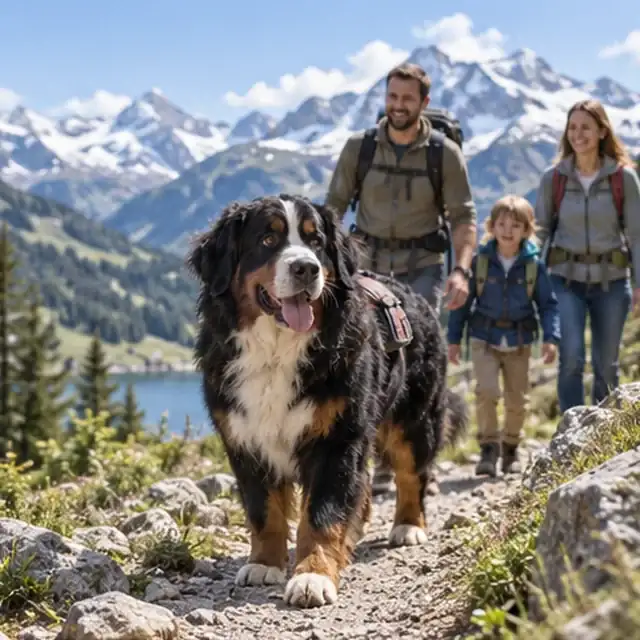
Moderate energy, but daily long walks or hikes are required. Puppies should not overload their joints: jumping and long running are limiting. The load of puppies and elderly dogs is adjusted with the veterinarian.
Smart and willing to please, so he learns well with positive reinforcement. An adult dog is very strong, so walking on a leash and calling are practiced from the puppy age, while the weight is still small. Rough methods are not suitable for a sensitive nature.
The long, thick wool is combed daily, especially during the molting season, otherwise tangles are formed. They bathe as needed, regularly clean their ears, trim their claws and take care of their teeth.
Usually gentle and patient with children. Due to their size and weight, contact with babies takes place under the supervision of an adult, and active games should not overload the joints of a young dog.
Usually peaceful with other dogs and pets, especially if socialized from an early age. Because of the size, all contacts are monitored.
Estimates help compare breeds. For zooaggression, 5/5 means less tendency to aggression towards dogs. The behavior and health of a particular dog depend on many factors.
High score: Bernese Mountain Dogs are usually very attached to their people, although each individual's behavior depends on socialization and experience.
The Bernese Mountain Dog learns well with consistent training. Short, non-forced reward sessions work best.
High score: the breed usually gets along peacefully with other dogs. The attitude towards small animals is assessed separately.
Low score: In a British cohort, the breed's median lifespan was 10.1 years. Among the described breed risks: dysplasia of the elbow joints, progressive retinal atrophy, bloating or stomach twist. The examination of the parents is confirmed with the veterinarian.
Low rating: Long thick coat needs daily brushing and shedding is significant.
Elbow dysplasia is mentioned as a possible risk. Other conditions include hip dysplasia. The breeder is asked to evaluate the joints of both parents.
Progressive retinal atrophy is a hereditary eye disease. Regular eye examinations and, where available, DNA testing of the parents help to detect the problem early.
Bloating or twisting of the stomach is an emergency condition to which large, deep-chested breeds are prone. Know the signs: unsuccessful attempts to vomit, distended stomach, restlessness; then go to the vet immediately. Oncological and blood diseases are also described for the breed.