Human orientation
Average score: the breed works independently, in a pack. Actual behavior depends on socialization.
THE PAW CATALOG
Origin: France
Billy is a French Hound from Poitou in the west of France. He was bred in the 19th century by Gaston Jublo de Rivoto Taco and named after his castle Billy. Three Poitevin lines became the basis. The pack was disbanded in 1927, and after the Second World War, only two hounds survived. The breeder's son revived the breed with a Poitevin, a Porcelain Hound and a Harrier. The standard was approved in 1885, and several packs still hunt roe deer and wild boar today.
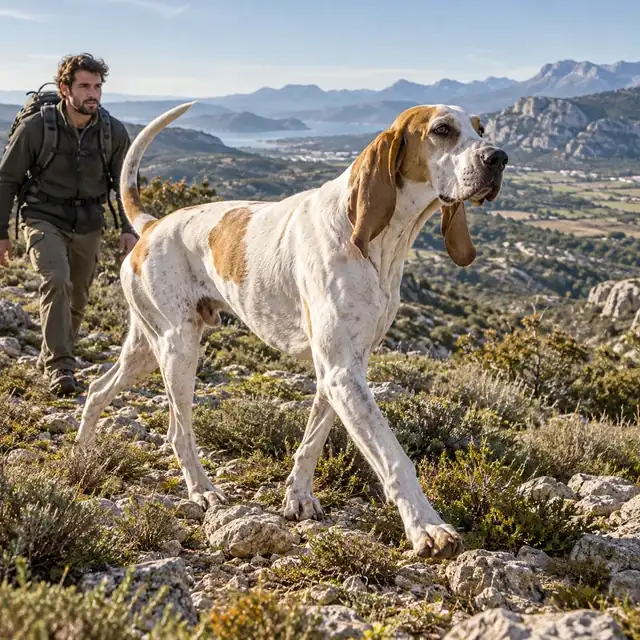
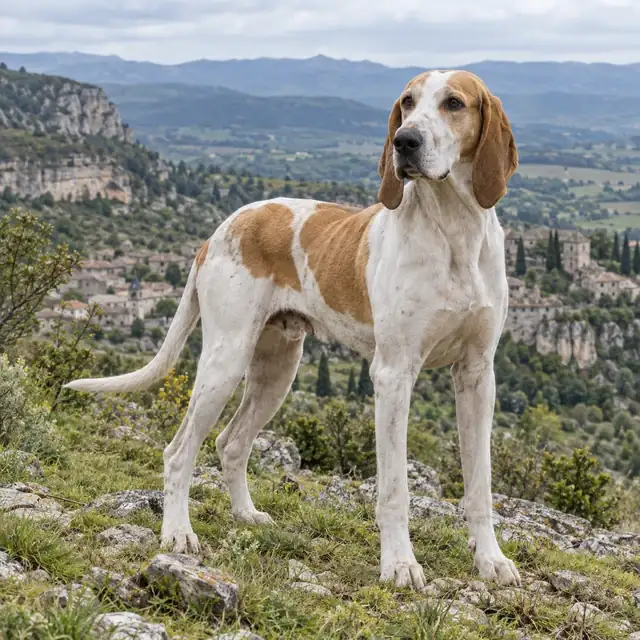
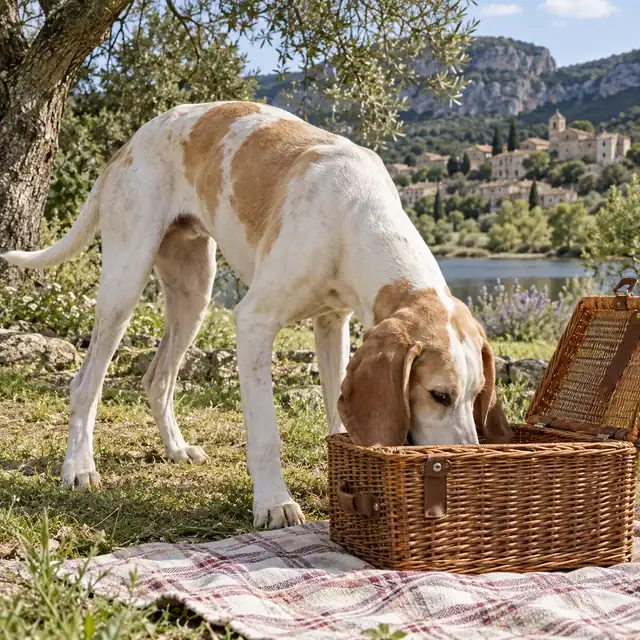
Billy is a large French hound with a short, light-colored coat. Works in a pack and canters easily and quickly. Needs space, a lot of movement and an experienced owner.
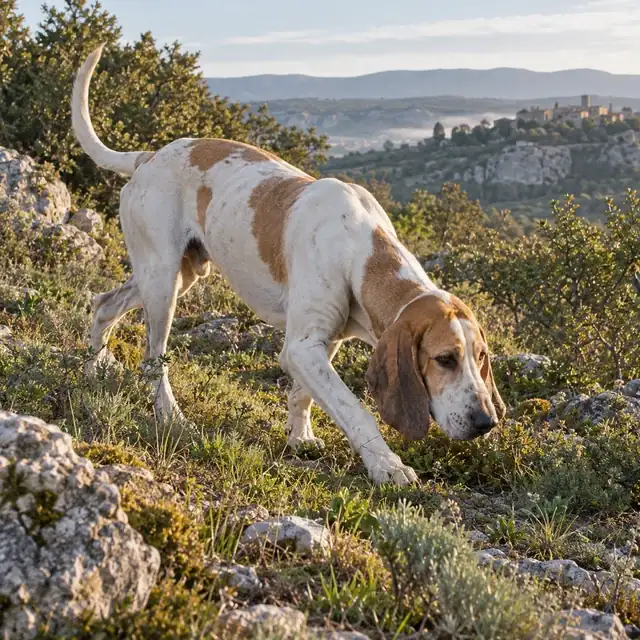
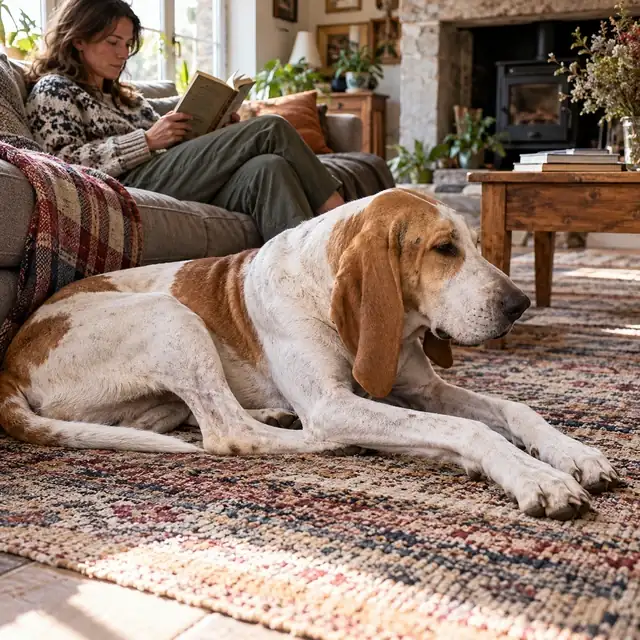
Not suitable for an apartment: This is a working pack hound that needs space, movement and canine company. The voice is loud, and after sensing the smell, the dog follows the trail.
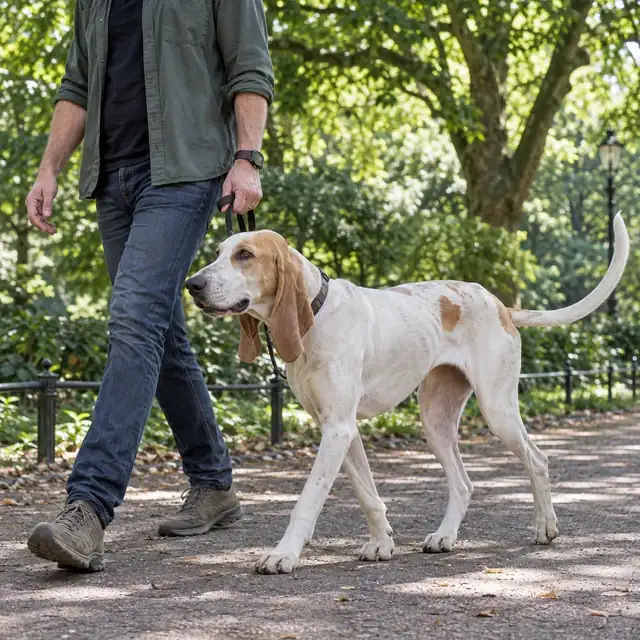
A healthy adult dog needs significant exercise every day: a long run, sniffing work. Free running is possible only in the fenced area. The load of puppies and elderly dogs is adjusted with the veterinarian.
Willing to work, but independent. Olfactory games, valuable treats and short activities work. Calling is practiced on a long leash, and free running is allowed only in a safe area.
The short, slightly stiff coat is combed approximately once a week. After walks, the skin, paws and ears are examined, claws are regularly trimmed and teeth are brushed.
Big and energetic, so an adult monitors the contact, and the child is explained the rules of calm play.
A pack hound, so it usually gets along with other dogs. Small animals can be perceived as prey.
Estimates help compare breeds. For zooaggression, 5/5 means less tendency to aggression towards dogs. The behavior and health of a particular dog depend on many factors.
Average score: the breed works independently, in a pack. Actual behavior depends on socialization.
The average score is given due to the lack of comparative data on the "Billy" breed. The character of an individual dog is determined by socialization and experience.
Average score: The contact of the "Billy" breed with dogs is generally normal, and rodents and small animals can awaken the hunting instinct.
The survival rate of the "Billy" breed in the British cohort is not comparable. The absence of the described risks does not guarantee the absence of hereditary diseases, so the breeder is asked for the results of the parents' examinations.
Average Rating: "Billy" needs weekly brushing and check-ups after every walk.
Breed screening: there are few descriptions of hereditary diseases of the "Billy" breed. Ask the breeder for the written results of the parents' examinations and the current requirements of the club.
Musculoskeletal system: the growth and load of the "Billy" breed should correspond to its age. Lameness, pain, or reluctance to move require a veterinary examination.
A preventive examination includes the eyes, heart and ears. For the "Billy" breed, the frequency of special inspections is determined by the advice of the club and the veterinarian.