Human orientation
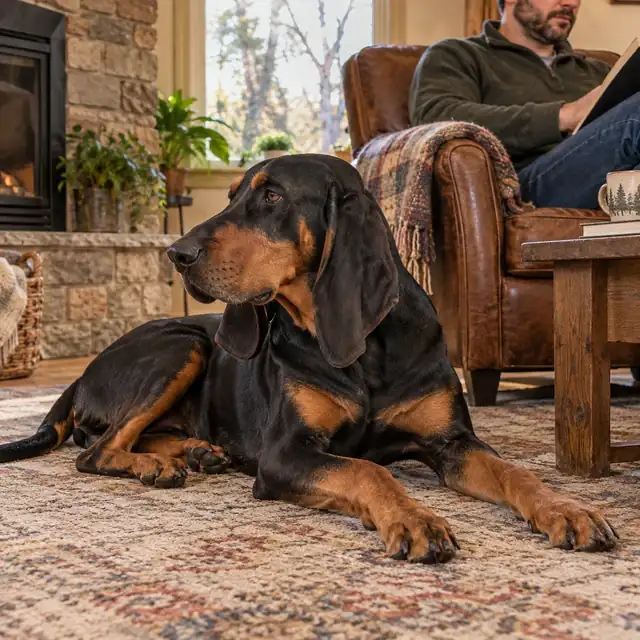
Gentle and sociable, likes to be with his family.
THE PAW CATALOG
Origin: United States of America
An American breed believed to be descended from Talbot Hounds crossed with Bloodhounds and Virginia Foxhounds in the early 18th century. Early settlers called them "settler dogs" and relied on them as family protectors and breadwinners.
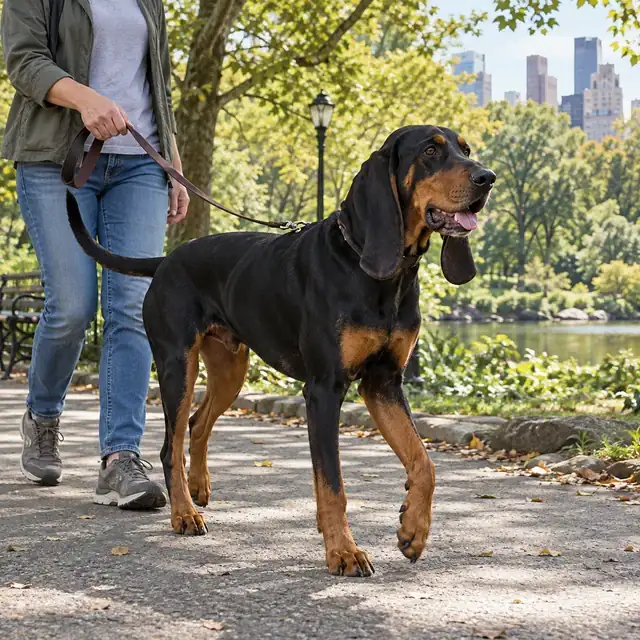
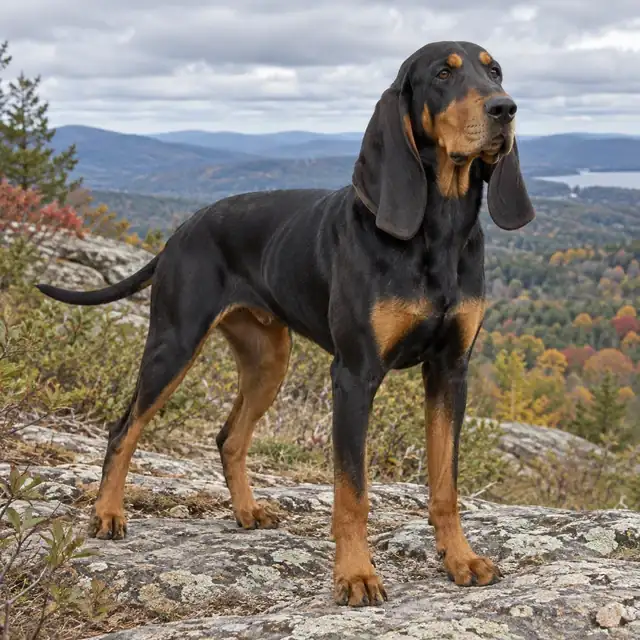
The Black and Tan Coonhound is a large (males 63-69 cm, bitches 58-63 cm) American Hound with a short shiny black coat and tan. Soft in character, sociable and gentle, although some dogs are reserved. Active, needs regular movement and reliable fencing, because he is a hound. A good family dog for active families.

Suitable for active families with a free yard and a reliable high fence. A hound's sense of smell can lead to a trail, so open doors and gates are a risk. One gets bored in a cramped apartment without movement.
High Daily long walks, running in a safe area and sniff work. As a hound, he needs a fence.
Basic obedience is a must. The breed is successful in obedience, agility, exhibitions, hunting and tracking. Recall is trained from an early age, because smells are distracting. Classes are varied, with rewards.
A short, shiny coat is easy: a brush once a week and an occasional bath. Long hanging ears are cleaned regularly. Claws are trimmed.
It is described as a good dog for active families. Children and the dog are under the supervision of an adult, because the size and energy are large.
Accustomed to working in a pack, therefore usually tolerant of dogs. The hunting instinct is aimed at game, so be careful with small animals.
Estimates help compare breeds. For zooaggression, 5/5 means less tendency to aggression towards dogs. The behavior and health of a particular dog depend on many factors.
Gentle and sociable, likes to be with his family.
Eager to learn, but smells easily distract.
In general, it is friendly with dogs, and perceives game as prey.
There is no comparable survival estimate for the breed in the British cohort used. Among the described breed risks: hip dysplasia, cataracts; examination of the parents is confirmed with the veterinarian.
The short coat is easy, but the ears need regular cleaning.
Hip Dysplasia: The breeder is asked to confirm examinations of both parents. The weight is kept normal. Stiffness after rest is not attributed to age without an examination.
Cataract: clouding of the lens; regular examinations by a veterinary ophthalmologist, changes in vision or the appearance of the eyes are not ignored.