Human orientation
Devoted to his family, good-natured, but stubbornly independent.
THE PAW CATALOG
Origin: Norway
An ancient breed that developed from local spitz types along the Norwegian-Swedish border and has been considered separate since about the middle of the 19th century. In the inner valleys of Norway, it was common at the end of the 19th and the beginning of the 20th century, but after 1900, breeding shifted to the gray elkhound. By the mid-1950s, the black elk had almost disappeared until several breeders revived the breed. Today, approximately 90-150 puppies are registered in Norway per year.
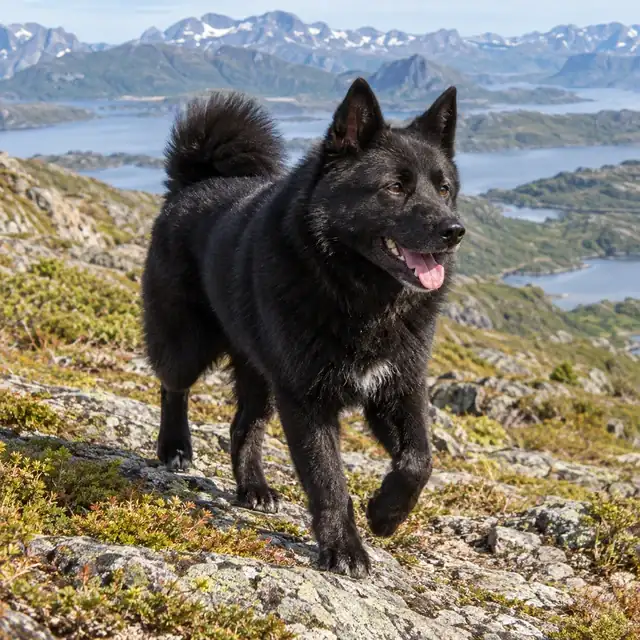
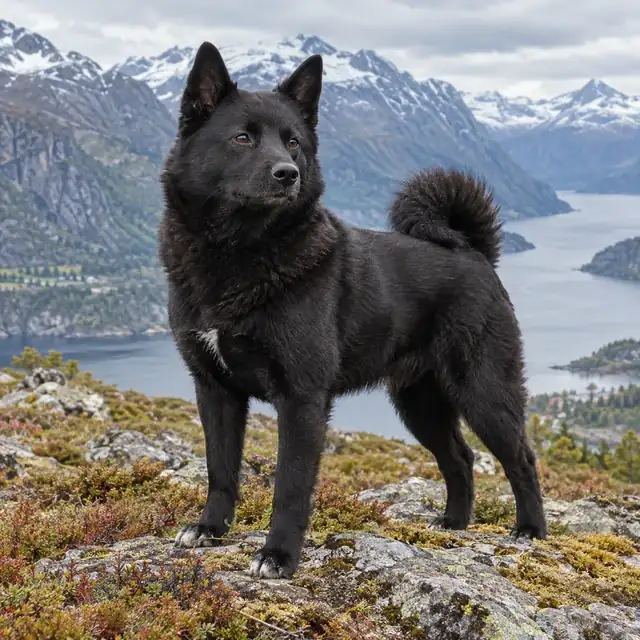
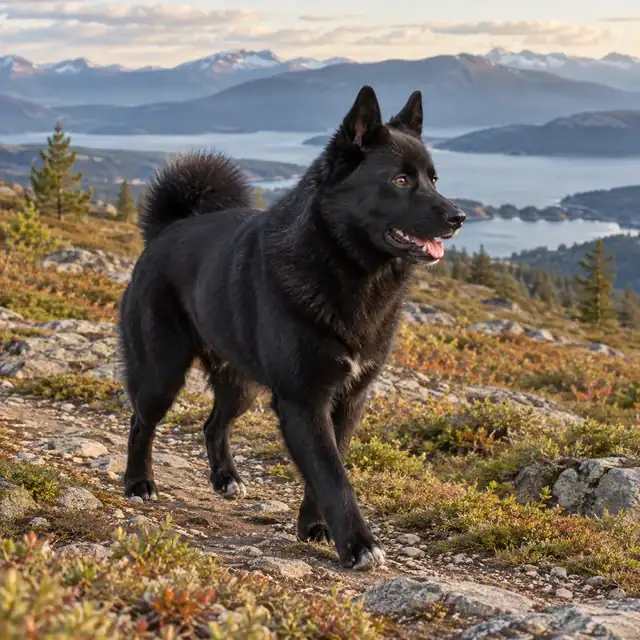
The Black Norwegian Elkhound is the smallest of the elkhounds: males 46-49 cm, bitches 43-46 cm. Square-built, muscular and athletic, with short shiny black fur, erect ears and a tail curled over the back. Fearless, mentally strong, good-natured and devoted to his family, but can be stubborn and independent. Loves movement, learns easily and rarely runs away. Prone to barking.
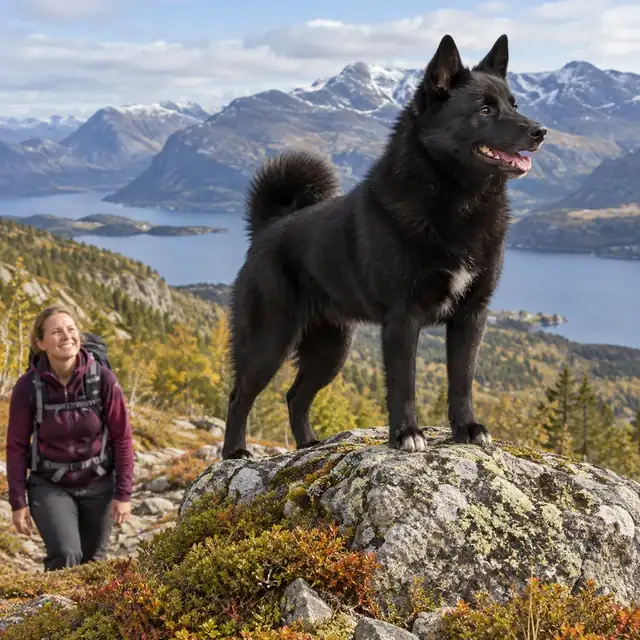
Suitable for active owners who love hiking and have time for daily long walks. He feels best outside the city. Tends to bark, so in an apartment building it can disturb the neighbors.
High Loves movement, long daily walks, hikes, olfactory work. Rarely escapes.
Easy to learn. Regular walks in nature from puppyhood help to raise a well-balanced companion. Can be stubborn and independent, which often depends on training than on breed. Barking is extinguished from an early age.
The short, shiny coat needs brushing once a week, more often during shedding. Ears, teeth and claws are examined regularly. After hiking, they look for ticks.
Good-natured and devoted to the family. Children and dog under adult supervision. Children are taught not to tease the dog and to behave calmly.
The hunting instinct is aimed at game and small animals. It usually gets along with dogs after early socialization. Small animals are not left unattended.
Estimates help compare breeds. For zooaggression, 5/5 means less tendency to aggression towards dogs. The behavior and health of a particular dog depend on many factors.
Devoted to his family, good-natured, but stubbornly independent.
Easy to learn, although independence requires consistency.
The hunting instinct requires control over small animals.
There is no comparable survival estimate for the breed in the British cohort used. The absence of the mentioned risk does not prove the absence of hereditary diseases.
The short, shiny coat is simple, but shedding needs special attention.
Breed screening: there are few descriptions of hereditary diseases of the Black Norwegian Elkhound breed. Ask the breeder for the written results of the parents' examinations and the current requirements of the club.
Musculoskeletal system: the growth and load of the Black Norwegian Elkhound breed is consistent with its age. If lameness or pain occurs, a veterinary examination is required.
Eyes and heart are checked during routine examinations. The schedule of in-depth checks is coordinated with the veterinarian and the breed club. Do not delay new symptoms, such as blurred vision or shortness of breath, until your next appointment.