Human orientation
Moderately high score: the breed seeks the company of people. Actual behavior depends on socialization.
THE PAW CATALOG
Origin: France
The breed developed around the beginning of the 20th century near the mouth of the Somme in France from Picardy spaniels and English setters. English hunters, leaving dogs in Picardy during quarantine, brought the blood of setters. The breed club was founded in 1907, and France recognized it as a separate breed in 1938. The blue color comes from setters.
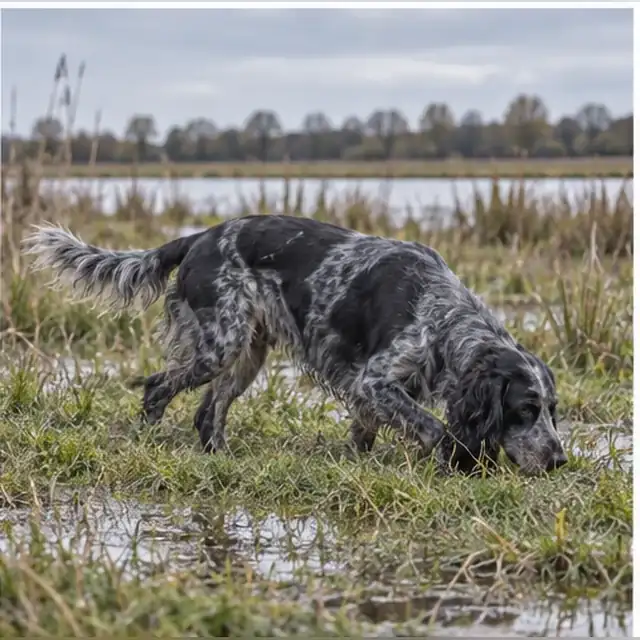
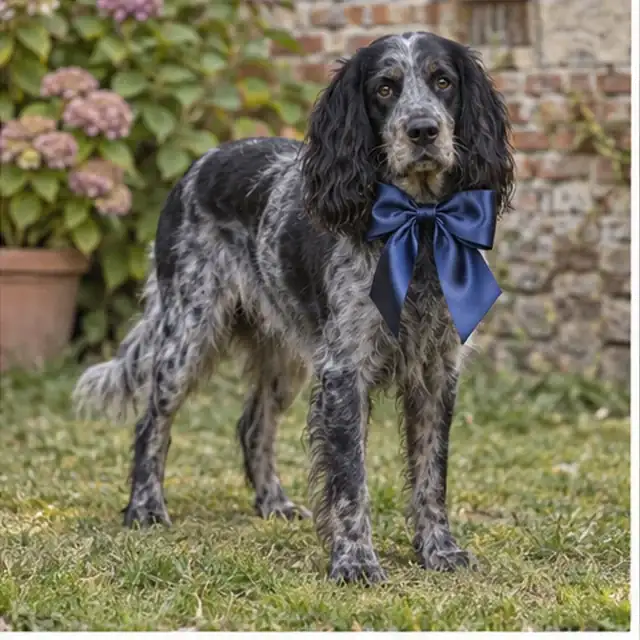
The Blue Picardy Spaniel is a fluffy French spaniel with a mottled grey-black coat. Calm at home, but very hardy in the field. Friendly to people and children, needs a lot of movement and olfactory tasks.

Suitable for active people and hunters who move a lot every day. At home, he is calm, but longs for the company of people. Bored without movement.
A healthy adult dog needs considerable daily exercise: running, sniffing, swimming. Free running is possible only in a safe area. The load of puppies and elderly dogs is adjusted with the veterinarian.
Intelligent, obedient and playful. Positive reinforcement and olfactory tasks work best. Calling is practiced from puppyhood.
The straight or slightly wavy coat with feathers on the ears, paws and tail is combed several times a week. Ears are cleaned and dried, claws are trimmed and teeth are taken care of.
Described as especially good with children. However, an energetic dog can knock down a baby, so an adult monitors the contact.
Usually peaceful with other dogs. The hunting instinct can manifest itself in relation to small game, so acquaintance with cats and birds is carried out gradually.
Estimates help compare breeds. For zooaggression, 5/5 means less tendency to aggression towards dogs. The behavior and health of a particular dog depend on many factors.
Moderately high score: the breed seeks the company of people. Actual behavior depends on socialization.
High Score: The breed is usually quick to learn commands, especially in olfactory tasks.
High score: the breed usually gets along well with other dogs. The attitude towards small animals is assessed separately.
There is no comparable survival estimate for the breed in the British cohort used. Among the described breed risks: hip dysplasia. The examination of the parents is confirmed with the veterinarian.
High score: the coat is combed several times a week, and the rest of the care is simple.
Hip dysplasia is mentioned as a possible risk. Ask the breeder for the results of the evaluation of the parents' hips, and the need for examinations is determined by the veterinarian. Long ears are also prone to inflammation.