Human orientation
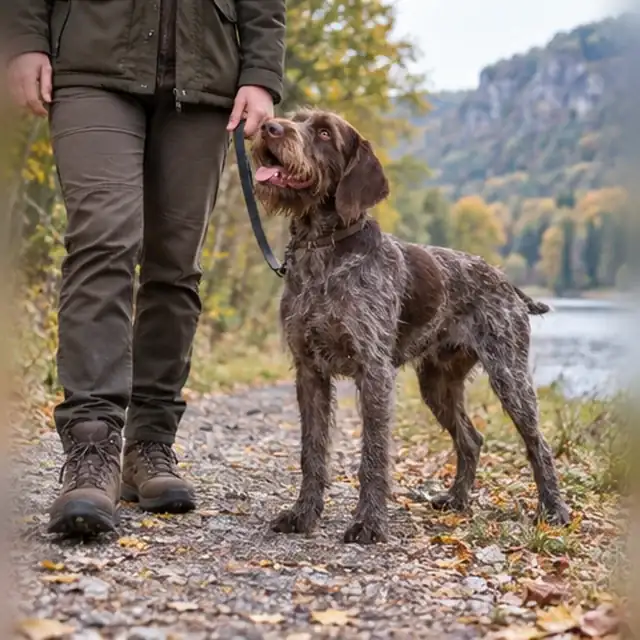
Very loyal to the master and willingly works next to him.
THE PAW CATALOG
Origin: Czech Republic
Czechoslovakian breed. Before the First World War, it was the most common hard-haired dog in the territory of the modern Czech Republic and Slovakia. The war and its aftermath nearly wiped out the breed in the 1920s, when breeders rebuilt it from surviving type dogs. The FCI standard was published in 1963. Currently, the breed ranks second among hunting breeds in the Czech Republic and Slovakia.
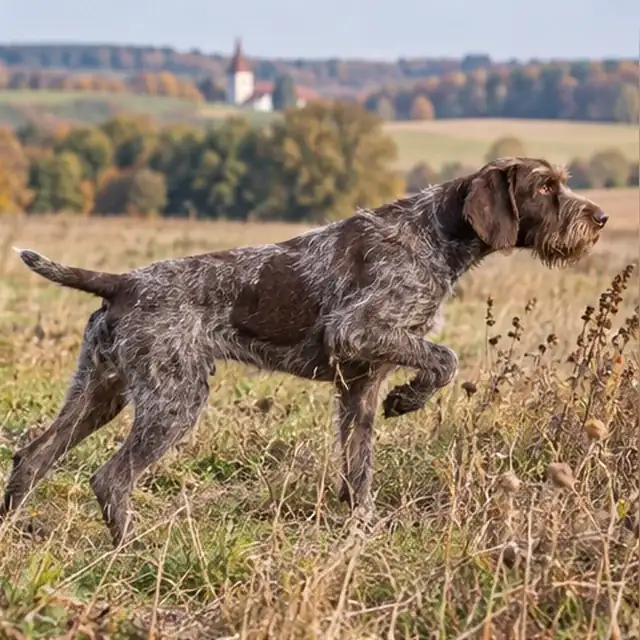
Czech Fousek is a medium-large (males 60-66 cm and 28-34 kg, bitches 58-62 cm and 22-28 kg) hard-coated, brindle with a characteristic beard and eyebrows. Universal hunting dog for field, water and forest. Easy to train, very loyal to the owner. Suitable for hunters or active owners with heavy loads.

Best suited for hunters or owners who are ready for daily long walks and work. Does not like loneliness and boredom. Unhappy in a cramped apartment without movement.
High Daily long walks, running in a safe area, swimming and nose work.
Easy to learn and willing to work with people. Early socialization and basic obedience are a must. The lying instinct is developed by olfactory work and fetching. Rudeness damages trust.
Hard wool needs combing once or twice a week and periodic trimming. The beard is wiped after eating and drinking. Ears, teeth and claws are examined regularly. After walks, they look for ticks and burdock root.
Loyal to the owner and usually gets along well with the family. Due to their size and energy, children and dogs are supervised.
The hunting instinct is aimed at game and rodents. Usually gets along with dogs. Acquaintance with cats and small animals is carried out gradually.
Estimates help compare breeds. For zooaggression, 5/5 means less tendency to aggression towards dogs. The behavior and health of a particular dog depend on many factors.
Very loyal to the master and willingly works next to him.
Easy to learn and loves to work.
Dogs are generally good, and game and rodents are of hunting interest.
There is no comparable survival estimate for the breed in the British cohort used. The absence of the mentioned risk does not prove the absence of hereditary diseases.
Hard wool requires regular combing and trimming.
Breed screening: detailed data on hereditary diseases of the "Czech Fousek" breed are scarce. Ask the breeder for documentary results of examinations of both parents and current recommendations of the club.
Musculoskeletal system: growth, weight and load of the "Czech Fousek" breed should correspond to the age. Pain, lameness, or reluctance to move require a veterinary examination.
During preventive visits, the veterinarian checks the eyes and the heart. How often to do special examinations is suggested by the breed club and the doctor. Do not delay new symptoms, such as blurred vision or shortness of breath, until your next appointment.