Human orientation
Medium-high rating: sensitive, proud and attached to the family. Behavior depends on upbringing.
THE PAW CATALOG
Origin: Russia
It has been a part of Russian culture for centuries: the Russian nobility bred greyhounds to hunt wolves and foxes, and they were given to foreigners as a great honor.
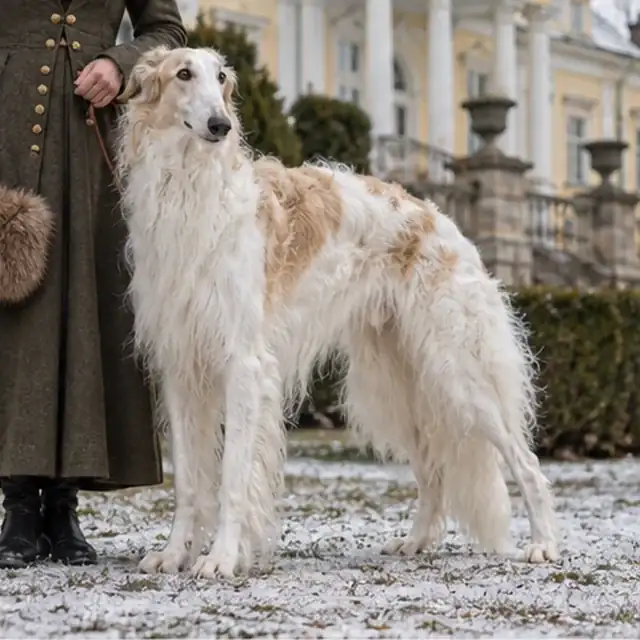
Russian hound (borzoi) is a tall (68-74 cm) elegant hunting dog with long silky hair. Sensitive, alert, reserved and dignified; independent, but attached to the family. Requires running in a safe place and regular grooming.

Suitable for calm owners with a moderate load. A large yard is optional if the dog is regularly walked and can run.
Moderate: a few walks a week and regular opportunities to run in a safe place.
Independent and proud, but a quick learner when interested. Training is soft and short.
The silky, moderately long coat must be combed at least once a week, especially during the summer molt. Claws are trimmed, teeth are cleaned.
Can be a good companion of children with whom he grew up, but does not tolerate rough games of children. Always under supervision.
Usually gets along with other dogs. Small running animals can cause a chase.
Estimates help compare breeds. For zooaggression, 5/5 means less tendency to aggression towards dogs. The behavior and health of a particular dog depend on many factors.
Medium-high rating: sensitive, proud and attached to the family. Behavior depends on upbringing.
Average score: independent.
Average score: peaceful with dogs, small animals - prey.
In the British cohort, the median lifespan of the breed was 12.0 years; small sample: 43 deaths. Among the described breed risks: dysplasia of the hip joints, progressive retinal atrophy, bloat or twisting of the stomach; examination of the parents is confirmed with the veterinarian.
Average score: silky coat needs weekly care.
Dysplasia of the hip joints: the results of X-ray evaluations of the parents are studied before the purchase. The weight is kept normal. If the dog is limping or reluctant to get up, it is examined by a doctor.
Progressive retinal atrophy: an inherited disease that gradually leads to blindness. Ask the breeder for the results of genetic tests and ophthalmological examinations of the parents.
Bloating or stomach upset: the portion is divided into several feedings, and the dog is allowed to rest after eating. An enlarged stomach and futile urges to vomit require urgent veterinary care.