Human orientation
High Score: Boston Terriers are usually very attached to their people, although each individual's behavior depends on socialization and experience.
THE PAW CATALOG
Origin: United States of America
The breed was created at the end of the 19th century in Boston from an English bulldog and a white English terrier. It is one of the few breeds that originated in the USA and is called the "American Gentleman".
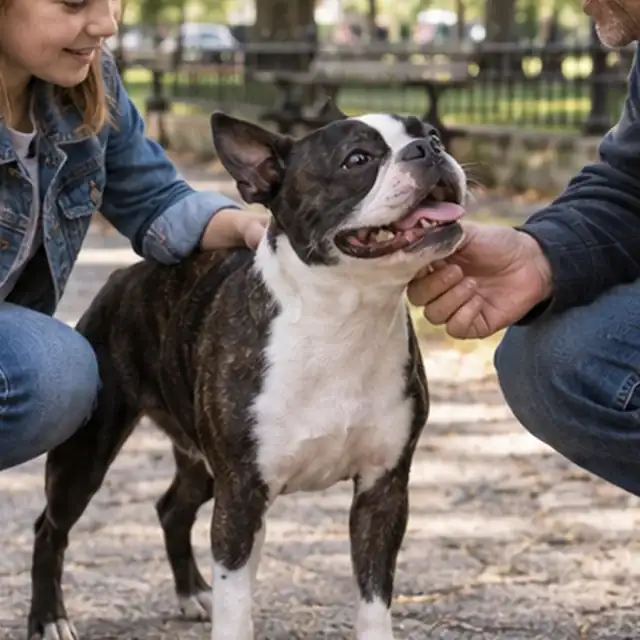
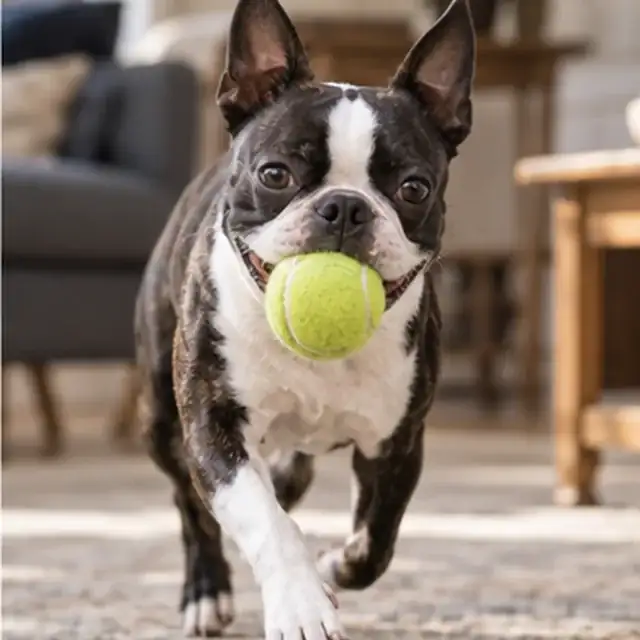
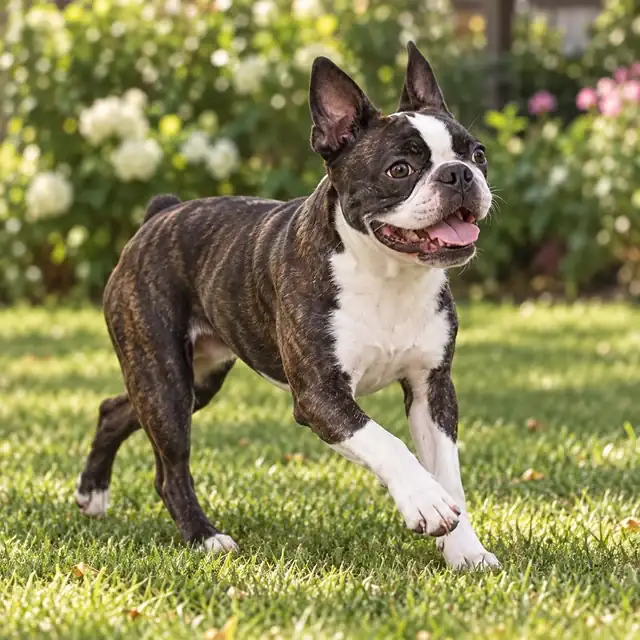
The Boston terrier is a small, compact dog with a flat face and large eyes, one of the few breeds of American origin. Cheerful, friendly and very attached to people. Needs protection from heat, eye care and calm loads.

Suitable for living in an apartment and in a family where a lot of attention is paid to the dog. Due to its short muzzle, it quickly overheats, snores and can breathe hard, so heat and heavy loads are dangerous.
Moderate walks and games in cool hours are enough for a healthy adult dog. Intense exercise, especially in the heat, is dangerous. The load of puppies and elderly dogs is adjusted with the veterinarian.
Intelligent, willing to please, but sometimes stubborn. Short sessions with treats and gentle correction work. Training should not be exhausting: due to the structure of the respiratory tract, the dog gets tired quickly.
The short, smooth coat is combed approximately once a week. The eyes are examined and wiped, the folds on the face are cleaned and dried, the ears and teeth are monitored. Claws are trimmed regularly.
Usually gentle and fun with children. Due to its small size, an adult monitors the contact, and the child is explained the rules of careful play.
Usually peaceful with dogs and pets. Acquaintances are carried out gradually, and games are stopped in the heat.
Estimates help compare breeds. For zooaggression, 5/5 means less tendency to aggression towards dogs. The behavior and health of a particular dog depend on many factors.
High Score: Boston Terriers are usually very attached to their people, although each individual's behavior depends on socialization and experience.
The Boston Terrier learns well with consistent training. Short, non-forced reward sessions work best.
Medium-high score: contact with other dogs and animals is usually normal, and early socialization is important.
Low score: In a British cohort, the breed's median lifespan was 11.8 years. Among the described breed risks: dislocation of the patella, cataracts, glaucoma, hearing impairment, eye diseases. The examination of the parents is confirmed with the veterinarian.
Medium-high rating: The coat is combed once a week, but the eyes and folds need regular attention.
Patella dislocation is mentioned as a possible risk. Signs: periodic limping or "jumping" on the hind leg. Diagnosis and treatment are prescribed by a veterinarian.
Cataracts are mentioned as a possible risk. Eye examinations are included in the routine examinations, and the results of the parents' test should be requested from the breeder.
Glaucoma - increased pressure in the eye. Symptoms: red eyes, pain, pupil changes size. This is an emergency, so see your vet right away.
Hearing impairment is mentioned as a possible risk. A hearing test in puppies helps to detect the problem in time.
Eye diseases in general are common in flat-faced breeds due to protruding eyes: corneal ulcers and trauma. Any redness or squinting should be checked by a veterinarian.