Human orientation
High score: Loyal and protective. Behavior depends on upbringing.
THE PAW CATALOG
Origin: Belgium and France
Bouvier brought out the monks in Flanders. They are believed to be descended from Irish wolfhounds, deerhounds and local farm dogs. He herded and guarded livestock, drove farm carts, and served as a service dog during both world wars.
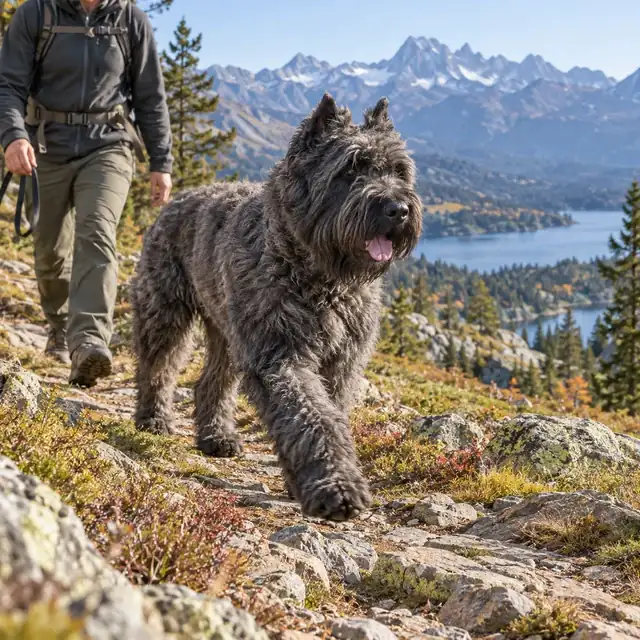
The Flemish Bouvier is a large (59-68 cm, 27-40 kg) watchdog and herding dog with a coarse two-layer coat of gray, brindle or black shade. Fearless, confident, strong-willed; quick learner Not suitable for beginners. Requires regular care and an experienced owner.

Suitable for experienced owners with space. Can be a loyal protector of the family, but not suitable for beginners or timid owners.
High: walks, tasks and mental effort every day.
He learns quickly and lends himself well to upbringing, but he is strong-willed and sometimes stubborn. Early socialization, consistency and a confident owner are required.
Thick wool needs grooming at least several times a week. Getting used to combing begins from an early age. Ears are examined, claws are trimmed.
He can be a loyal and protective member of the family, but he is never left unattended with children.
Usually gets along well with other dogs if raised with them. The shepherd's instinct is preserved.
Estimates help compare breeds. For zooaggression, 5/5 means less tendency to aggression towards dogs. The behavior and health of a particular dog depend on many factors.
High score: Loyal and protective. Behavior depends on upbringing.
High score: quick learner, but strong-willed.
Average score: depends on socialization.
In the British cohort, the median lifespan of the breed was 11.3 years; small sample: 79 deaths. Among the described breed risks: dysplasia of the hip joints, dysplasia of the elbow joints, dysfunction of the thyroid gland; examination of the parents is confirmed with the veterinarian.
Low rating: thick wool needs regular grooming.
Hip Dysplasia: Parents look at joint health before choosing a puppy. The puppy is not forced to make sharp jumps and long runs while the bones are growing. If the dog is limping or reluctant to get up, it is examined by a doctor.
Dysplasia of the elbow joints: the breeder is asked to confirm the examinations of both parents. The weight is kept normal. Lameness is shown to the veterinarian.
Dysfunction of the thyroid gland: hormones are checked for inactivity, weight gain, and skin problems.
Epilepsy is manifested by convulsive attacks, which must be shown to the veterinarian. The doctor selects a scheme of observation and, if necessary, treatment.
Cataract: clouding of the lens; regular examinations by a veterinary ophthalmologist, changes in vision or the appearance of the eyes are not ignored.