Human orientation
Loves people, seeks close contact with the owner.
THE PAW CATALOG
Origin: Italy
An ancient hunting breed, the origin of which is not completely clear; it is believed to be descended from the Egyptian Hound and the Molossian or Persian Mastiff. The regional types of Piedmont and Lombardy were later combined into a more uniform breed. It was originally used to drive birds into nets, and the style of work changed along with hunting and weapons.
Italian breed - hunting dog and retriever of ancient origin: males 58-67 cm, bitches 55-62 cm, weight 25-40 kg. Very eager to please, loving, close to the owner, friendly to strangers. Many report a cause for concern by barking or growling. An active breed that requires a large area and mental load.
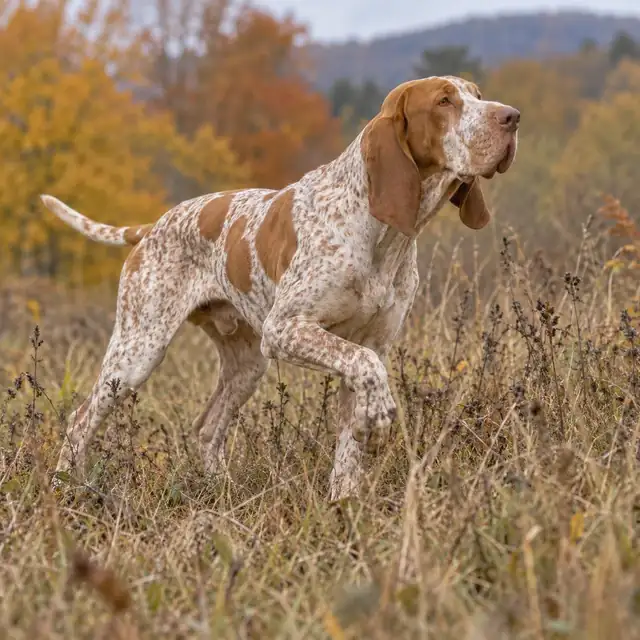
Suitable for active owners with a large area and time for daily activities. Needs more mental than physical stimulation. Does not like loneliness.
High Constant movement, large area. Mental load is more important for him than physical.
Obedience is mandatory. Sharp remarks do not work. The more they demand from the defect, the better it works. Early socialization helps reduce hypervigilance.
Short hair needs minimal care, infrequent bathing. Long ears are cleaned regularly to reduce the risk of otitis. Claws are trimmed, teeth are examined.
Loves people, therefore suitable for an active family. Children and the dog are always supervised by an adult.
The hunting instinct is aimed at birds. It usually gets along with dogs after early socialization. Acquaintance with small animals is carried out carefully.
Estimates help compare breeds. For zooaggression, 5/5 means less tendency to aggression towards dogs. The behavior and health of a particular dog depend on many factors.
Loves people, seeks close contact with the owner.
Eager to learn, the more tasks, the better.
In general, the friendly, hunting instinct needs attention.
In the British cohort, the median lifespan of the breed was 13.8 years; small sample: 22 deaths. Among the described breed risks: dysplasia of the elbow joints, cataracts, eyelid twitching; examination of the parents is confirmed with the veterinarian.
Short hair is simple, and long ears need regular cleaning.
Dysplasia of the elbow joints: the results of examinations of both parents are requested. The puppy is not forced to make sharp jumps and long runs while the bones are growing. Lameness is shown to the veterinarian.
Cataract: clouding of the lens; regular examinations by a veterinary ophthalmologist, changes in vision or the appearance of the eyes are not ignored.
Eyelid rolling (entropion): The eyelids roll inward and irritate the cornea. Tearing, squinting or redness of the eye requires a veterinary examination.
Inverted eyelids (ectropion): the lower eyelid hangs down, the eye is prone to irritation. The eyes are examined regularly, for signs of inflammation, consult a veterinarian.