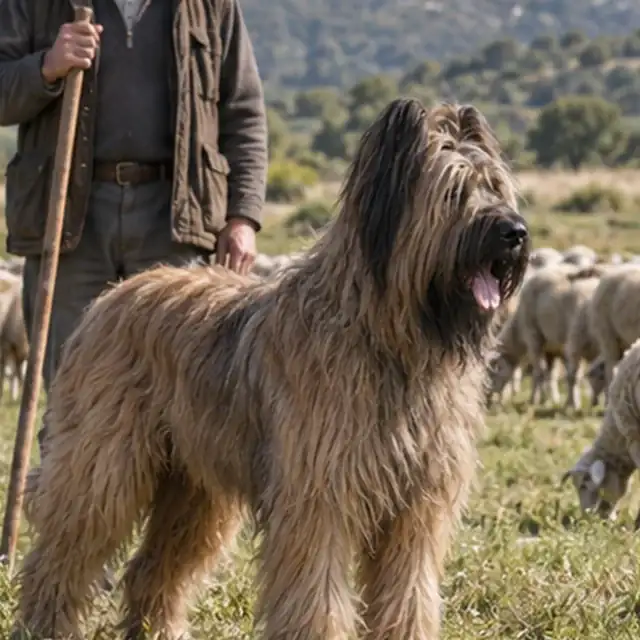
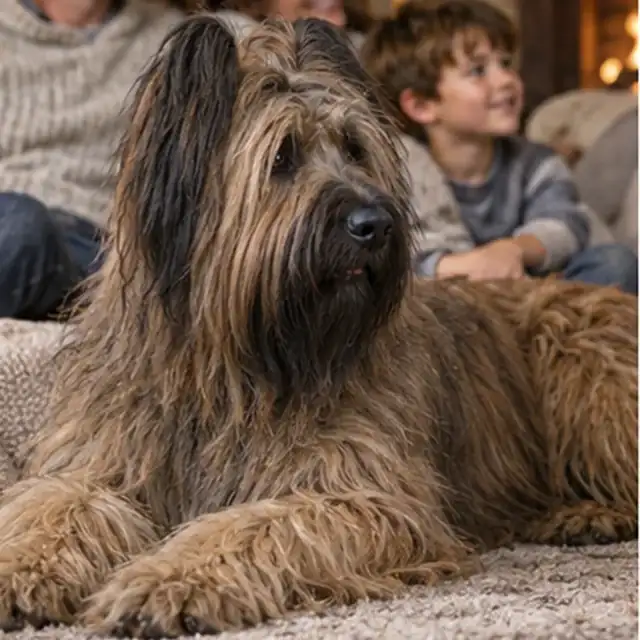
Human orientation
Average score: the breed is devoted to the family, but reserved to outsiders. Actual behavior depends on socialization.
THE PAW CATALOG
Origin: France
The breed originates from France and is named after the Brie region. Briars have been seen on French tapestries since the 8th century. Thomas Jefferson brought a few to Monticello, and the French army used them in both world wars. The AKC recognized the breed in 1928.
Briar is a large French shepherd dog with long wavy hair and a beard. Loyal, protective and independent, reserved towards strangers. Needs daily grooming, movement and early socialization.
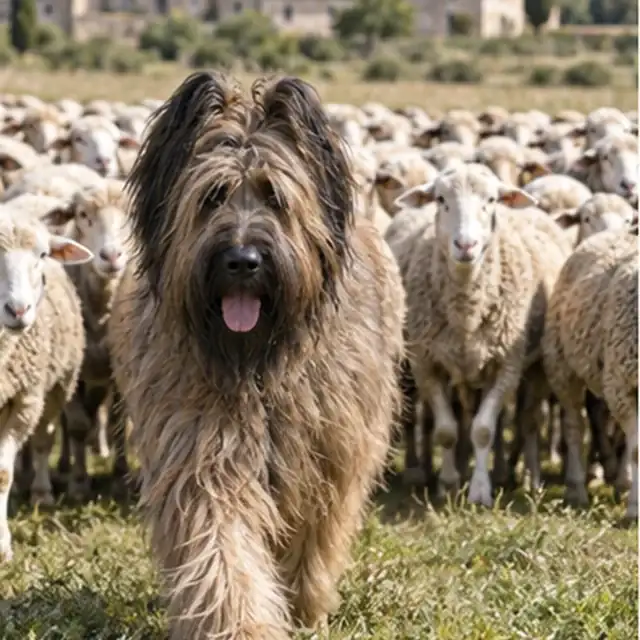
Suitable for people who give the dog movement and communication. Calm at home after stress. The guard character requires early socialization, and it does not always get along with other pets.
A healthy adult dog needs regular exercise: running, hiking, fetching. After a walk, it is calm at home. The load of puppies and elderly dogs is adjusted with the veterinarian.
Smart, but stubborn. Consistency, positive reinforcement and early socialization work. Rough methods are not suitable.
Long wavy hair is combed about four times a week, otherwise tangles form. Frequent bathing damages the coat. A haircut is optional. The beard and muzzle are cleaned, the ears are examined, the claws are trimmed, and the teeth are brushed.
Family-oriented and protective, usually gets along well with children. Size and energy require adult supervision, and the herding instinct can manifest itself in "picking up" children.
It does not always get along with other animals, so early socialization and careful introductions are necessary.
Estimates help compare breeds. For zooaggression, 5/5 means less tendency to aggression towards dogs. The behavior and health of a particular dog depend on many factors.
Average score: the breed is devoted to the family, but reserved to outsiders. Actual behavior depends on socialization.
Neutral assessment: there is no sufficient comparative data on the "Briar" breed. The behavior of a particular dog depends on socialization and experience.
Average score: contact with other animals needs assessment and early socialization.
In the British cohort, the median lifespan of the breed was 12.6 years. Among the described breed risks: hip dysplasia, thyroid disorders, cataracts, kidney disease. The examination of the parents is confirmed with the veterinarian.
Low rating: Long, wavy coat needs frequent brushing.
Hip dysplasia is mentioned as a possible risk. According to estimates, it is found in a significant part of dogs of the breed. The results of the parents' assessment should be asked from the breeder.
Dysfunction of the thyroid gland (hypothyroidism) is mentioned as a possible risk. Symptoms: weight gain, lethargy, dry skin. Treated with hormonal supplements.
Cataracts and other eye diseases, including night blindness and corneal opacities, are mentioned as possible risks. Eye examinations are included in routine examinations. A deep chest also makes a dog prone to colic.
Kidney disease is mentioned in the breed profile as a possible risk. Preventive examination and blood tests help detect changes in time.