Human orientation
Average score: the breed is attached to the family, but independent in the field. Actual behavior depends on socialization.
THE PAW CATALOG
Origin: France
The breed was bred in the XIX century in the province of Brittany in France as a hunting dog. The word "spaniel" was removed from the name by the AKC in 1982, although it is still commonly used.
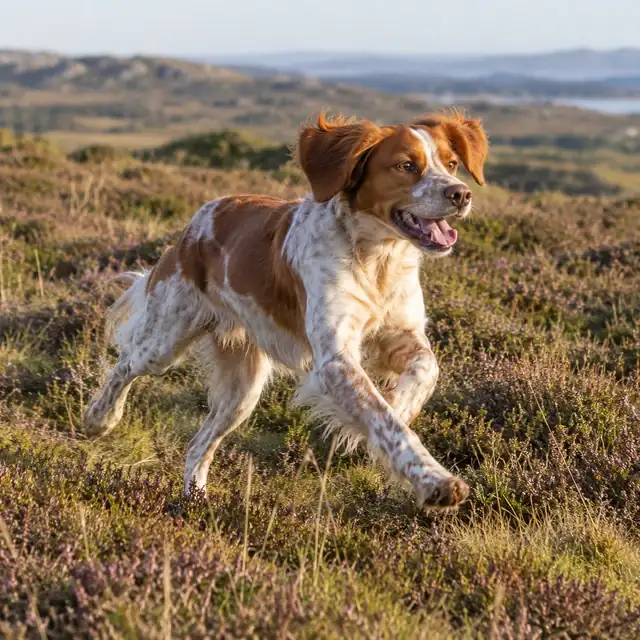
The Breton Español is a medium-sized, very energetic hunting dog from French Brittany. Friendly, sensitive and willing to learn, has a strong hunting instinct. Needs daily active exercises and nose work.

Suitable for active people and hunters who move a lot every day. Loneliness is hard to bear and can cause anxiety. His hunting instinct makes him chase birds and small animals, so he needs a fence or a leash outside.
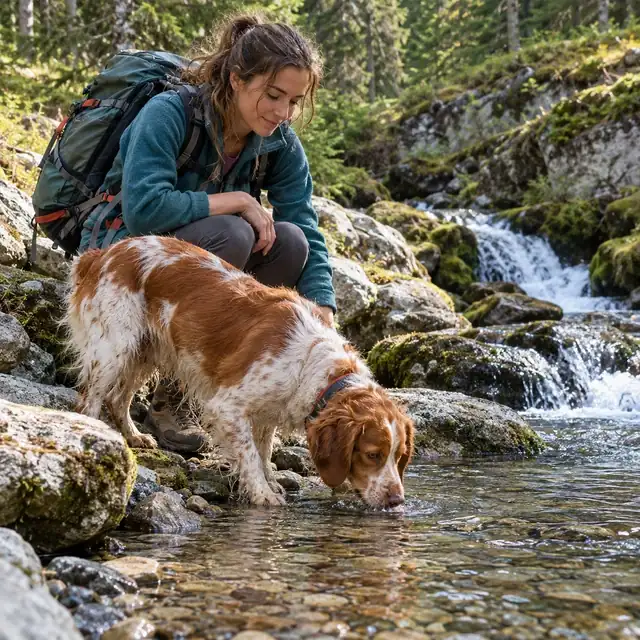
A healthy adult dog needs intensive exercise every day: fetching, running, hiking, agility, as well as mental tasks. The load of puppies and elderly dogs is adjusted with the veterinarian.
Sensitive and willing to please. Short, frequent classes on positive reinforcement work. Early socialization helps maintain confidence, and the call is practiced from puppyhood.
The wool is combed weekly with a soft brush, more often during the molting season. They bathe as needed, after walks they inspect for ticks and burdock root. Hanging ears are cleaned after bathing and swimming.
Usually gets along well with children. Very energetic, so an adult monitors the contact, and the rules of the game are explained to the child.
Usually dog friendly. The hunting instinct can manifest itself in relation to birds and rodents, so introductions are carried out gradually.
Estimates help compare breeds. For zooaggression, 5/5 means less tendency to aggression towards dogs. The behavior and health of a particular dog depend on many factors.
Average score: the breed is attached to the family, but independent in the field. Actual behavior depends on socialization.
High score: "Breton Español" easily learns new things, and various exercises help her not get bored.
Contact with other dogs is usually good. The attitude towards small animals is evaluated separately, and early socialization is important.
In the British cohort, the median lifespan of the breed was 11.1 years. Among the described breed risks: hip dysplasia, eye diseases. The examination of the parents is confirmed with the veterinarian.
Low score: coat needs regular brushing, and active walks require skin and ear checks.
Hip dysplasia is mentioned as a possible risk. Signs: weakness of hind legs, reluctance to move. The results of the parents' assessment should be asked from the breeder. Epilepsy and hypothyroidism are described among other conditions.
Eye diseases, particularly cataracts, are mentioned as a possible risk. Symptoms: blurred vision. Eye examinations are included in routine examinations. Hanging ears are also prone to infections.