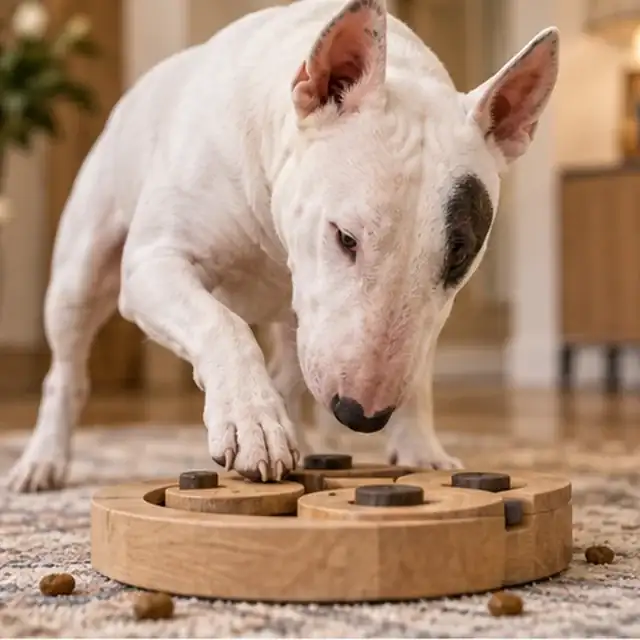
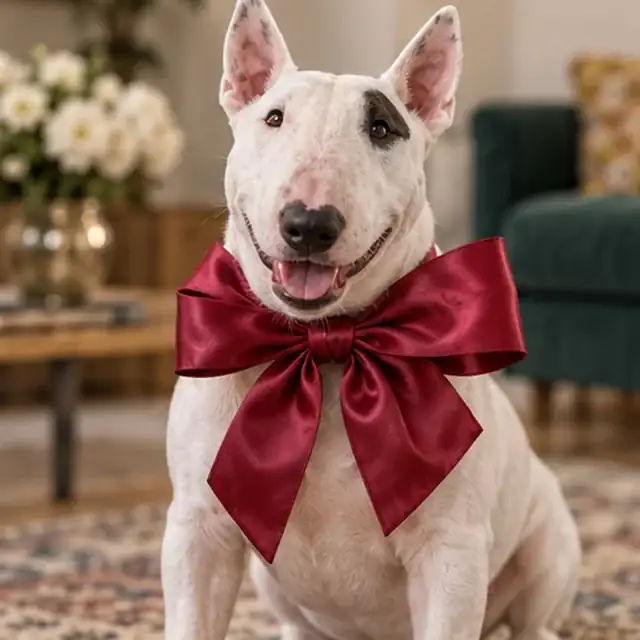
Human orientation
High score: The breed is usually willing to interact with the family. Actual behavior depends on socialization.
THE PAW CATALOG
Origin: Great Britain
Bull terriers were bred in England in the 19th century from crossing bulldogs with terriers used in dog fights. Later, the blood of Spanish pointers was added, and the breed became the companion of English gentlemen, receiving the nickname "white cavalier". The AKC recognized the breed in 1885. In some countries, there are restrictions on keeping such dogs, so you should find out the local rules in advance.
The bull terrier is a muscular terrier with a characteristic egg-shaped head, humorous and stubborn. Very attached to people, but can jealously guard food and toys. Requires an experienced owner, early socialization and daily activity.
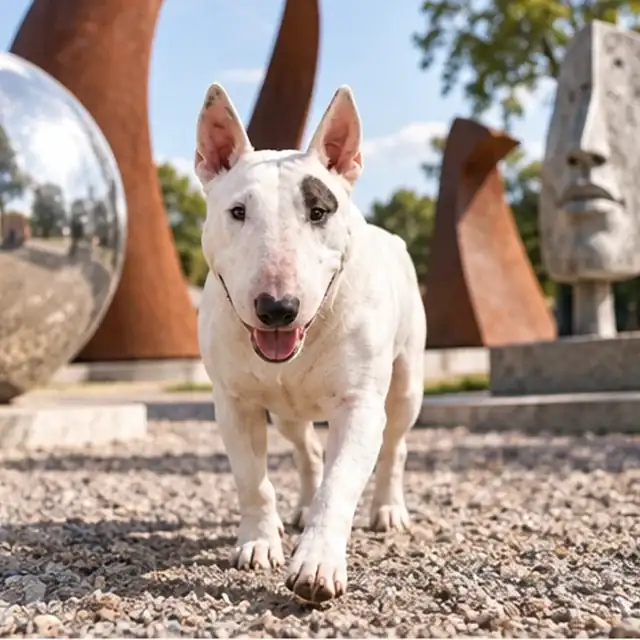
It is suitable for people with experience who work with a dog for a long time every day. The Bull Terrier is funny but stubborn and can be a problem with other dogs. Without activities, one gets bored and destroys things.
A healthy adult dog needs one to two hours of intense activity and mental tasks every day. Without it, it is boring and destructive. The load of puppies and elderly dogs is adjusted with the veterinarian.
Persistent and stubborn. Training is mandatory and should be consistent, positive reinforcement, with early socialization. Work is also needed on the protection of resources - food and toys.
Short hair is combed once or twice a week. They are bathed up to once every three months, their ears are cleaned once every one to two weeks, their claws are trimmed approximately every month. White skin is prone to irritation and sunburn.
Gets along better with older children. An adult monitors the contact, and the rules are explained to the child: do not take away food or toys.
Low Compatibility: The breed can be conflicted with other dogs, so early socialization, careful introductions and supervision are required.
Estimates help compare breeds. For zooaggression, 5/5 means less tendency to aggression towards dogs. The behavior and health of a particular dog depend on many factors.
High score: The breed is usually willing to interact with the family. Actual behavior depends on socialization.
The average score is given due to the lack of comparative data on the Bull Terrier breed. The character of an individual dog is determined by socialization and experience.
Low score: getting to know other dogs requires special care and early socialization.
In the British cohort, the median lifespan of the breed was 12.0 years. The absence of the mentioned risk does not prove the absence of hereditary diseases, and screening of parents (hearing, kidneys, heart) is important.
Medium-high rating: The coat is brushed once or twice a week, but the skin and compulsive habits need attention.
Breed Screening: Congenital deafness (especially in white dogs), hereditary nephritis, heart disease, and dislocation of the patella are described for bull terriers. Ask the breeder for the results of the BAER hearing test, urinalysis and heart examination of the parents.
Musculoskeletal system: dislocation of the patella is manifested by periodic limping or "jumping". Growth and exercise should be appropriate for age, and pain should be examined by a veterinarian.
A preventive examination includes evaluation of the eyes, heart and skin (especially in white dogs). Obsessive states, such as tail wagging, are also described in the breed: these should be discussed with a veterinarian or behavioral specialist.