Human orientation
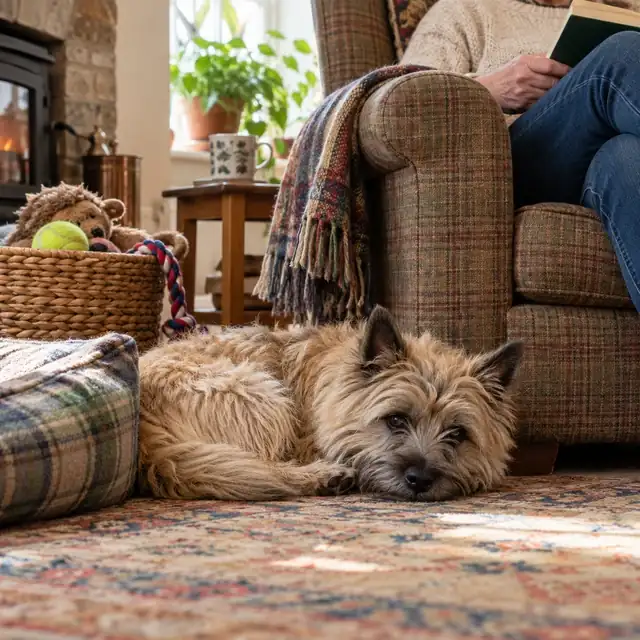
High Score: The Cairn Terrier is sociable and family loving. Behavior depends on upbringing.
THE PAW CATALOG
Origin: Great Britain
One of the original breeds of the Highlands and Western Isles of Scotland, bred as a working terrier to fight rodents. The Kennel Club approved the name in 1910. Supporters later created a breed club to prevent the old working mountain terrier from becoming an indoor dog.
The Cairn Terrier is a small Scottish terrier (28-31 cm, 6-7.5 kg) with a shaggy water-repellent coat. Fearless, cheerful and confident, but not aggressive. Needs daily walks, reliable fencing and trimming twice a year.

Suitable for apartment and house, if he walks and plays every day. Willingly digs and looks for prey, so the fence and gates must be reliable. If it lives outside, it needs shelter, water and interesting toys.
Agile and strong: long walks and games in the yard, as well as obedience and agility. It is released without a leash only when the recall is reliable.
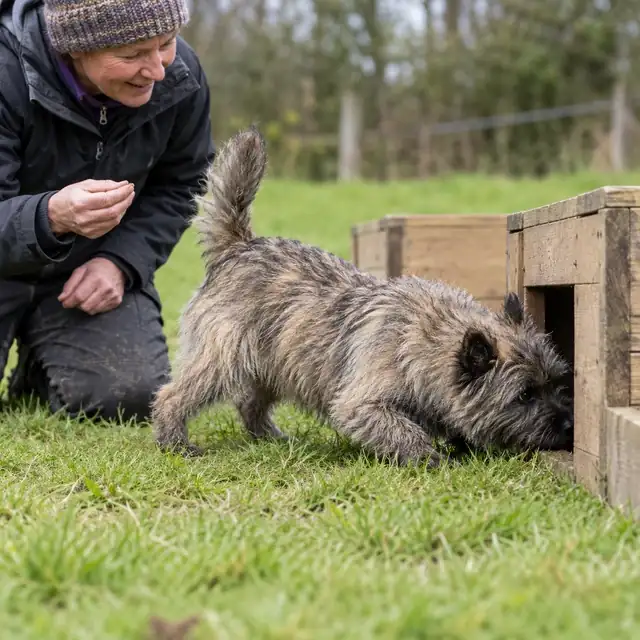
Brave and interesting, he learns quickly, but he gets bored of monotony. Obedience, agility and olfactory games are useful. Early socialization helps build confidence.
The coat is brushed weekly with a comb, and the top layer is plucked by hand in early summer and late fall. Claws are trimmed, teeth and ears are inspected.
Gets along well with people of all ages and families, but with small children and animals remains under adult supervision.
The hunting instinct is aimed at rodents and small animals. Usually sociable with dogs, but confident and can start arguments.
Estimates help compare breeds. For zooaggression, 5/5 means less tendency to aggression towards dogs. The behavior and health of a particular dog depend on many factors.
High Score: The Cairn Terrier is sociable and family loving. Behavior depends on upbringing.
Average score: learns quickly, but gets bored by monotony.
Average score: generally normal with dogs, but hunting instinct for small animals needs control.
In the British cohort, the median lifespan of the breed was 14.0 years. The absence of the mentioned risk does not prove the absence of hereditary diseases.
High rating: care is limited to weekly combing and twice-yearly plucking.
Pedigree Screening: There is little reliable data on hereditary diseases in the Cairn Terrier, so test results of both parents should be requested in writing.
Musculoskeletal system: the growth, weight and load of the Cairn Terrier breed should correspond to its age. Pain, lameness, or reluctance to move require a veterinary examination.
A preventive examination of the Cairn Terrier breed includes an evaluation of the eyes, heart and ears. The frequency of special inspections is determined by the recommendations of the club and the veterinarian.