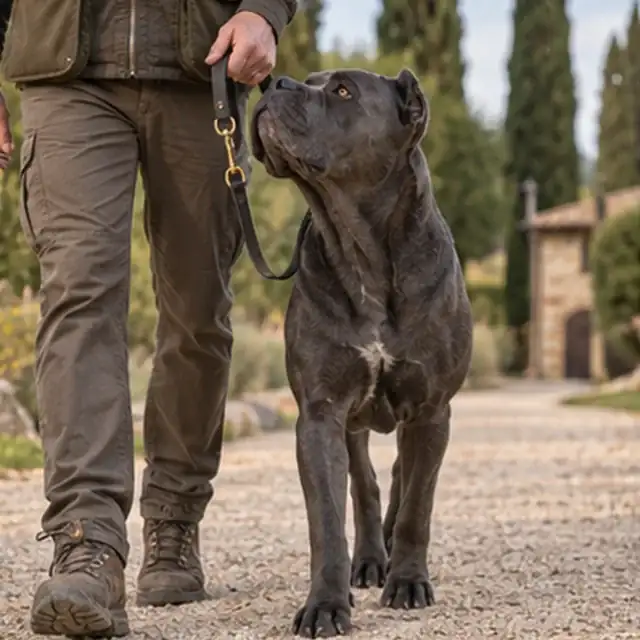
Human orientation
High score: Cane Corso is loyal to the family and willing to cooperate. Behavior depends on upbringing.
THE PAW CATALOG
Origin: Italy
The breed was originally bred as Roman fighting dogs, then used to guard farms in southern Italy. As the farms declined, the herd declined, and in the late 1970s, enthusiasts began a restoration program.
Cane Corso is a powerful Italian mastiff: males 62-70 cm and 45-50 kg, females 58-66 cm and 40-45 kg. Loyal, balanced, agile, bred to protect property, family and livestock. It needs an experienced owner, persistent training from a puppy age and a reliable fence.
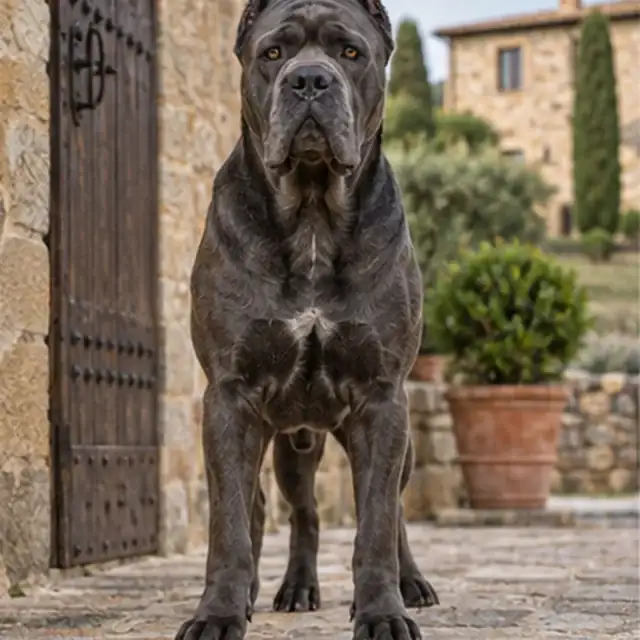
Not recommended for beginners and timid owners. You need a strong fence, constant education and socialization from an early age, and children always come into contact with him under supervision. Energetic, needs a lot of movement.
An energetic dog that needs a lot of movement: daily walks, running, work. Without it, behavioral problems appear. The yard should be well fenced.
Eager to learn and eager to please, but needs a firm, calm leader. Consistency and early socialization are a must. Forced parenting harms relationships.
Minimal: the coat is combed once a week, bathed as needed. Claws are trimmed, ears and teeth are examined, and the big dog is weighed regularly.
Devoted to the family, but the size, strength and protective character require constant supervision of contact with children. They do not leave other people's children alone with him.
Bred to guard the territory, so unfamiliar dogs and other animals can cause a reaction. Early socialization and guided introductions are a must.
Estimates help compare breeds. For zooaggression, 5/5 means less tendency to aggression towards dogs. The behavior and health of a particular dog depend on many factors.
High score: Cane Corso is loyal to the family and willing to cooperate. Behavior depends on upbringing.
High score: seeks to please, but needs a firm, consistent leader.
Average score: the protective instinct can be manifested in relation to unfamiliar animals.
In the British cohort, the median lifespan of the breed was 8.1 years. Among the described birth risks: dysplasia of the hip joints, epilepsy, bloating or stomach twist; examination of the parents is confirmed with the veterinarian.
High rating: Short coat brushed once a week, but size requires weight control.
Hip dysplasia is possible in large breeds. They ask for the results of the parents' examinations, and the weight is kept within the norm.
Epilepsy is mentioned among the risks. Ask the breeder about cases of convulsions in the line, and at the first attacks contact the veterinarian.
Bloating or twisting of the stomach is a life-threatening condition. They feed in small portions, avoid loads before and after meals, and immediately go to the veterinarian at the first signs.