Human orientation
High score: a gentleman is very attached to his family and needs constant company. Behavior depends on socialization.
THE PAW CATALOG
Origin: Great Britain
It comes from small dachshund spaniels of the 16th-18th centuries and received a royal name during the time of the Stuarts. The breed club was created in 1928, and the British Kennel Club recognized it as a separate breed in 1946.
The Cavalier King Charles Spaniel is a small gentle spaniel (5.4-8.2 kg) with a long silky coat and expressive eyes. Four colors: Blenheim, tan black, tricolor and ruby. Gentle, cheerful and very attached to the family. Needs company, moderate activity and close monitoring of heart and neurological health.
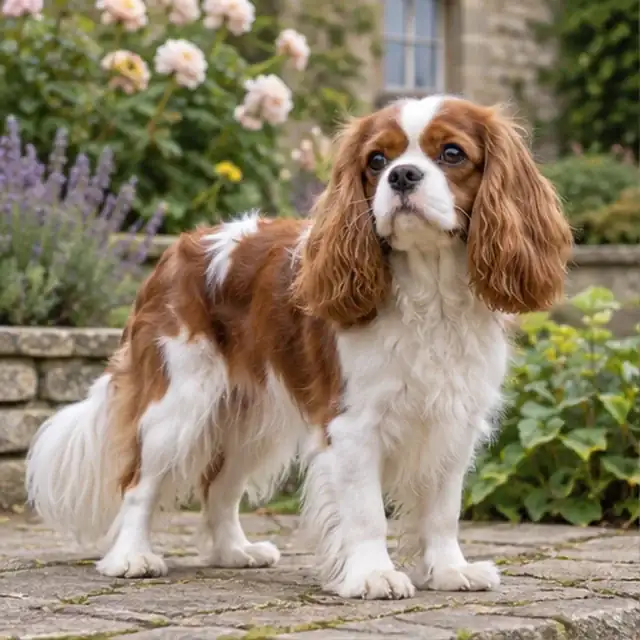
Not suitable for life in a booth or on the street; happiest when participating in family affairs. Does not like loneliness. Can live in an apartment.
Moderate: about twenty minutes of movement per day. Does not like too long a load, especially for heart problems.
Affectionate and eager to please, usually easy to learn. A gentle tone and encouragement work best. Early socialization is useful.
The silky coat is combed weekly, and more often during shedding periods and after walks. Special attention is paid to the ears: long hanging ears are prone to infections. The standard does not allow cutting or dyeing wool.
Gentle and gentle, gets along well with children. The small size requires careful play and supervision.
Usually sociable with other dogs and cats. Spaniel nature can manifest itself in an interest in birds.
Estimates help compare breeds. For zooaggression, 5/5 means less tendency to aggression towards dogs. The behavior and health of a particular dog depend on many factors.
High score: a gentleman is very attached to his family and needs constant company. Behavior depends on socialization.
Medium-high rating: affectionate and willing to please, easy to learn with a gentle approach.
High score: usually peaceful and sociable with other animals.
In the British cohort, the median lifespan of the breed was 11.8 years. Among the described breed risks: hip dysplasia, cataracts, heart disease; also called syringomyelia and Chiari malformation; examination of the parents is confirmed with the veterinarian.
Medium-high rating: weekly combing and ear care, no complicated haircut.
Mitral valve: Mitral valve disease is a progressive heart disease, the main risk of the breed. Not all cavaliers get sick, but the heart is listened to during preventive examinations, and the breeder is asked about the heart parameters of the parents.
Eyes: eye diseases, including cataracts, have been described in the breed. Regular reviews help to notice changes in time.
Knees and hip joints: dislocation of the patella and dysplasia of the hip joints are possible. Monitor weight and lameness.
Syringomyelia and Chiari malformation are progressive neurological diseases related to the structure of the skull. Pain in the neck, air scratching or screeching require examination by a neurologist. Screening of parents based on MRI results is recommended.