Human orientation
Very attached to the family, at the same time reserved with strangers.
THE PAW CATALOG
Origin: United States of America
The origin dates back to 1807, when two Newfoundland puppies were allegedly rescued from a shipwreck, which were later crossed with local dogs. The breed developed around the Chesapeake Bay to hunt waterfowl in harsh conditions. It was officially recognized in 1878.
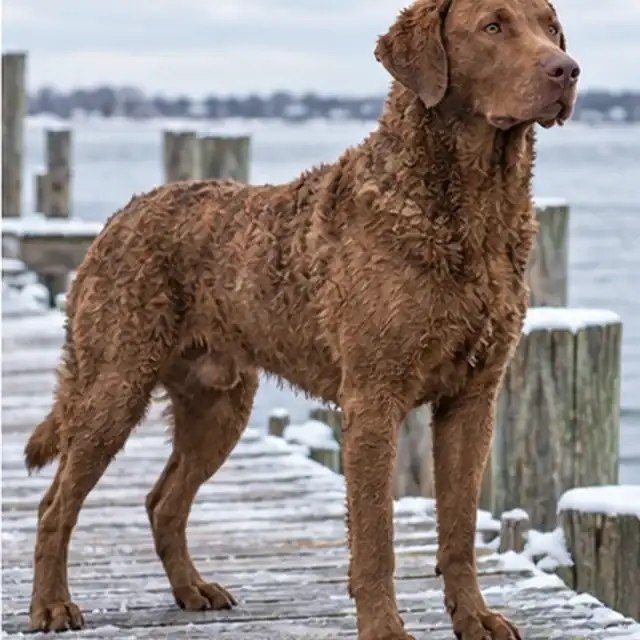
Chesapeake Bay Retriever is a medium-large sturdy retriever: males 58-66 cm and 29-36 kg, bitches 53-61 cm and 25-32 kg. Intelligent, cheerful, gentle and protective. Brave, attentive, with a good sense of smell and love for water. He is very attached to his family, reserved and careful with strangers. Suitable for active people, ready for swimming, work and clear upbringing.

Suitable for active owners who love water and long walks. Needs daily work, swimming and attention. Does not like loneliness and has a hard time changing owners. It will be miserable in a cramped apartment without a load.
High Daily long walks, running, fetching and swimming. It becomes restless without load.
Due to the protective instinct, early socialization and training is necessary. Basic obedience is a must. Versatile, successful in obedience, dog diving and agility. Classes are consistent, without rudeness, because the dog is sensitive.
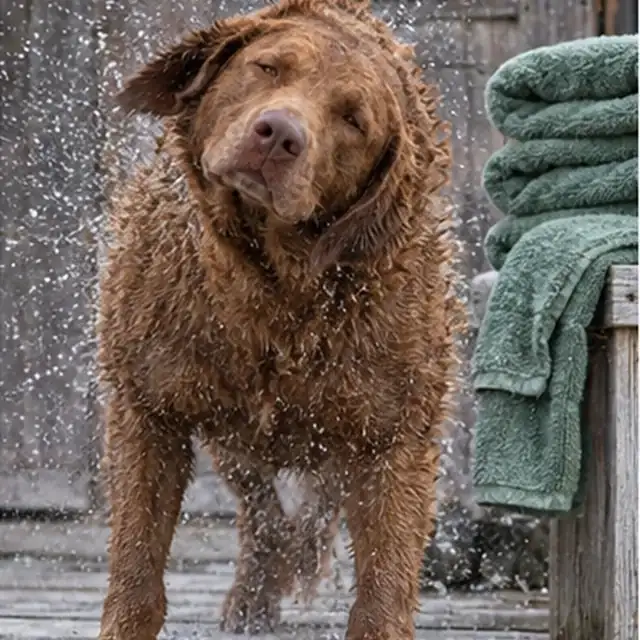
The double coat requires minimal care: regular brushing helps reduce shedding. It is not recommended to bathe often, because the natural fat makes the wool water-repellent. Swimming and spray for wool keep it fresh. Ears are dried after water.
Tied to the family, but children and the dog are always under the supervision of an adult. The size and strength require teaching the child to handle the dog calmly.
The protective nature needs socialization from an early age. Can be dominant over other dogs. The hunting instinct is aimed at birds, so be careful with small animals.
Estimates help compare breeds. For zooaggression, 5/5 means less tendency to aggression towards dogs. The behavior and health of a particular dog depend on many factors.
Very attached to the family, at the same time reserved with strangers.
Intelligent and perceptive, does well in several sports.
Early socialization is necessary, because the protective instinct is strong.
In the British cohort, the median lifespan of the breed was 11.6 years; small sample: 42 deaths. Among the described breed risks: hip dysplasia; examination of the parents is confirmed with the veterinarian.
The coat is simple but dense and should not be bathed often.
Dysplasia of the hip joints: the results of examinations of both parents are requested. The weight is kept normal. Stiffness after rest is not attributed to age without an examination.