Human orientation
Medium-high score: calm and friendly. Behavior depends on upbringing.
THE PAW CATALOG
Origin: Uruguay
Descended mainly from the Spanish Alano and other European dogs brought by the first colonizers. Released or abandoned, they adapted to the wild and multiplied. In the 18th century, due to attacks on livestock and people, the government paid bounties for the dogs killed, but many of them survived, especially in the Cerro Largo highlands, where pastoralists tamed them as watchdogs. The story of survival made the breed a national symbol of Uruguay. The FCI granted provisional recognition in 2006 and full recognition in 2017.
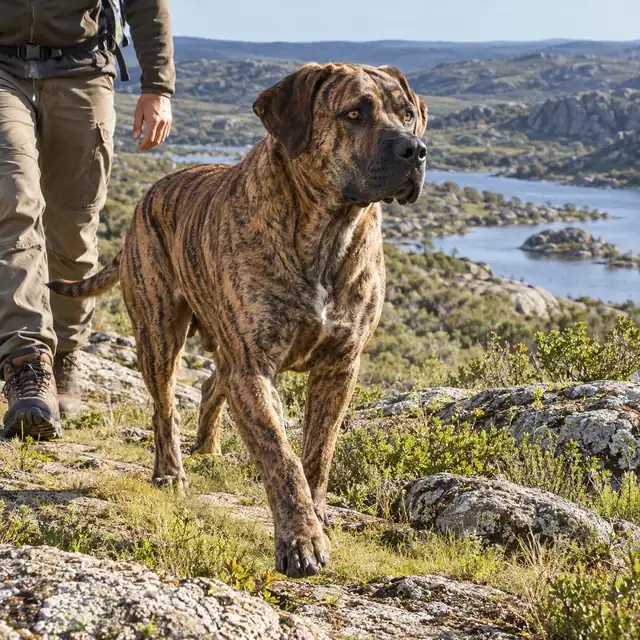
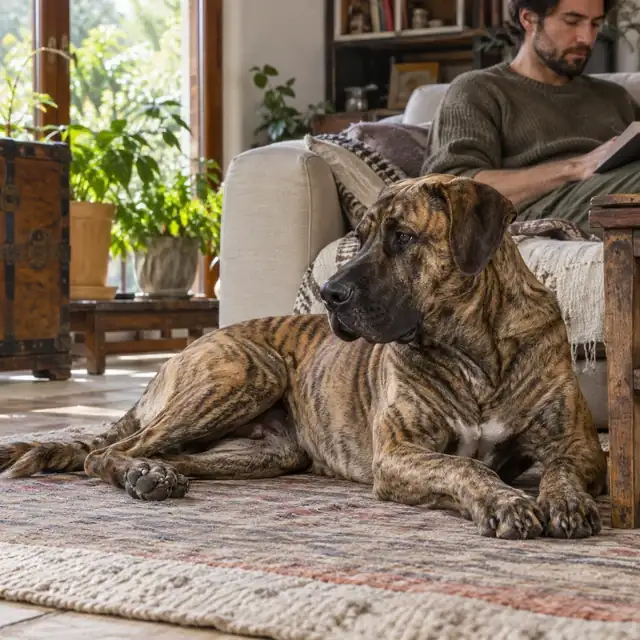
The Uruguayan Cimarron is a large (58-61 cm, 38-45 kg) dog with a short, usually brindle coat. Very brave, calm and stable, rarely barks, only when the threat is real. Requires thorough socialization from puppyhood.

In Uruguay, it is used for protection, hunting and dog sports. Suitable for families with space and experience.
Moderately high: walks, activities and space.
Calm and stable, but like all large dogs, needs thorough early socialization.
Short hair is combed once a week. Ears are examined, claws are trimmed.
Friendly with children, however, due to the size of contacts under supervision.
Friendly with other animals with proper socialization.
Estimates help compare breeds. For zooaggression, 5/5 means less tendency to aggression towards dogs. The behavior and health of a particular dog depend on many factors.
Medium-high score: calm and friendly. Behavior depends on upbringing.
Average score: needs thorough socialization.
Medium-high rating: friendly in socialization.
There is no comparable survival estimate for the breed in the British cohort used. The absence of the mentioned risk does not prove the absence of hereditary diseases.
High score: short coat.
Breed Screening: Breeders check for hip and elbow dysplasia before breeding. Ask for the results of the parents' examinations.
Musculoskeletal system: the growth and load of the "Uruguayan Cimarron" breed should correspond to the age. Lameness, pain, or reluctance to move require a veterinary examination.
Eyes and heart are checked during routine examinations. Narrow examinations, for example by an ophthalmologist or a cardiologist, are prescribed as needed. Ask the breeder what tests the parents have passed.