Human orientation
Medium-high rating: calm and loyal, without being intrusive. Behavior depends on upbringing.
THE PAW CATALOG
Origin: Great Britain
Probably formed in England in the 18th century from the heavy-headed Alpine spaniel. Hunter at Clumber Park has been improving the breed for about thirty years. Clumbers were among the first dogs in dog shows that began in 1859.
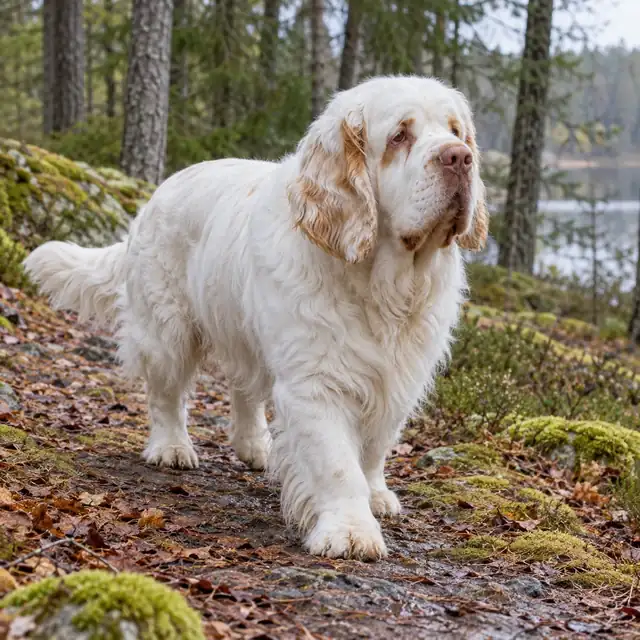
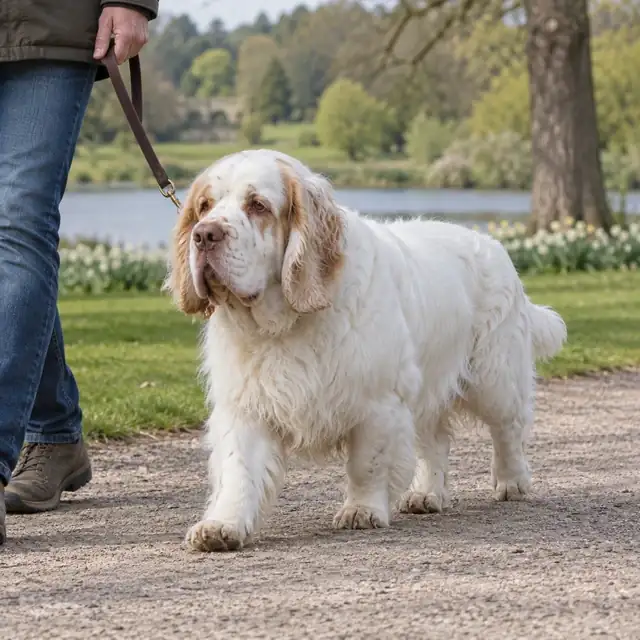
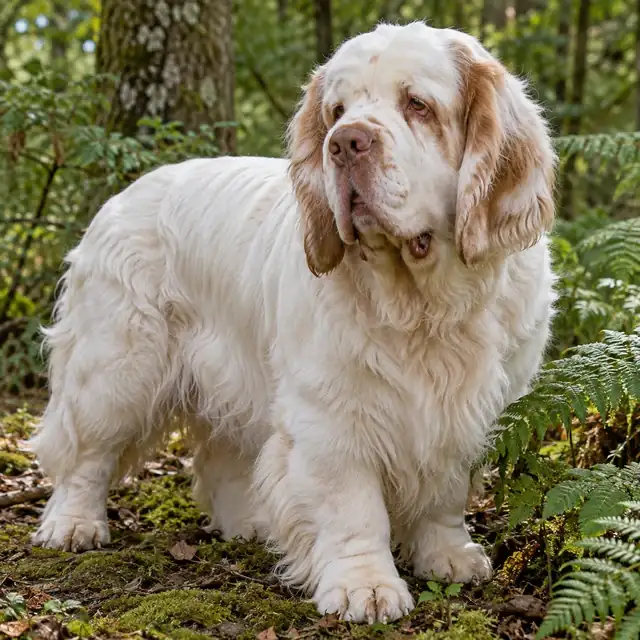
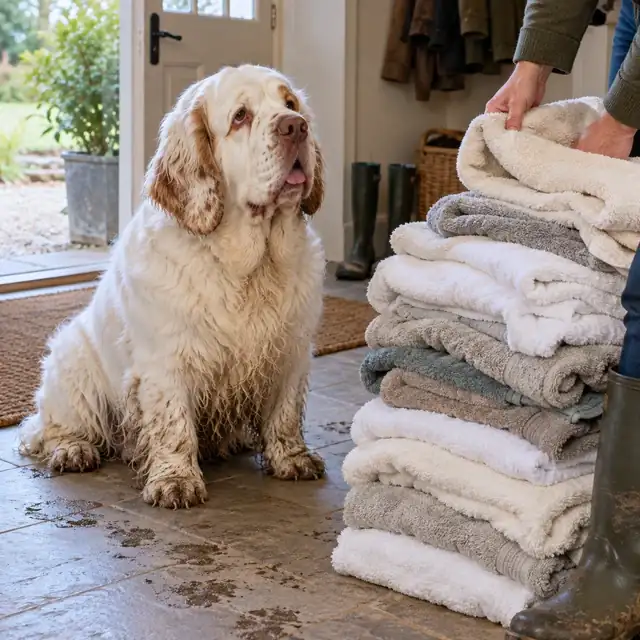
The Clumber Spaniel is a massive, short, lanky dog (43-51 cm, 25-39 kg) with a long, soft coat, mostly white with lemon or orange markings. Calm, loyal, likes to rest and bring toys. Needs weight control, ear care and back attention.

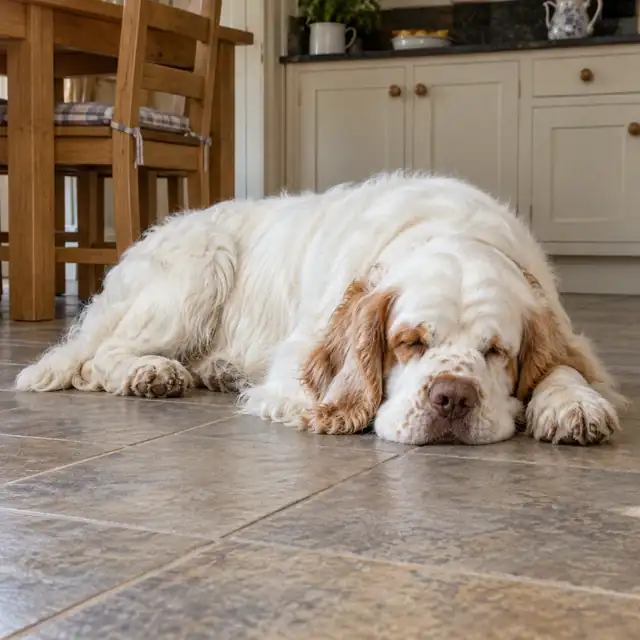
Calm and quiet at home, a bad watchman. Not much energy, but without movement quickly gains weight. Drooles more than most spaniels due to droopy lips.
Low to Moderate: A good daily walk or play in the yard. Without movement, he becomes lazy and gains extra weight.
Calm and loyal, cooperates well, but is not in a hurry. Short sessions with treats, patience and a soft tone. Fetching brings him real joy.
The wool is combed two or three times a week, sometimes every day. Ears are kept clean and dry, claws are trimmed, teeth are brushed. Saliva from the lips is regularly wiped.
Calm and good-natured, usually patient with children. A heavy body requires careful games, and you should not overload your back.
Gets along well with other dogs. The hunting instinct is weaker than that of other spaniels, but birds and rodents can be of interest.
Estimates help compare breeds. For zooaggression, 5/5 means less tendency to aggression towards dogs. The behavior and health of a particular dog depend on many factors.
Medium-high rating: calm and loyal, without being intrusive. Behavior depends on upbringing.
Medium-high rating: cooperates willingly, but takes his time.
Average score: Gets along well with dogs and may be interested in birds and rodents.
In the British cohort, the median lifespan of the breed was 12.3 years; small sample: 85 deaths. Among the described breed risks: hip dysplasia, thyroid gland dysfunction, intervertebral disc disease; examination of the parents is confirmed with the veterinarian.
Medium-high rating: combing several times a week, clean dry ears and wiping of saliva are required.
Hip dysplasia is possible in the breed. They ask for the results of the parents' examinations, and the weight is kept within the norm.
Dysfunction of the thyroid gland is manifested by weight gain, lethargy and changes in the skin. Diagnosed by a veterinarian based on tests.
Disease of the intervertebral discs is the main problem of the breed and an urgent condition. Sudden pain in the back, weakness in the hind legs or refusal to move should be seen immediately. Weight control and no jumps reduce the risk.
Eyelid rolling (entropion): The eyelid rolls inward and the eyelashes scratch the eye. Signs: lacrimation, squinting. Treated by a veterinarian.
Inverted eyelids (ectropion): the eyelid hangs down, exposing the mucous membrane. Regular eye examinations and eye care are required.