Human orientation
Very high score: closely attached to the family and does not like solitude. Behavior depends on socialization.
THE PAW CATALOG
Origin: Madagascar
It comes from the seaside town of Tulear in Madagascar, where it was the house dog of the nobility, which, according to legend, restricted its ownership. In the 1960s, the French brought the breed to France, where it was improved to its modern appearance.
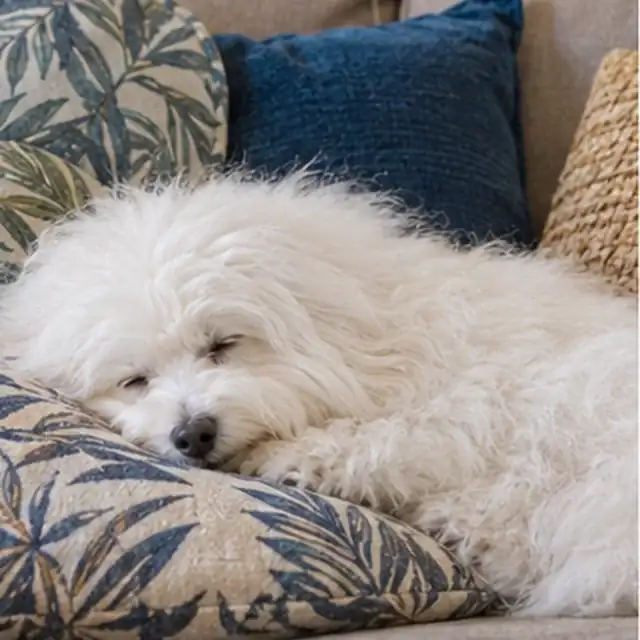
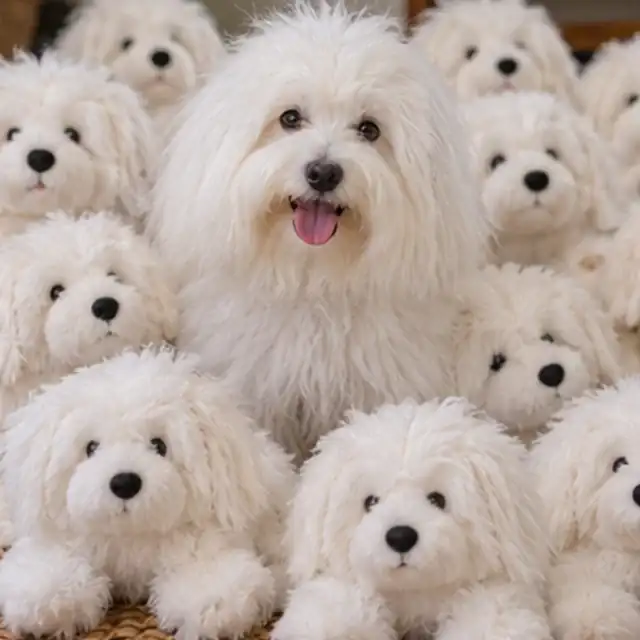
Coton de Tulear is a small (23-28 cm, 3.5-6 kg) dog with long white wool, similar to raw cotton. Cheerful, sociable and willing to learn, feels good in different living conditions. It requires daily combing to the skin so that the fur does not stray.

It is suitable for both an apartment and a house, but it does not tolerate prolonged loneliness. He likes to swim, run and play, so he willingly accompanies his owner on walks.
Daily walks and games are enough. Willingly swims and runs, and in his free time likes to rest near his owner.
Smart and eager to please. Classes are short, with treats and praise. The fur is used to being combed from the puppy age, then grooming becomes a pleasant ritual.
The wool is combed daily to the very skin, because near the skin it gets tangled. Severely matted wool sometimes has to be cut. Eyes are wiped, ears are examined, teeth are brushed.
Usually gentle and playful, gets along well with children. Due to the small size, games with small children are supervised.
Sociable to people and dogs, with early socialization it gets along well with other animals.
Estimates help compare breeds. For zooaggression, 5/5 means less tendency to aggression towards dogs. The behavior and health of a particular dog depend on many factors.
Very high score: closely attached to the family and does not like solitude. Behavior depends on socialization.
High score: willing to learn, responds well to praise.
Very high rating: sociable to dogs and other animals during socialization.
In the British cohort, the median lifespan of the breed was 14.2 years; small sample: 44 deaths. Among the described breed risks: dysplasia of the hip joints, dislocation of the patella, eye diseases; examination of the parents is confirmed with the veterinarian.
Low rating: Long coat requires daily brushing or it tangles.
Dysplasia of the hip joints: the results of examinations of both parents are requested, the weight is kept normal, and lameness or stiffness after rest is shown to the veterinarian.
Dislocation of the patella is manifested by periodic "jumping" on the hind leg. The degree is determined by the veterinarian, mild cases are only observed.
Eye diseases: regular examinations by a veterinary ophthalmologist. Redness, cloudiness or excessive tearing are not ignored.