Human orientation
Loyal to her owner and attentive to him.
THE PAW CATALOG
Origin: Croatia
It comes from Slavonia in eastern Croatia. It is believed that it was formed from local dogs for several centuries, and a manuscript of 1719 connects its appearance with immigrants. Systematic breeding was started in 1935 by Professor Stepan Romych. The breed was first shown in 1949 at the first state exhibition in Zagreb. The first standard was written by Dr. Otto Rohr in 1951 and the FCI published the standard in 1969.
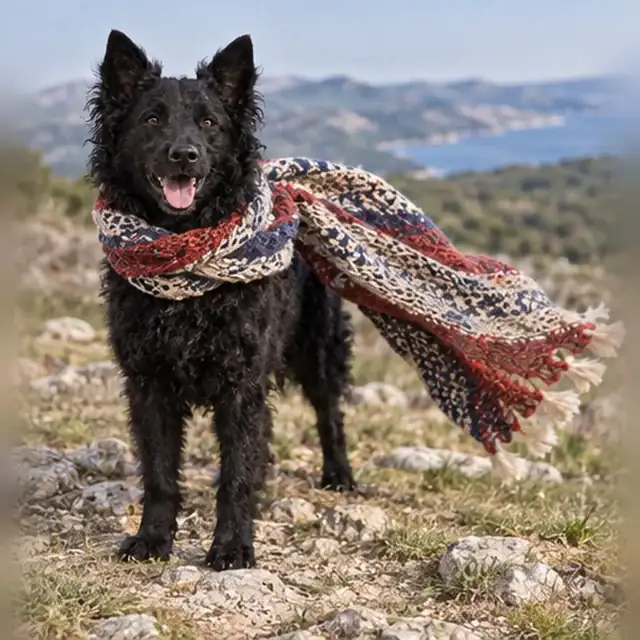
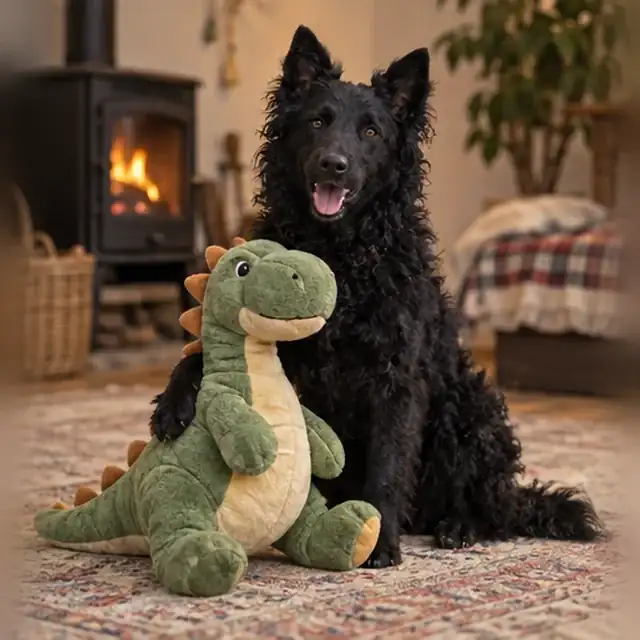
Croatian Shepherd Dog (Croatian shepherds) is a medium (45-50 cm in males, 43-48 cm in females) dog of rectangular structure with thick wavy or curly black hair. Lively and balanced, devoted to the owner, attentive to the environment. Should not be aggressive or nervous. Smart, brave and hardy, easily trainable. Suitable for active people who like to work with a dog.
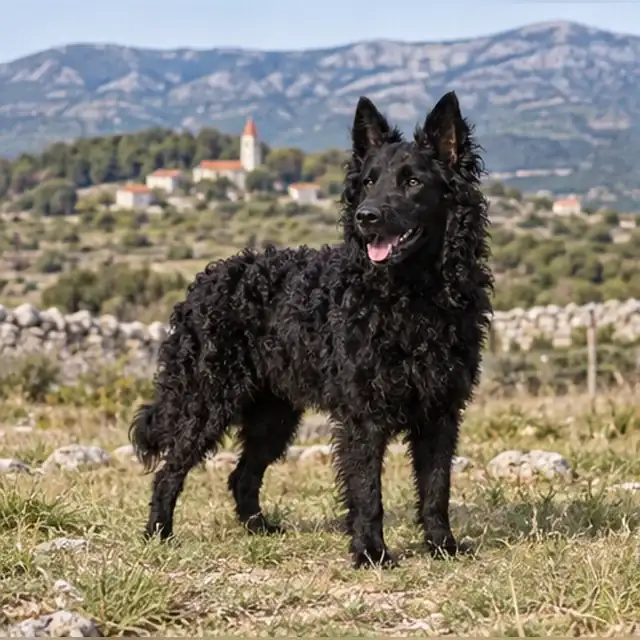
Suitable for active families who can walk, exercise and give the dog tasks every day. Does not tolerate boredom and loneliness. In the apartment it is possible for a daily load.
High Daily walks, running, games and mental tasks. Enduring and tireless in work.
Willingly learns and quickly learns commands. Early socialization and various activities help to grow balanced. Herding work, agility, trail sports suit her naturally.
The thick wavy coat is combed several times a week, more often during shedding. They bathe as needed. Ears, teeth and claws are examined regularly, between the fingers are checked for burdock root.
Devoted to family and usually gets along well with children. The shepherd's instinct can manifest itself in attempts to "collect" children. Children and dog under supervision.
Innate ability to herd, therefore can try to control other animals. It usually gets along with dogs and cats after early socialization.
Estimates help compare breeds. For zooaggression, 5/5 means less tendency to aggression towards dogs. The behavior and health of a particular dog depend on many factors.
Loyal to her owner and attentive to him.
Smart and easy to learn; willingly works in pairs with a person.
Generally gets along with animals, but the shepherd's instinct sometimes manifests itself.
There is no comparable survival estimate for the breed in the British cohort used. The absence of the mentioned risk does not prove the absence of hereditary diseases.
Thick wavy hair needs regular brushing.
Breed screening: detailed data on hereditary diseases of the "Croatian Shepherd" breed are scarce. Ask the breeder for documentary results of examinations of both parents and current recommendations of the club.
Musculoskeletal system: growth, weight and load of the Croatian Shepherd breed should correspond to the age. Pain, lameness, or reluctance to move require a veterinary examination.
The condition of the eyes and heart is included in the routine examination. How often to do special examinations is suggested by the breed club and the doctor. Do not delay new symptoms, such as blurred vision or shortness of breath, until your next appointment.