Human orientation
High score: devoted to family. Behavior depends on socialization.
THE PAW CATALOG
Origin: Great Britain
It is considered one of the oldest retriever breeds. In origin, they are called St. John's Newfoundland, Irish Water Spaniel, Old English Water Dog and Poodle. The British Kennel Club recognized the breed in 1854, and it appeared in Australia probably as early as the 19th century.
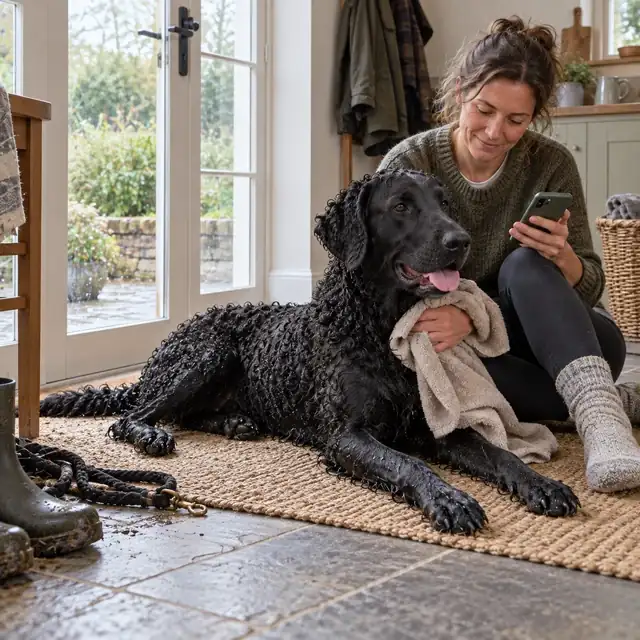
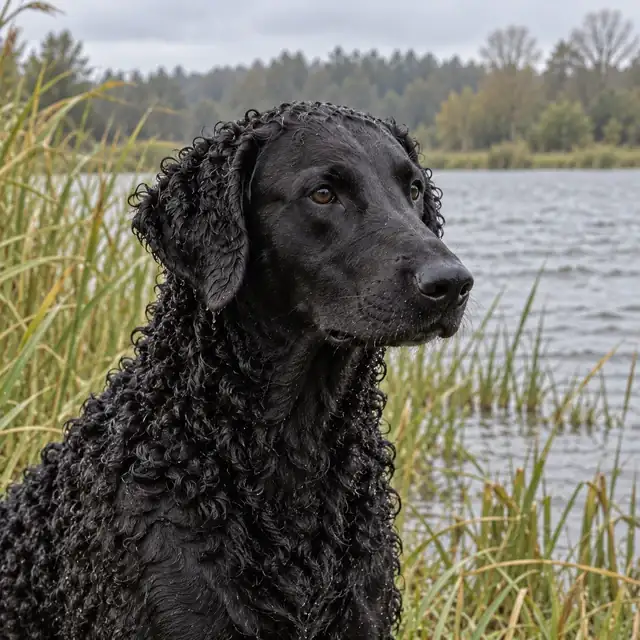
The curly-haired retriever is a large (about 64-69 cm) aristocrat among retrievers with a waterproof coat of tight black or liver-colored curls. Kind, balanced, devoted to the family, but independent and a little reserved. Grows slowly and needs a lot of movement.
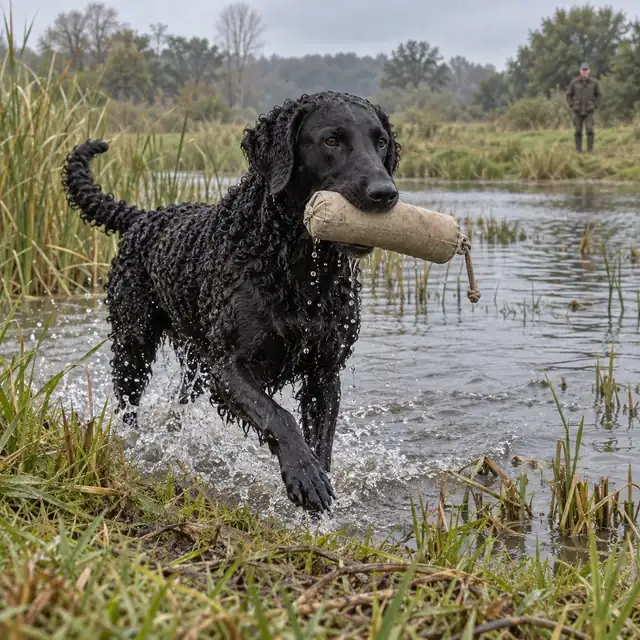
Suitable for active families with a yard and the opportunity to swim or take long walks. It is boring in an apartment without a load. Loves water and usually swims from an early age.
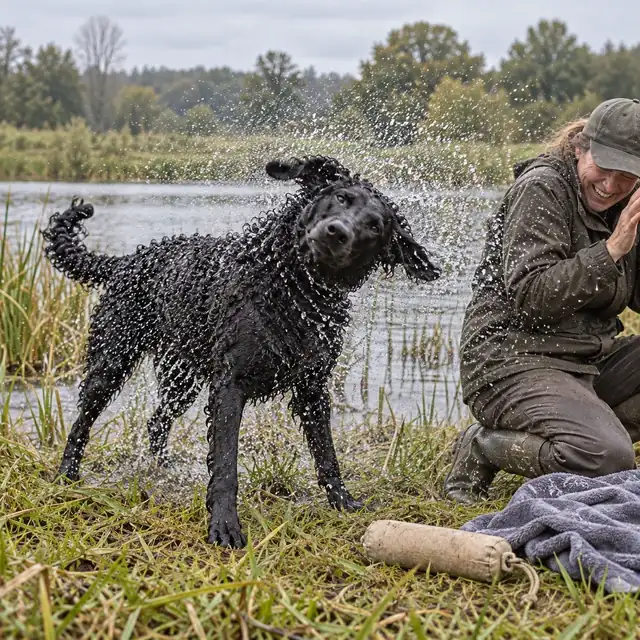
Movement is required every day: at least a long walk and play in the area. He's a retriever by nature, so swimming and retrieving give him what he craves.
Grows up slowly, sometimes up to three years, so learning requires time and patience. Bold and confident, but independent and a bit aloof. A trained dog is obedient, but works at its own pace.
Wool is easy to care for. Several times a year, strands sticking out are cut, most often near the ears and tail. Do not use a brush or comb: they destroy the curls. Ears are examined, claws are trimmed.
Kind, balanced and devoted to the family. Due to their size and strength, games with toddlers are supervised.
Usually gets along with other dogs. The retriever's hunting instinct remains, so small animals need control.
Estimates help compare breeds. For zooaggression, 5/5 means less tendency to aggression towards dogs. The behavior and health of a particular dog depend on many factors.
High score: devoted to family. Behavior depends on socialization.
Medium-high rating: intelligent, but independent and matures slowly.
Average score: friendly, but the hunting instinct needs to be controlled.
In the British cohort, the median lifespan of the breed was 12.2 years; small sample: 66 deaths. Among the described breed risks: bloating or stomach twist; examination of the parents is confirmed with the veterinarian.
High rating: the coat does not need brushing, only trimming a few times a year.
Bloating or twisting of the stomach is a life-threatening condition. They feed in small portions, avoid loads before and after meals, and immediately go to the veterinarian at the first signs.