Human orientation
He is very attached to his family-pack, although he is distrustful of strangers.
THE PAW CATALOG
Origin: Former Czechoslovakia
The breed was born as a scientific experiment in Czechoslovakia in 1955. Colonel Karel Hartl planned to cross a Carpathian gray wolf with a German shepherd in military kennels. The first hybrids appeared on May 26, 1958 in Libejovyce from the wolf dog Brita and the shepherd dog Caesar from Birch Grove. Until 1982, the breed was called the Czech wolfhound, then it was recognized as a national breed, and the FCI accepted it in 1999.
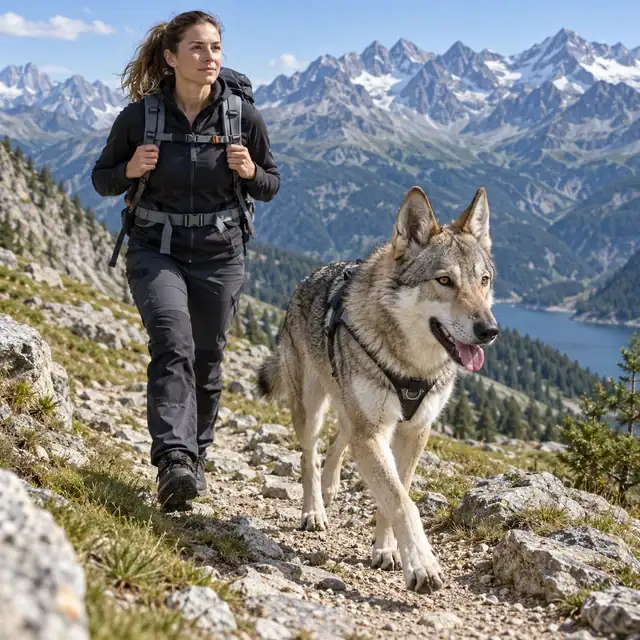
Czechoslovak wolfdog is a large, strong dog (males from 65 cm, bitches from 60 cm) with a wolf-like appearance: silver-gray or yellow-gray color with a light mask. Very attached to his pack-family, at the same time reserved with strangers. This is not an ordinary companion: the breed needs a lot of experience, socialization and daily exercise.

Only suitable for experienced owners who understand the behavior of native breeds, have a fenced area and time for daily walks and training. Not suitable for an apartment and prolonged loneliness.
Very high. Daily long runs, hikes and mental tasks. Hardy, able to run a considerable distance without fatigue.
Independent and sensitive, training requires experience, patience and positive methods. Early and long socialization is mandatory. Do not expect unconditional obedience to commands, as in classic service breeds.
The fur is straight, close to the body, very thick in winter, thinner in summer. Seasonal shedding is strong, then comb out daily. Ears, teeth and claws are examined regularly.
In the family can be devoted, but the size, strength and independence require constant supervision of communication with children. Stranger children are introduced to the dog very carefully.
The hunting instinct is strong, so it can perceive small animals as prey. Early socialization is required with other dogs. Off-leash walking is rarely safe.
Estimates help compare breeds. For zooaggression, 5/5 means less tendency to aggression towards dogs. The behavior and health of a particular dog depend on many factors.
He is very attached to his family-pack, although he is distrustful of strangers.
Independent and difficult to train, needs an experienced owner.
A strong hunting instinct, so small animals are not left unattended.
There is no comparable survival estimate for the breed in the British cohort used. The absence of the mentioned risk does not prove the absence of hereditary diseases.
The coat sheds a lot, and the needs for education and movement are much higher than average.
Breed screening: little is known about hereditary diseases of the Czechoslovak Lupus breed. The breeder is asked for documents with the results of examinations of both parents and current recommendations of the club.
Musculoskeletal system: the growth and load of the "Czechoslovakian Lupus" breed should correspond to the age. Lameness, pain, or reluctance to move require a veterinary examination.
Eyes and heart need regular attention from a doctor. How often to do special examinations is suggested by the breed club and the doctor. Do not delay new symptoms, such as blurred vision or shortness of breath, until your next appointment.