Human orientation
High score: Dalmatian is friendly, loves company and wants to be in a family. Behavior depends on upbringing.
THE PAW CATALOG
Origin: Croatia
The origin is debated, but the breed has changed little over the centuries. The name is associated with Dalmatia, where it was first reliably recorded. Dalmatians served as carriage dogs, mascots of fire brigades, farm and hunting assistants. In Britain, they were first shown at an exhibition in 1860, and in America - in the 1920s.
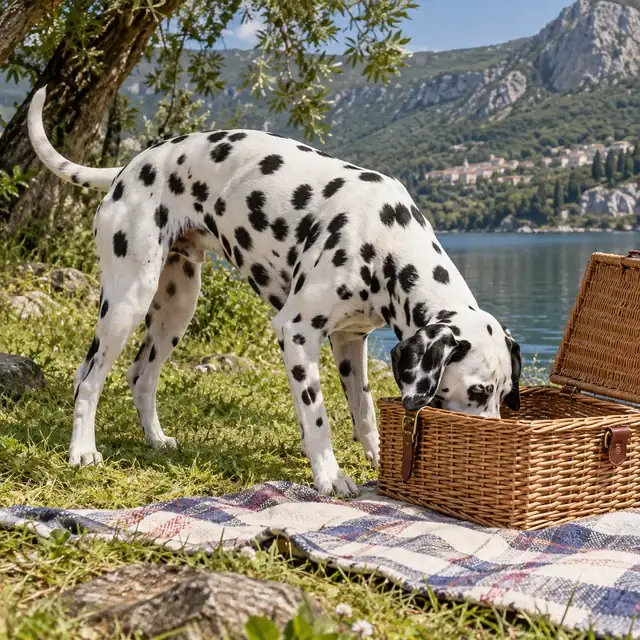
Dalmatian is a medium-sized white dog with clear black or brown spots, a short coat that is dense and shiny. Height 56-61 cm. Friendly, energetic, hardy runner who loves work and company. Requires daily exercise, attention to hearing and a diet that prevents stones in the urinary tract.

A runner by nature, so he needs an active family and yard, not just walks. Behaves like a guard dog: alert, often loud. Without classes can become noisy and restless.
Approximately forty minutes of active movement per day, usually more. Willingly runs next to the bike. Boring without load.
Friendly and eager to please, learns easily, but loses interest in monotonous exercises. Classes should be varied. Street recall is unreliable when distracted.
A short coat requires minimal care, but the Dalmatian is constantly lazy. It is combed weekly, and frequent wet wipes help to collect white hair. Water regime is important for the urinary tract.
Friendly and energetic, loves games. Due to its size and turbulence, it can knock down children, so the games require supervision.
Generally not nervous and not aggressive, gets along with other dogs. Early exposure to pets and horses builds confidence.
Estimates help compare breeds. For zooaggression, 5/5 means less tendency to aggression towards dogs. The behavior and health of a particular dog depend on many factors.
High score: Dalmatian is friendly, loves company and wants to be in a family. Behavior depends on upbringing.
High score: eager to learn, but bored by monotony.
Average Score: Usually peaceful with dogs, but can be excessive in energy and rambunctiousness.
In the British cohort, the median lifespan of the breed was 13.2 years. Among the described congenital risks: urate stones of the urinary bladder, congenital hearing impairment, hearing impairment; examination of the parents is confirmed with the veterinarian.
Average score: care of the coat is easy, but the Dalmatian is constantly lazy, and the risk of stones requires a feeding and drinking regime.
Bladder urate stones can be formed due to the peculiarities of purine metabolism. Diet, adequate water intake, and regular urination reduce the risk, and difficulty urinating requires immediate attention.
Congenital hearing impairment is a known breed risk. Puppies are BAER tested at around 7 weeks of age and the breeder is asked for the results.
Hearing impairment may occur later. Reaction to sounds, sleep with loud noise or unusual behavior is a reason to check hearing at the veterinarian.