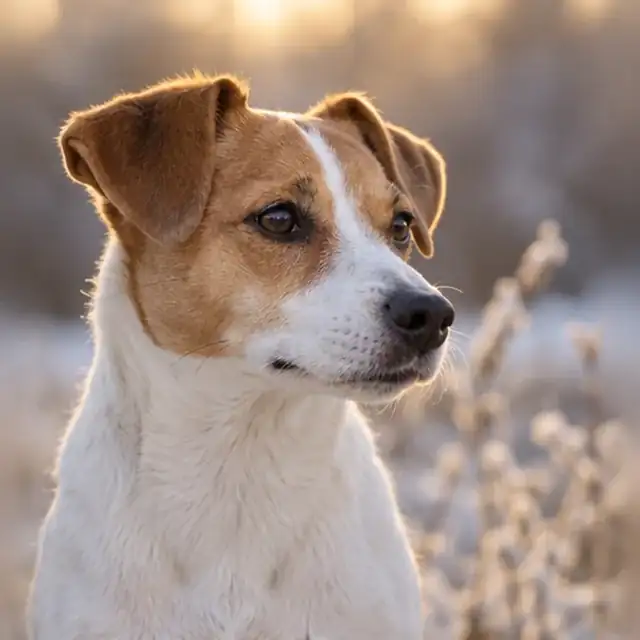
Human orientation
High Score: The breed is very attached to people and craves contact. Actual behavior depends on the dog's socialization and experience.
THE PAW CATALOG
Origin: Denmark and Sweden
The exact origin is unknown, but dog skeletons from Viking Age burials resemble modern farm dogs. Most likely, the breed developed in Skåne - in the south of Sweden and in Denmark. On small Scandinavian farms, she caught rats, reported strangers and helped herd cattle. The Industrial Revolution of the 1870s reduced the number of small farms and livestock plummeted; in the 1980s, Danish and Swedish kennel clubs jointly saved the breed. It was brought to the USA in 1998, and AKC fully recognized it in 2025.
The Danish-Swedish farm dog is a small, hard-working farm dog, which is called a "little big dog". Friendly, cheerful and easy to learn, but able to relax at home. Needs daily activity, activities and companionship of the family.

Suitable for families ready for daily walks and games. He is calm at home, but needs to be busy and have people around. He informs about strangers with one bark, and does not chase them.
Active work and sports: agility, olfactory work, grazing, training. After the workload, he willingly rests at home.
Cheerful, smart and easy to learn. Does well in agility, obedience, rail, sniffing, herding and dog diving. Make classes varied and short.
Care is simple: regular combing is enough. Ears are examined, nails are trimmed, teeth are cleaned.
Friendly and easy to communicate with, gets along with children. Energetic games with babies are supervised, and children learn not to pull the dog.
Historically caught rats and other pests, so small rodents in a shared house are risky. It usually gets along with dogs and cats with early socialization.
Estimates help compare breeds. For zooaggression, 5/5 means less tendency to aggression towards dogs. The behavior and health of a particular dog depend on many factors.
High Score: The breed is very attached to people and craves contact. Actual behavior depends on the dog's socialization and experience.
High score: easy to learn and variety of activities keeps interest.
High score: Generally sociable with other animals, although caution is required around rodents.
The British cohort does not provide a comparable survival estimate for the Danish-Swedish Farm Dog breed. The absence of the mentioned risks does not prove the absence of hereditary diseases, and parents should be checked in any case.
High score: care is easy and does not require trimming.
Pedigree Screening: There is little reliable data on the hereditary diseases of the Danish-Swedish Farm Dog breed, so the results of examinations of both parents should be requested in writing.
Musculoskeletal system: growth, weight and load of the "Danish-Swedish Farm Dog" breed should be age-appropriate. Pain, lameness, or reluctance to move require a veterinary examination.
A preventive examination includes the eyes, heart and ears. For the "Danish-Swedish Farm Dog" breed, the frequency of special inspections is determined by the advice of the club and the veterinarian.