Human orientation
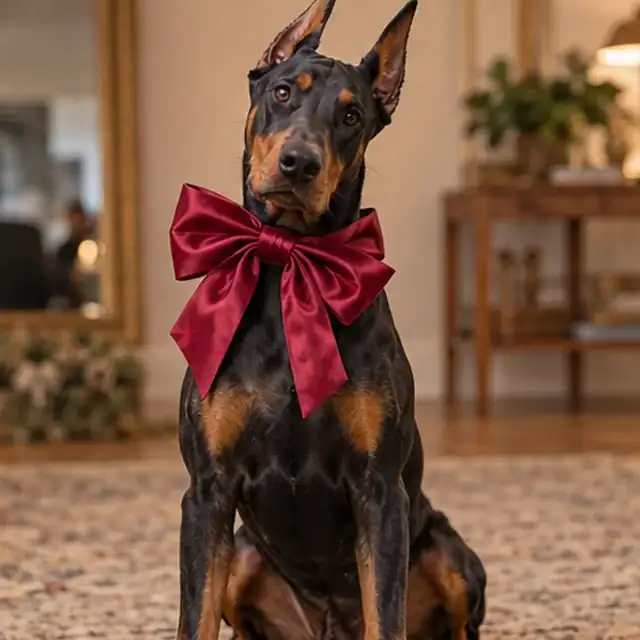
High score: Doberman is very attached to the family and sensitive to its mood. Actual behavior depends on socialization.
THE PAW CATALOG
Origin: Germany
Named after the German tax collector Friedrich Louis Doberman from Apolda in Thuringia, who ran a dog shelter and sought to breed a hardy, strong, intelligent and protective dog. Today, Dobermans work as guards, police, military and rescue dogs, and therapists.
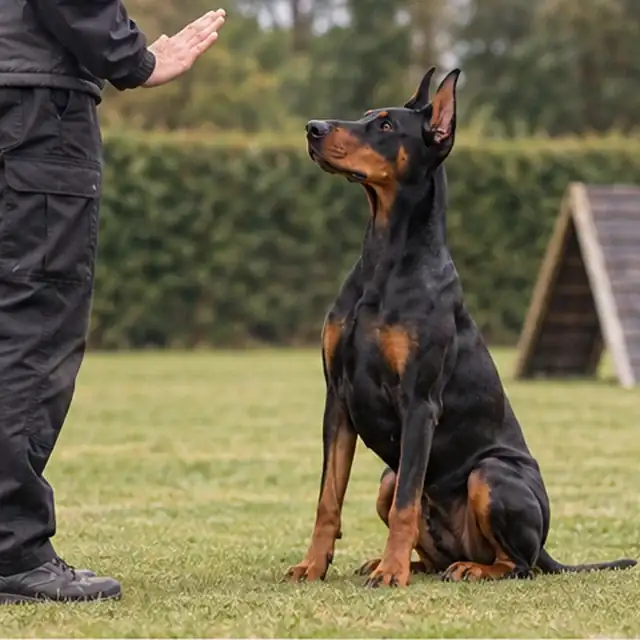
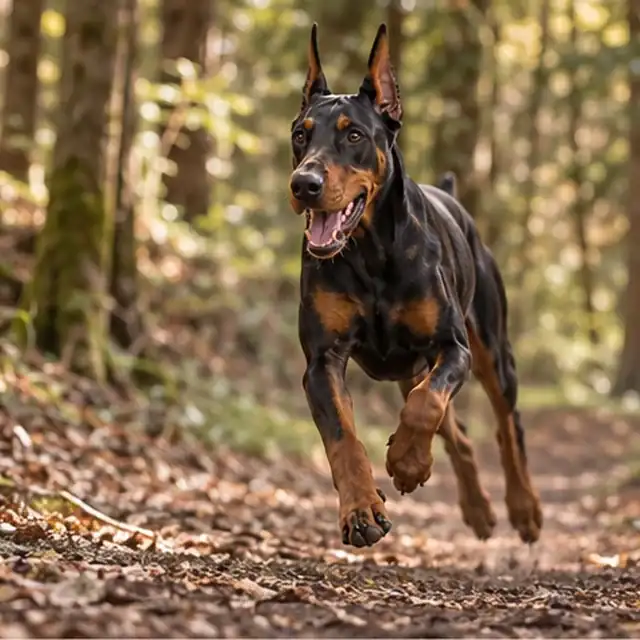
The Doberman is an elegant, strong and very intelligent dog with a short smooth coat: black, brown, blue or fawn with red markings. Males are about 69 cm, females are about 65 cm. Devoted to the family, alert and confident. It requires daily exercise, early training and careful monitoring of the heart.
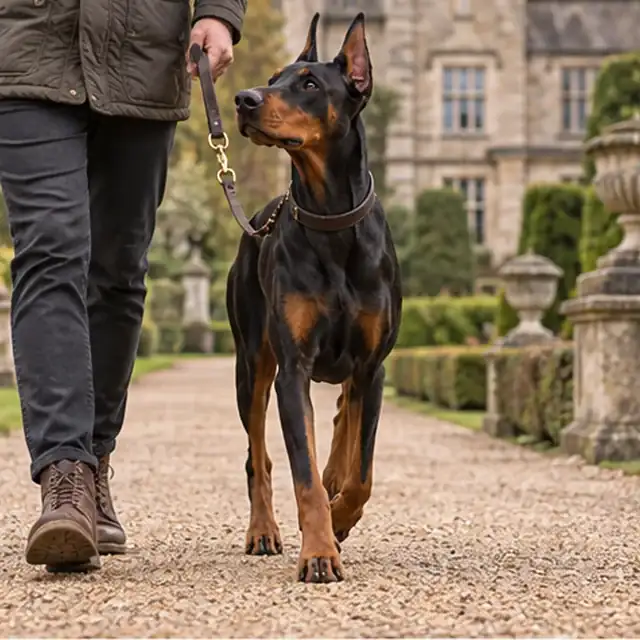
Suitable for active owners who give their dog exercise and mental work every day. Do not leave alone in the yard for a long time. Gentle with his family at home, alert outside.
High: daily walks, running, mental work and various places for activities. Having nothing to do is boring and can make you nervous.
Intelligent, obedient and sensitive. Early consistent training and socialization is a must, especially for a confident, strong dog. Pressure and rudeness do not help.
Minimal: the short coat is combed once a week and bathed as needed. Ears are examined, nails are trimmed, teeth are cleaned. A dog needs warmth in the cold.
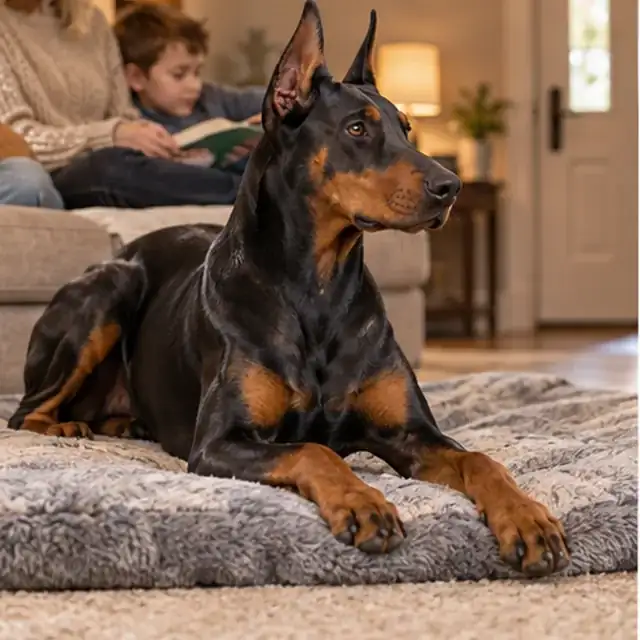
Calm and gentle in the family, but large size and strength require supervision in games. Contacts with other people's children are controlled.
With early socialization, it can get along with other animals. The protective character needs control in contacts with unfamiliar dogs.
Estimates help compare breeds. For zooaggression, 5/5 means less tendency to aggression towards dogs. The behavior and health of a particular dog depend on many factors.
High score: Doberman is very attached to the family and sensitive to its mood. Actual behavior depends on socialization.
High score: intelligent and obedient, learns well with consistent training.
Average score: protective character needs socialization and control.
In the British cohort, the median lifespan of the breed was 11.2 years. Among the described hereditary risks: hip dysplasia, thyroid dysfunction, progressive retinal atrophy, as well as cardiomyopathy and von Willebrand's disease; examination of the parents is confirmed with the veterinarian.
Medium-High Rating: Shorthairs are easy to care for, but heart and glandular health requires attention.
Hip dysplasia is possible in the breed. Before the purchase, they ask for the results of examinations of both parents, and the weight is kept within the norm.
Dysfunction of the thyroid gland can be manifested by weight gain, lethargy and skin changes. The diagnosis is made by a veterinarian based on tests.
Progressive retinal atrophy is a hereditary eye disease that gradually reduces vision. Pedigree dogs are examined, and night blindness may be the first sign.
Cardiomyopathy, in particular dilated cardiomyopathy, is a known breed risk. The heart is regularly checked by the vet, and fatigue, coughing or fainting require immediate examination.
Von Willebrand's disease is a blood coagulation disorder. There is a genetic test, so the breeder is asked for the results. Before operations, the veterinarian is warned.