Human orientation
High score: the woodcutter is friendly and attached to the family. Behavior depends on upbringing.
THE PAW CATALOG
Origin: Sweden
The breed originates from the Westphalian dachshund, which was brought from Germany to Sweden around 1910 and crossed with other hounds. The name Drever was chosen based on the results of a newspaper contest in 1947, and in the same year the Swedish Kennel Club recognized it as a separate breed. The breed is recognized by the FCI, Canadian and United Kennel Clubs.
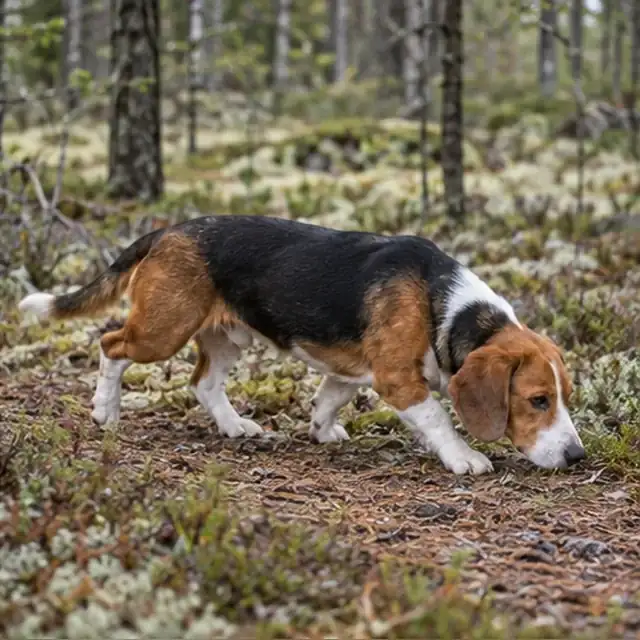
Drever is a Swedish hound with a long body and short legs (up to 38 cm), short dense fur and endurance in deep snow. Mostly a working hunter, calm in the family. Needs daily movement, olfactory work and reliable fencing.

In Sweden, it is mainly kept as a hunting dog, and in North America it is promoted as a rare domestic breed. Suitable for a house with a yard, but the apartment needs long walks every day.
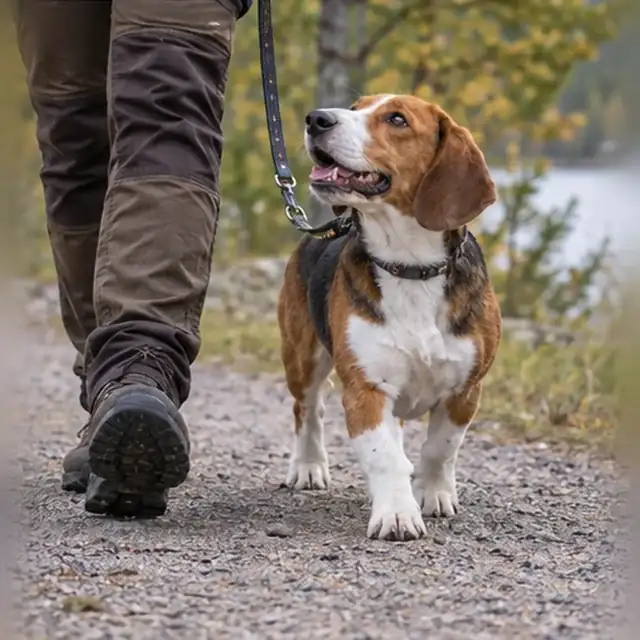
High: Daily walks, trail work and free running in a safe place. The moderate body and short legs are adapted for slow work in deep snow.
Smell and hunting instinct are often stronger than command, so recall is practiced from puppyhood. Classes are short, with a reward. Olfactory tracks satisfy a natural need.
Short hair is combed once a week, more often during shedding. Ears are examined, nails are trimmed, teeth are cleaned. Due to the long body, the weight is monitored.
Usually calm and friendly, but hunting energy needs supervision. The long back is not loaded by lifting the dog without support.
A hunter of hare, roe deer, fox and deer, therefore small animals are prey for him. It usually gets along with dogs during socialization.
Estimates help compare breeds. For zooaggression, 5/5 means less tendency to aggression towards dogs. The behavior and health of a particular dog depend on many factors.
High score: the woodcutter is friendly and attached to the family. Behavior depends on upbringing.
High score: Willing to cooperate, although smell is often distracting.
High score: usually sociable with dogs, but small animals are judged separately.
The survival rate of the Drever breed in the British cohort is not comparable. The absence of the described risks does not guarantee the absence of hereditary diseases, so the breeder is asked for the results of the parents' examinations.
High score: the short coat is combed once a week, the rest of the care is simple.
Breed screening: there are few descriptions of hereditary diseases of the Drever breed. Ask the breeder for the written results of the parents' examinations and the current requirements of the club.
Musculoskeletal apparatus: the growth and load of the Drever breed should correspond to its age. Lameness, pain, or reluctance to move require a veterinary examination.
A preventive examination of the Drever breed includes an evaluation of the eyes, heart and ears. The frequency of special inspections is determined by the recommendations of the club and the veterinarian.