Human orientation
Average score: trusting and sociable, but works independently as a hunter. Behavior depends on upbringing.
THE PAW CATALOG
Origin: Norway
Named after Captain Wilhelm Konrad Dunker, who bred the breed in the first half of the 19th century, crossing several hounds. During World War II, the herd declined, then interest increased until the 1970s, then declined again. By the 1980s the breed had become uniform and strong, but inbreeding created problems, so control crosses were made to increase diversity and health. The herd remains small.
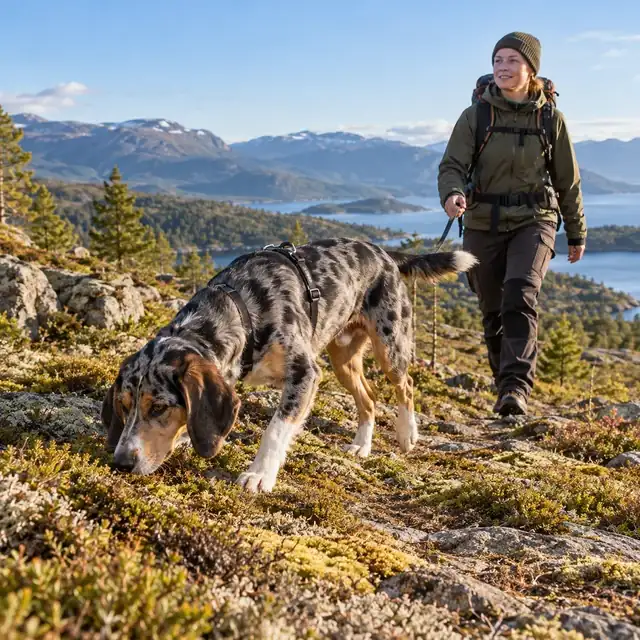
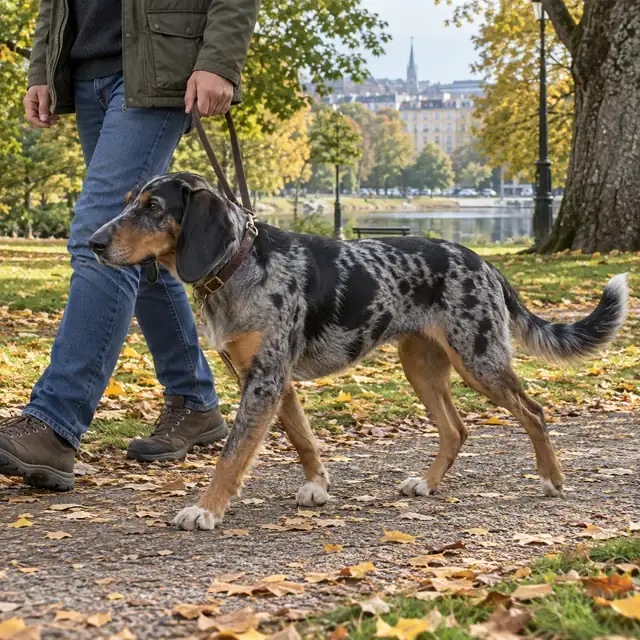
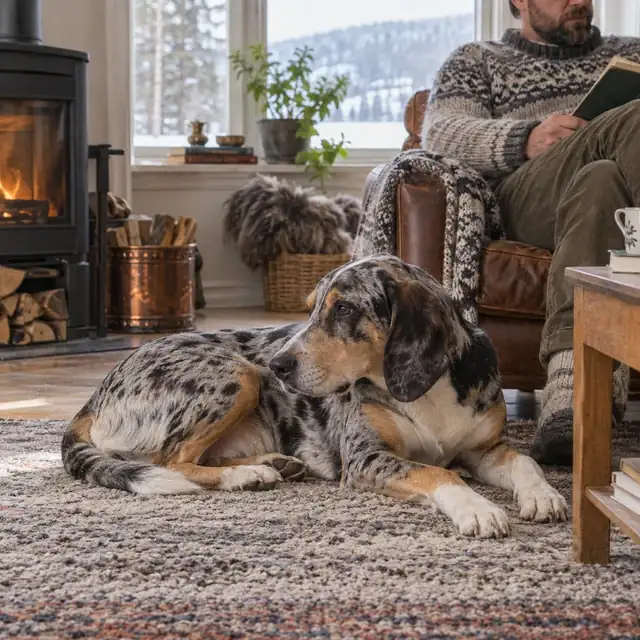
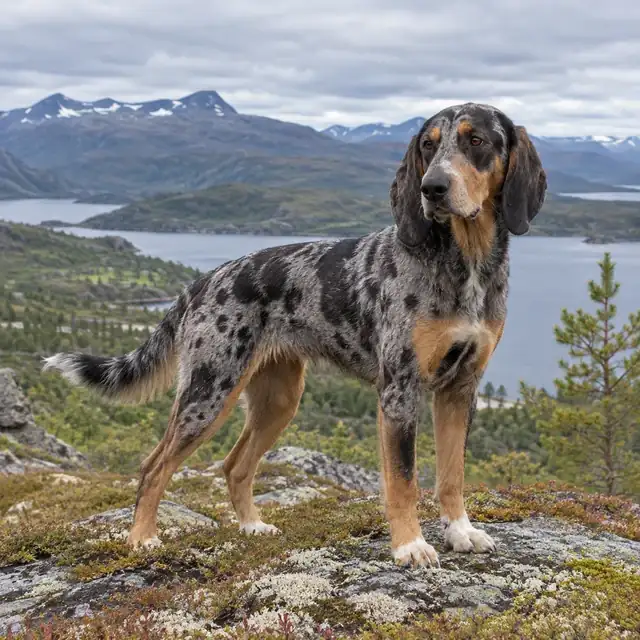
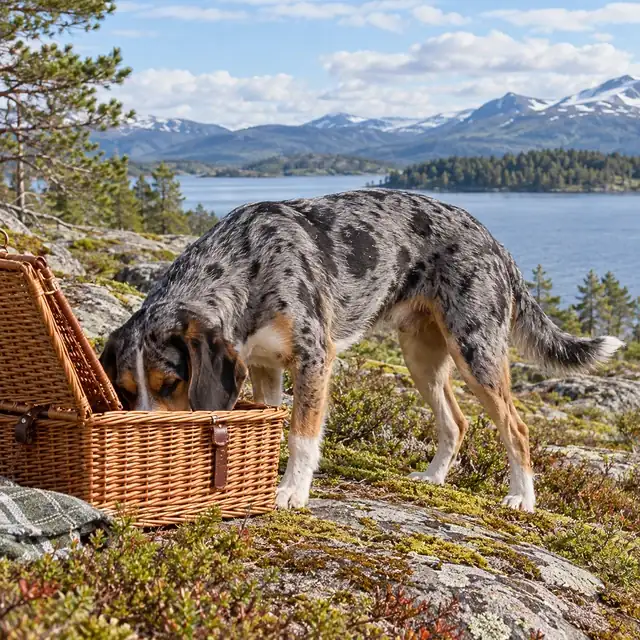
Dunker is a Norwegian hound with a straight, dense, stiff coat, known for its marble (merle) color. Males 50-58 cm, females 47-54 cm. Calm, trusting, easy to learn, at the same time a hardworking hunter. Needs daily movement and olfactory work.

Best suited to a hunter or active family in a home with a yard. Balanced and trusting, gets along well with people. The apartment is only possible for long daily walks.
High: Daily long walks, trail work and free running in a safe area. This is a working hunting hound.
Stable nervous system, easy to learn and shows itself well in hunting tests. Lessons are built on praise and repetition. Recalls are practiced from an early age.
Straight dense wool is combed once or twice a week. Ears are examined, nails are trimmed, teeth are cleaned. Caring for merle dogs is the same.
Sociable and trusting, usually gets along well with children. Hunting energy needs supervision.
Like a hound for a hare, treats small animals as prey. Usually peaceful with dogs during socialization.
Estimates help compare breeds. For zooaggression, 5/5 means less tendency to aggression towards dogs. The behavior and health of a particular dog depend on many factors.
Average score: trusting and sociable, but works independently as a hunter. Behavior depends on upbringing.
High score: stable character and easy training, which is confirmed by hunting trials.
Average score: peaceful with dogs, and hunting instinct towards small animals.
There are no comparable survival data for the Dunker breed in the British cohort used. Just because no risk is listed doesn't mean it doesn't exist: screening parents remains important.
High score: care is simple, combing once or twice a week is enough.
Breed screening: detailed data on hereditary diseases of the Dunker breed are scarce. Ask the breeder for documentary results of examinations of both parents and current recommendations of the club.
Locomotor system: for the "Dunker" breed, the load is selected according to age and condition. Limping, pain or reluctance to move is a reason to consult a veterinarian.
A preventive examination for the Dunker breed covers the eyes, heart and ears; the breed club and veterinarian will tell you how often to do special checks.