Human orientation
High Score: The Dutch Shepherd is people-oriented and willing to work in pairs. Behavior depends on upbringing.
THE PAW CATALOG
Origin: The Netherlands
The Dutch Shepherd is a herding breed from the Netherlands, bred by farmers and shepherds as a hardy and versatile dog. Its type is described in the 1898 standard. In 1914, brindle became the only permissible color to distinguish the dog from German and Belgian shepherds. During and after the Second World War, the breed almost disappeared, and foreign blood was added to restore it. It remains rare.
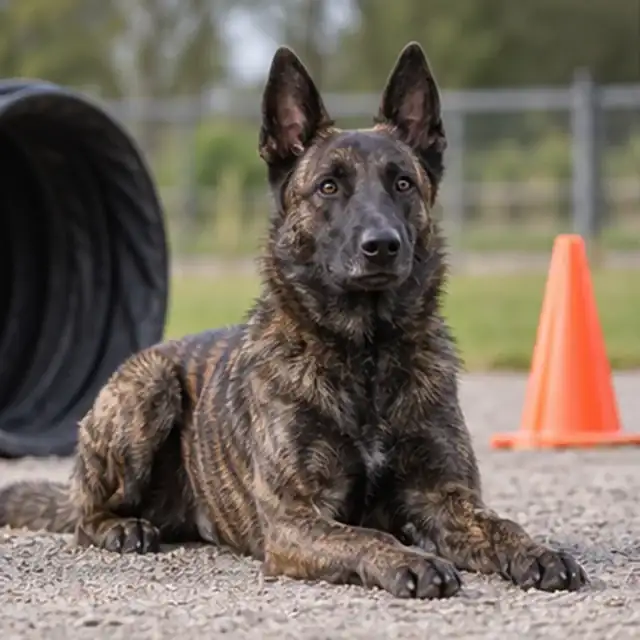
The Dutch Shepherd is a strong, energetic and very trainable herding dog of medium size: males 57-62 cm, females 55-60 cm. All three types of hair (short, long, hard) are brindle. Independent, hardy, with a strong herding drive. Needs daily work and a confident owner.

Suitable for active owners who give their dog work every day, not just a walk. Can work independently, without strict supervision. In an apartment without activity, it quickly becomes restless and destructive.
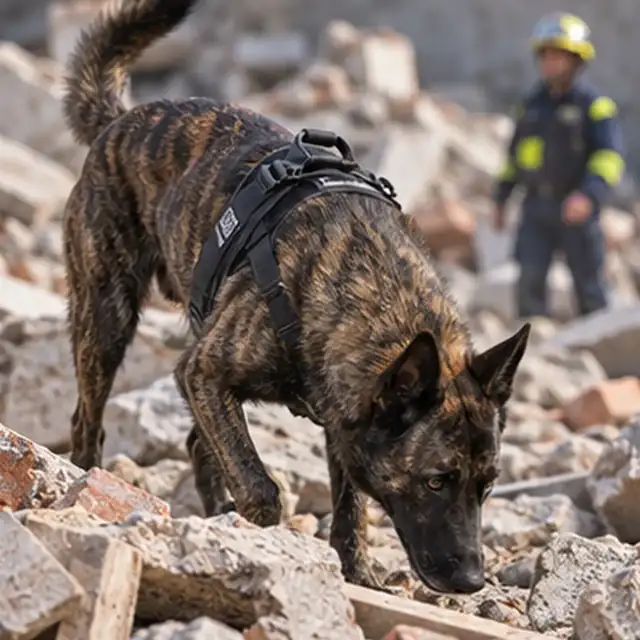
High: daily active work and mental tasks. Modern Dutch Shepherds work in police, search and trail work, in particular under the Dutch KNPV program, and perform in dog sports.
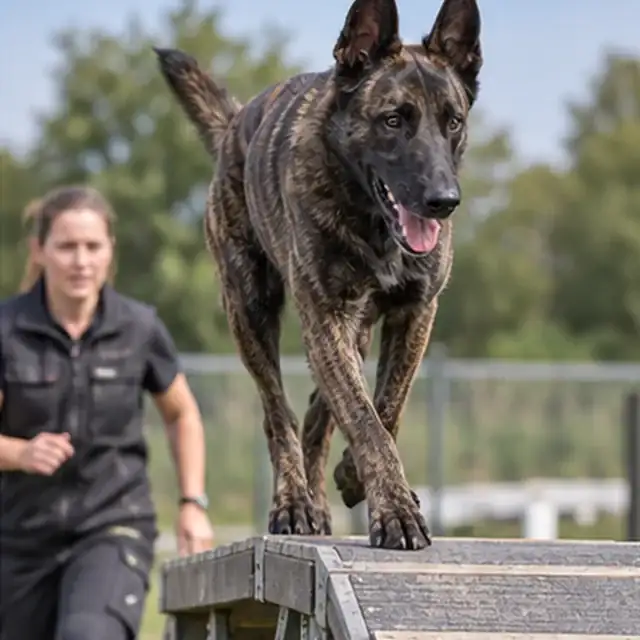
Very educated and independent. Performs tasks without constant supervision. Agility, obedience, flyball, sniffing and defensive sports are useful. Early socialization and clear rules are essential.
Short hair needs periodic brushing and daily during shedding in spring and autumn. Long-haired - about once a week. The hard coat is combed weekly and plucked twice a year.
A devoted member of the family, however, the shepherd's instinct may manifest itself in attempts to sway children. The games are supervised, and the dog is taught to control movement and not to grab with its teeth.
It usually gets along with dogs during socialization. The shepherd's habit of managing the herd can disturb other animals, and small ones should be introduced gradually.
Estimates help compare breeds. For zooaggression, 5/5 means less tendency to aggression towards dogs. The behavior and health of a particular dog depend on many factors.
High Score: The Dutch Shepherd is people-oriented and willing to work in pairs. Behavior depends on upbringing.
High score: quick learner and able to complete tasks independently.
Average score: gets along with dogs, but herding instinct needs adjustment, and small animals are introduced gradually.
There is no comparable survival estimate for the breed in the British cohort used. Among the described breed risks: hip dysplasia; also called allergies and eye diseases in hard-coated dogs; examination of the parents is confirmed with the veterinarian.
Average score: care depends on the type of coat, and combing and plucking require regularity.
Hip dysplasia occurs in some dogs. The results of the parents' examinations are requested.