Human orientation
The breed is usually friendly, but independent. The actual behavior depends on the socialization and experience of the particular dog.
THE PAW CATALOG
Origin: Great Britain
The breed was formed in the 18th century for hunting on horseback: the dogs followed the scent, and the hunters followed them on horseback. Pedigrees of the flocks were kept already at the end of that century. Later, American breeders bred the faster American Foxhound from English hounds. The English type is more massive than the American type and has a coarser bone.
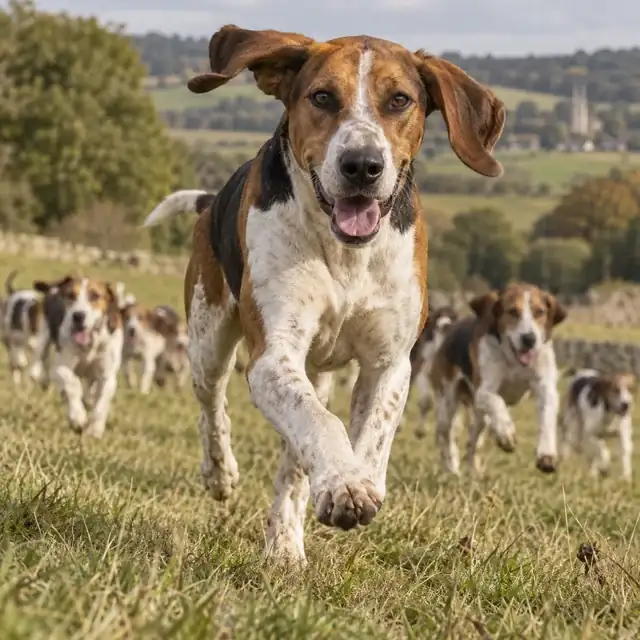
The English Foxhound is a hardy hound historically adapted to work in a large pack. Calm and friendly, but requires a lot of movement, the company of dogs and a reliable fence. He is cramped in the apartment.

More suitable for a country house with a large fenced area and the company of other dogs. Without movement and company, he gets bored and starts barking or howling. Shows independence, often ignores commands, so patience is required.
The need for movement is very high: long walks, running or jogging every day. Free running is possible only in a fenced area, because the dog chases after the smell and prey. The load of puppies and elderly dogs is adjusted with the veterinarian.
Calm, but independent and persistent: usually does not hear commands on the trail. Reward learning works better than pressure. Calling is practiced on a long leash, and olfactory games are used as a reward.
The short dense coat needs brushing about once a week. Claws are regularly trimmed, teeth are brushed. Long hanging ears are cleaned and dried.
Usually gets along well with children: calm and gentle. However, a large and strong dog can accidentally knock down a baby, so an adult monitors the contact.
The pack origin makes the breed friendly to other dogs. Cats and small animals are introduced gradually, because the hunting instinct triggers fast movements.
Estimates help compare breeds. For zooaggression, 5/5 means less tendency to aggression towards dogs. The behavior and health of a particular dog depend on many factors.
The breed is usually friendly, but independent. The actual behavior depends on the socialization and experience of the particular dog.
The breed learns well in consistent classes, but is stubborn in the field. Short classes with a reward work.
High Score: The breed usually gets along well with other dogs due to its pack history. The attitude towards cats and small animals is assessed separately.
There is no comparable survival estimate for the breed in the British cohort used. Among the described breed risks: bloating or stomach upset. The examination of the parents is confirmed with the veterinarian.
High rating: the short coat is combed about once a week, and the rest of the care is easy. The main expenditure of time falls on movement.
Stomach bloating or twisting is an emergency for large, deep-chested dogs. Know the signs: unsuccessful attempts to vomit, distended stomach, restlessness; in this case, go to the vet immediately. Sometimes the breed also has dysplasia of the hip joints, so the hips of the parents should be checked.