Human orientation
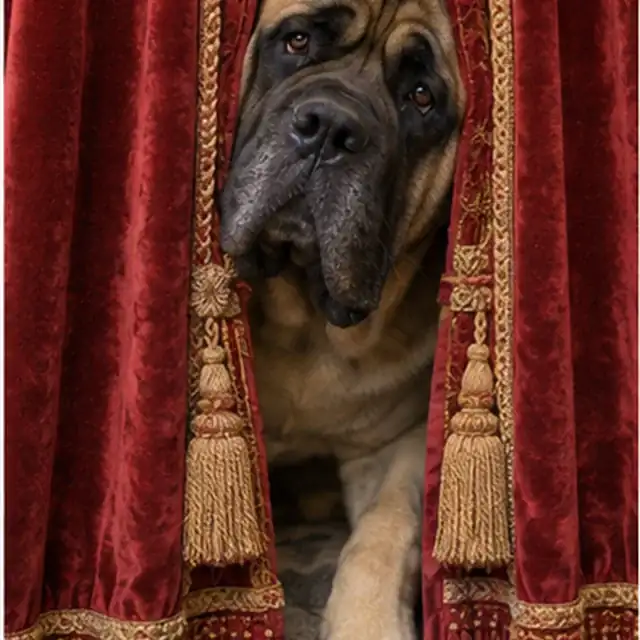
High score: the breed is usually very attached to the family and does not tolerate loneliness well. The actual behavior depends on the socialization and experience of the particular dog.
THE PAW CATALOG
Origin: Great Britain
Mastiff-type dogs are depicted in ancient drawings from about 2200 BC. The Romans encountered them in Britain and took them out for battle, and medieval English aristocrats used them for hunting, warfare and guarding. During the world wars, the breed almost disappeared, and in 1947 there were only a few purebred dogs left in Great Britain. It was revived with the help of imports from the USA and Canada.
The English Mastiff is a very large, calm guard dog of the old English type. Meek and patient with family, but extremely dependent on people. Needs space, weight control and gentle exercise, especially at a young age.
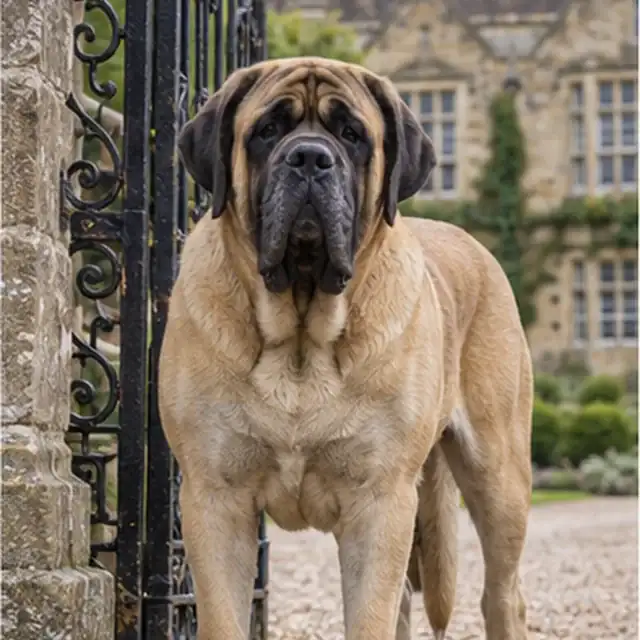
Mastiff needs a big home and a family in which he is a real member. Being alone for a long time causes anxiety and destruction. As a watchman, he warns with his voice and size, not with an attack. Get ready for drooling, snoring, and significant feed and veterinary expenses.
Puppies develop slowly, so there are no formal loads up to nine months: they rest when they need. Then the load is gradually increased. Avoid stairs, slippery floors, jumping and rough games. Adults need regular walks in the cool hours of the day.
The dog has intelligence, but reacts to strong pressure with stubbornness. Training should be gentle, calm, with rewards and consistent rules. Start early, while the dog is small: walking on a leash and calling will be practiced before the weight reaches hundreds of kilograms.
The short, smooth coat needs to be brushed about once a week, and more often during the shedding period. The folds on the face are wiped, especially after eating, the ears are regularly cleaned, the teeth, skin and claws are examined.
Usually patient and calm with children, but the weight of the dog is a risk for children. An adult always monitors the contact, and the rules are explained to the child: do not climb on the dog, do not wake it, do not take food.
Acquaintance with other dogs and pets is carried out gradually. The mastiff is usually calm, but its size requires control in any interaction.
Estimates help compare breeds. For zooaggression, 5/5 means less tendency to aggression towards dogs. The behavior and health of a particular dog depend on many factors.
High score: the breed is usually very attached to the family and does not tolerate loneliness well. The actual behavior depends on the socialization and experience of the particular dog.
Average rating of learnability: "English Mastiff" learns under a clear regime, short sequential exercises and constant repetition.
An average score means that contact with other dogs and pets requires an individual assessment. Because of size, all interactions are controlled.
Low score: In the British cohort, the median lifespan of the breed was 9.0 years. Among the described breed risks: hip dysplasia, epilepsy, von Willebrand's disease. The examination of the parents is confirmed with the veterinarian.
High score: The short coat is brushed about once a week and the folds are cleaned after eating. The main costs are related to the size of the dog.
Hip dysplasia is mentioned as a possible risk, which is important for such a large breed. Parents are checked with an X-ray, and growth is monitored so as not to strain the joints. The veterinarian determines the need for examinations.
Epilepsy is mentioned as a possible risk for the English Mastiff breed. Ask the breeder about cases of convulsions in the line, and at the first attacks contact the veterinarian.
Von Willebrand disease, a blood clotting disorder, is mentioned as a possible risk. There are tests, so ask the breeder for the results.
Bloating or twisting of the stomach is an emergency condition to which large, deep-chested breeds are prone. Know the signs: unsuccessful attempts to vomit, distended stomach, restlessness; in this case, go to the doctor immediately.
Degenerative myelopathy is a progressive lesion of the spinal cord, which is usually manifested by weakness of the hind legs in adulthood. There is a genetic test for it; ask parents for results.