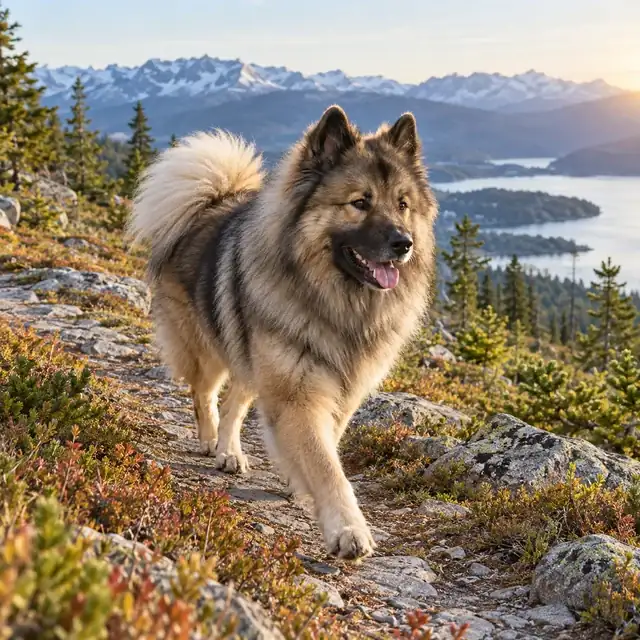
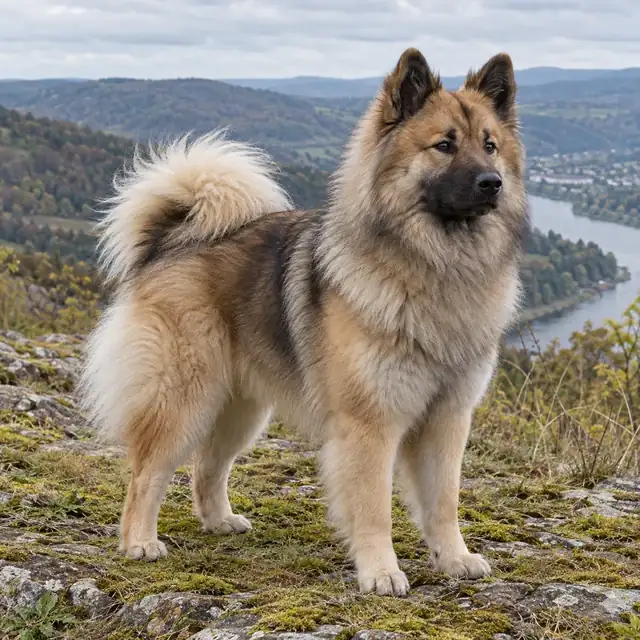
Human orientation
Strongly attached to family, needs daily close contact.
THE PAW CATALOG
Origin: Germany
German breed. Julius Wipfel is considered the founder. Around 1960, the Chow Chow was crossed with the Wolfspitz, and the first dogs were named "Wolf Chow". After the next crossing with the Samoyed, the breed was named Eurasian and was recognized by the FCI. Designed for companionship.
The Eurasian is a medium (52-60 cm and 22-30 kg in males, 48-56 cm and 18-26 kg in females) companion dog with thick, medium-length fur. Confident, collected and balanced, resistant to provocations. Vigilant, but without excessive barking, strongly attached to the family, calm with strangers, not intrusive. It requires daily close communication with the family and patient learning.
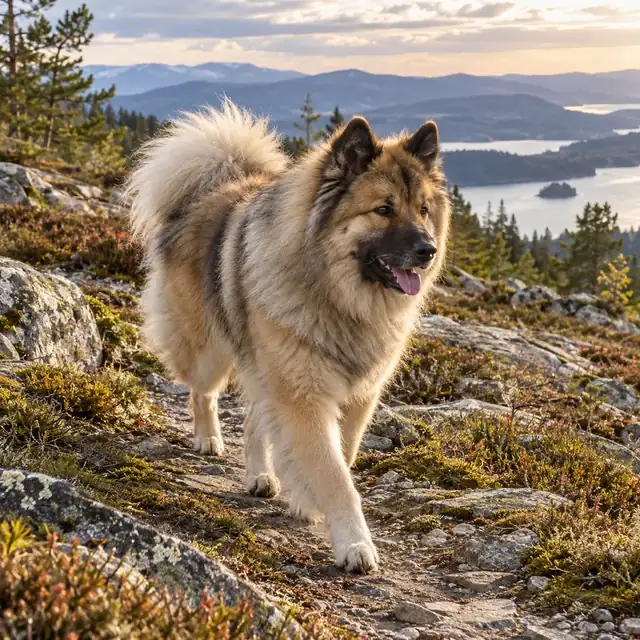
Suitable for families who can devote time and attention to a dog. Can't stand loneliness and life on a chain. Can live in an apartment provided daily walks.
Moderate Daily walks, games and mental tasks. Does not need excessive movement, but likes to be with family.
Consistency and patience are required, without rudeness. Early socialization is a must. Classes are varied, calm. The dog is sensitive to the owner's mood.
Thick wool with undercoat is combed once or twice a week, in shedding every day. They bathe as needed. Ears, teeth and claws are examined regularly.
Calm and resistant to provocations, usually gets along well with children. Babies and a dog under the supervision of an adult.
Generally balanced, gets along with other dogs with early socialization. Acquaintance with other animals is carried out gradually.
Estimates help compare breeds. For zooaggression, 5/5 means less tendency to aggression towards dogs. The behavior and health of a particular dog depend on many factors.
Strongly attached to family, needs daily close contact.
Smart, but needs patient and consistent training.
Balanced, generally calm towards other animals.
There is no comparable survival estimate for the breed in the British cohort used. Among the described birth risks: dysplasia of the hip joints, dislocation of the patella, bloat or twisting of the stomach; examination of the parents is confirmed with the veterinarian.
Thick wool requires regular brushing, especially during shedding.
Hip Dysplasia: The breeder is asked to confirm examinations of both parents. The puppy is not forced to make sharp jumps and long runs while the bones are growing. Stiffness after rest is not attributed to age without an examination.
A dislocation of the patella is often noticeable by short "bounces" on the hind leg during running. Mild forms are often only controlled, and severe ones may require surgery. It is better to ask the breeder about similar cases in the pedigree.
Bloating or stomach upset: the portion is divided into several feedings, and the dog is allowed to rest after eating. An enlarged stomach and futile urges to vomit require urgent veterinary care.