Human orientation
Very attached to people, likes to be around and get along with family.
THE PAW CATALOG
Origin: Great Britain
They were bred in England at the end of the 19th and the beginning of the 20th century: first as completely black exhibition dogs, then with other colors. The population has been sharply reduced on several occasions, so the Kennel Club of Great Britain still classifies it as a vulnerable native breed, although the number is gradually increasing.
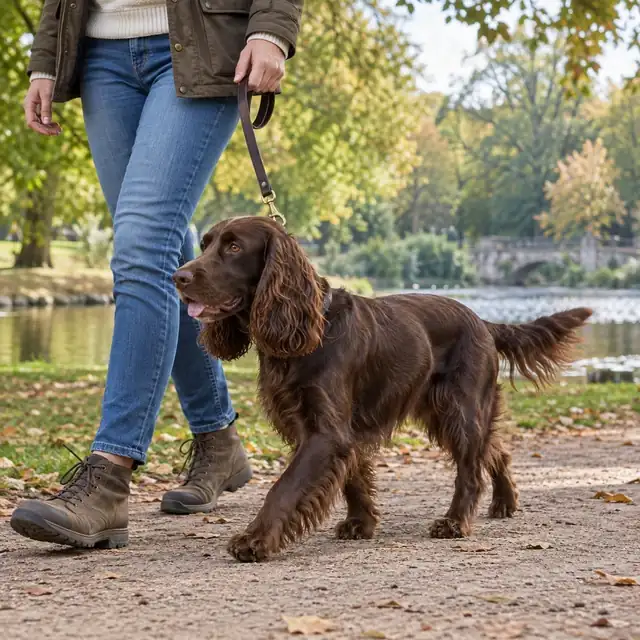
The field spaniel is a small spaniel (about 46 cm and 18-25 kg), reserved, gentle and at the same time active. Described as "unusually obedient", but with an independent character and sensitivity. Attached to people, works well in hunting and sports. Although the breed is rare, it is suitable for families who can walk a lot and exercise with the dog.

It is well suited for a family that likes walks and recreation together. He can't stand being left alone all day: he gets bored and can destroy things. The apartment is possible only with regular long walks.
Moderately high. At least a daily walk and regular playtime are required. He is hardy, likes agility, tracking and sniffing.
Very smart, so he studies well, but sensitive to rudeness. Useful basic obedience courses. Early socialization with people and animals helps to raise a well-balanced dog. Hunting talent is developed by fetching and searching.
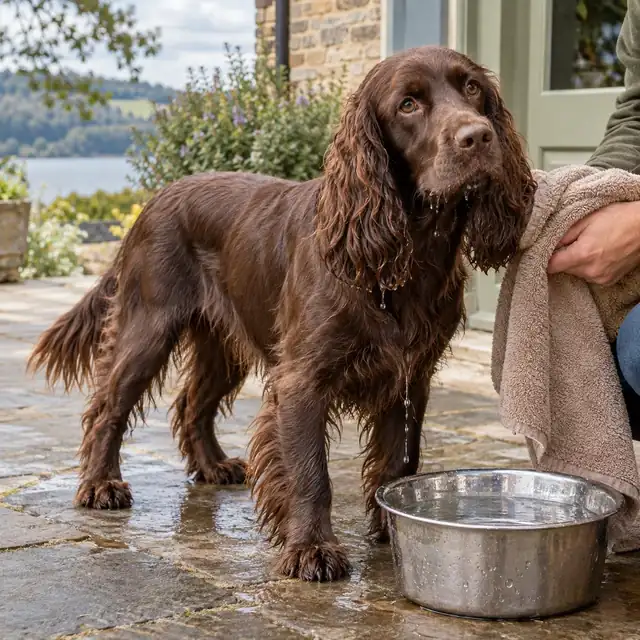
The hair is less than that of other spaniels, so the care is relatively simple: combing, periodic bathing, trimming the hair on the paws and ears, clipping the claws. Long ears are regularly cleaned, because they are vulnerable to inflammation.
Usually gentle and patient. As with any breed, communication with small children is controlled. The child is taught to be gentle with the dog and not to limit its space.
Willingly communicates with other dogs and animals, especially if socialized from an early age. The hunting instinct is aimed at birds and small animals, so acquaintances with it are carried out carefully.
Estimates help compare breeds. For zooaggression, 5/5 means less tendency to aggression towards dogs. The behavior and health of a particular dog depend on many factors.
Very attached to people, likes to be around and get along with family.
Smart and sensitive, learns well using soft methods.
Usually friendly with dogs and other animals with early socialization.
In the British cohort, the median lifespan of the breed was 13.1 years. Among the described breed risks: epilepsy; examination of the parents is confirmed with the veterinarian.
There is not much wool, but the ears, paws and nails need regular attention.
Epilepsy: after the first attack, the dog is examined by a doctor. The doctor selects a scheme of observation and, if necessary, treatment.