Human orientation
Devoted to her family, seeks to be close to her and protect her.
THE PAW CATALOG
Origin: Brazil
Brazilian working breed of the Molosser type. Its origin is associated with European dogs brought in colonial times. On plantations and farms, it was used for guarding, grazing cattle, and hunting jaguars. The name comes from the Portuguese filar - "grab, hold". The first written standard appeared in 1946, and the breeder Paulo Santos Krusch is considered the "father of the breed". Today, there are several standards that describe acceptable suits and types in different ways.
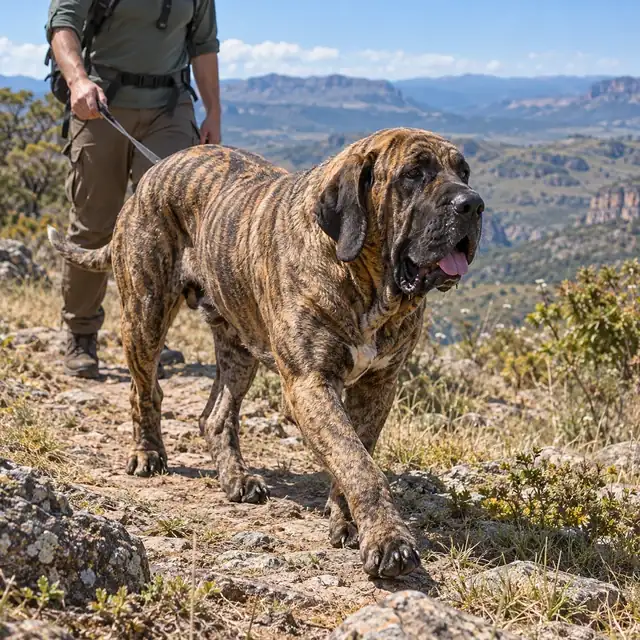
Fila Brasileiro is a massive but mobile Brazilian Molosser: males 65-75 cm and over 50 kg, bitches 60-70 cm and over 40 kg. Big head, deep muzzle, heavy bone, thick skin with pronounced under-chest. Devoted to her family, but wary of strangers by nature. Such a dog requires a very experienced owner, reliable fencing and consistent training.

Only suitable for owners with experience with large guard breeds and their own yard with a high secure fence. In many countries, keeping phila is restricted or prohibited, so be sure to check local laws before purchasing. It is not suitable for living in a cramped apartment.
Moderately high. Daily walks, mental tasks, and safe movement around the yard are all necessary, but throwing a ball and running in the heat is not for a big, heavy dog, especially at a young age.
Early and extensive socialization, clear rules, a calm and consistent approach are needed. Classes are conducted without rudeness, because the strength and stubbornness of the breed make coercion dangerous. Guests and strangers are introduced to the dog in a controlled manner. A training course under the guidance of a specialist is desirable.
Short dense wool is easy: a brush once a week is enough. The chest and folds on the neck are wiped, the teeth, ears and claws are inspected. Weight is controlled, especially during growth, so as not to overload the joints.
He treats his family's children gently and protectively, but his size and strength carry risks. Communication with children is always under supervision. Stranger children and their noisy games on the dog's territory are restricted.
Can be dominant towards other dogs, especially of the same sex. Hunting and protective instincts need control. Acquaintances with animals are carried out gradually, on a leash, and walks are organized safely.
Estimates help compare breeds. For zooaggression, 5/5 means less tendency to aggression towards dogs. The behavior and health of a particular dog depend on many factors.
Devoted to her family, seeks to be close to her and protect her.
Intelligent, but stubborn and strong: consistency and experience of the owner are required.
Can dominate other dogs, needs control and early socialization.
There is no comparable survival estimate for the breed in the British cohort used. The absence of the mentioned risk does not prove the absence of hereditary diseases.
The coat is short and simple, but the large size and folds demand attention.
Breed screening: detailed data on hereditary diseases of the "Fila Brasileiro" breed are scarce. Ask the breeder for documentary results of examinations of both parents and current recommendations of the club.
Musculoskeletal system: the growth, weight and load of the "Fila Brasileiro" breed should correspond to its age. Pain, lameness, or reluctance to move require a veterinary examination.
During preventive visits, the veterinarian checks the eyes and the heart. The frequency of special examinations is determined according to the recommendations of the club and the veterinarian. Do not delay new symptoms, such as blurred vision or shortness of breath, until your next appointment.