Human orientation
He is closely tied to his family, although he has an independent character.
THE PAW CATALOG
Origin: Finland
Northern hunters have used dogs of this type for hundreds of years to hunt birds. It was registered as a breed in the 1880s, and in 1979 Finland declared it the national dog. Special attention was paid to the voice: the Finnish Spitz barks at a bird sitting on a tree and indicates its location to the hunter.
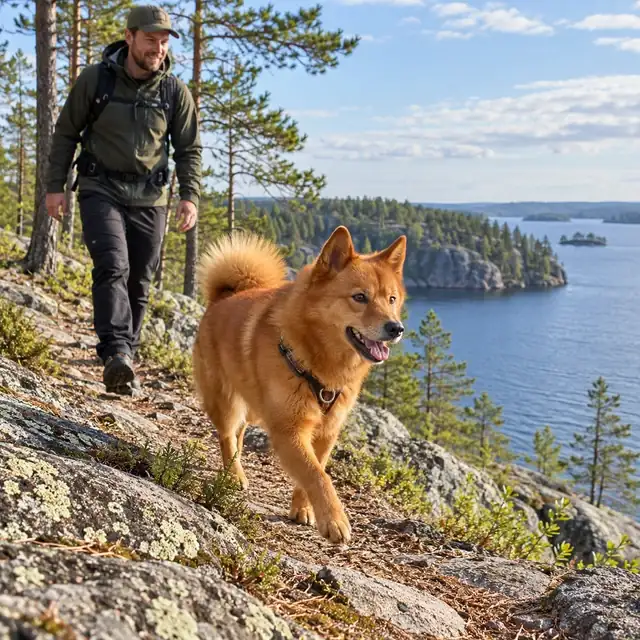
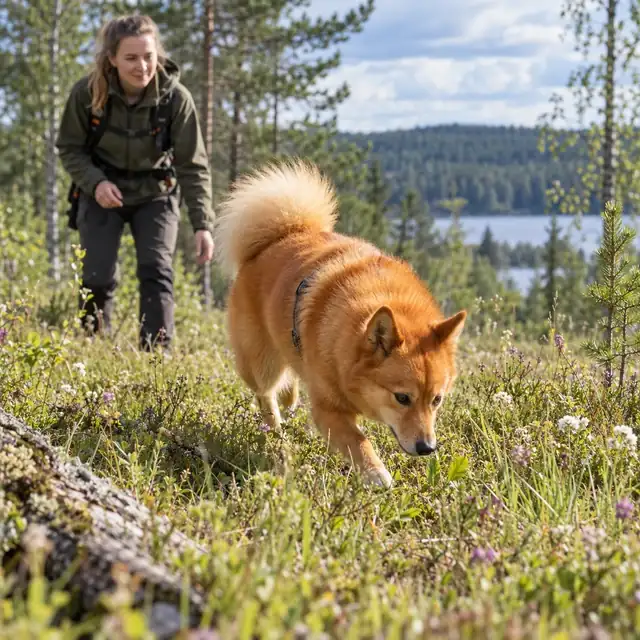
Finnish Spitz is a red hunting spitz of medium size: males 44-50 cm, bitches 39-45 cm. Lively, energetic, determined and independent. Treat strangers with caution at first, but don't be timid or angry. It is known for its ringing voice, which is used to announce game, so barking needs to be trained from a puppy age. Closely attached to the family.

Suitable for active owners who are ready for daily walks and a loud dog. Barking can become a problem in an apartment building. Without work and communication, he is bored, so it is best for him in a family with a yard and time for classes.
High Daily walks, running and olfactory games. A fast and willing hunter, so it can be released without a leash only in a fenced area.
Clever and independent. Early gentle but firm work gives the best results: basic commands, recall, and the "quiet" command. Classes are varied, with rewards. Constant barking is extinguished without waiting for it to become established.
The thick coat is thoroughly combed every few days. Twice a year, the dog sheds a lot, then combing is done daily. Bathe as needed, examine ears, teeth and claws.
He is closely attached to his family, gets along well with children. Children and the dog are always under the supervision of an adult. Children are taught not to frighten or pull the dog by the tail and ears.
The hunting instinct is aimed at birds and small animals. He usually gets along with dogs if he is socialized from an early age. Domestic birds and rodents are not left unattended.
Estimates help compare breeds. For zooaggression, 5/5 means less tendency to aggression towards dogs. The behavior and health of a particular dog depend on many factors.
He is closely tied to his family, although he has an independent character.
Clever and determined; early work and patience are required.
It is usually good with dogs, but perceives birds and small animals as prey.
There is no comparable survival estimate for the breed in the British cohort used. The absence of the mentioned risk does not prove the absence of hereditary diseases.
Thick wool requires regular combing, and in shedding - daily.
Pedigree Screening: There is little reliable data on the hereditary diseases of the Finnish Spitz breed, so the results of examinations of both parents should be requested in writing.
Musculoskeletal apparatus: for the Finnish Spitz breed, the load is selected according to age and condition. Limping, pain or reluctance to move is a reason to consult a veterinarian.
Heart and eyes are included in the list of annual examination. The frequency of special examinations is determined according to the recommendations of the club and the veterinarian. Do not delay new symptoms, such as blurred vision or shortness of breath, until your next appointment.