Human orientation
Very attached to the owners, does not like loneliness and wants to be close.
THE PAW CATALOG
Origin: France
The breed originated in England as a miniature bulldog, which became a favorite of Nottingham lacemakers. When the artisans moved to France, they brought dogs with them. There, small bulldogs were crossed with local breeds and quickly bred a new breed that gained fame in Paris and then spread throughout Europe and the world. Today it is one of the most popular companion breeds.
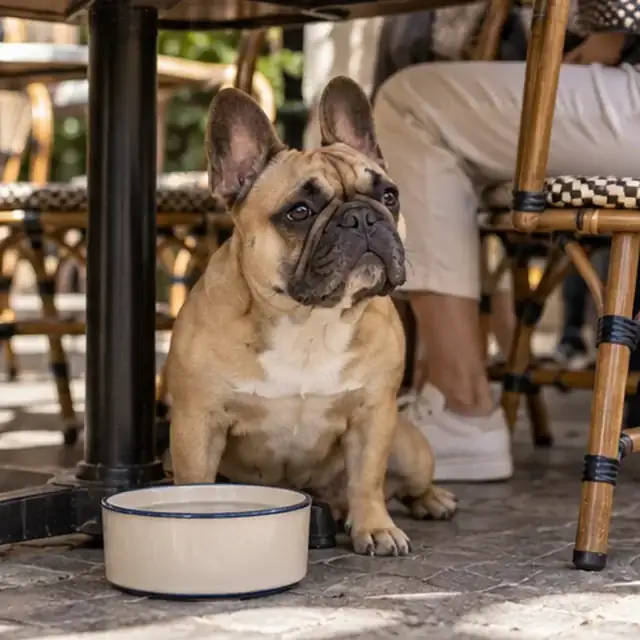
The French Bulldog is a compact (approximately 11-13 kg) stocky dog with large standing ears, a flat muzzle and a lively character. Attentive, smart, affectionate and stubborn, often behaves like a clown. Gets attached to people and does not tolerate loneliness well. Due to the structure of the skull, his airways are narrower than those of dogs with a longer muzzle, so heat and physical exertion require caution.

It is well suited for living in an apartment, because it does not need long runs. He likes to be around people, so he should not be left alone for a long time. In the summer, keep it cool at home, move the walks to the morning and evening.
Moderate Short leisurely walks and indoor games are enough. The energy level is different: some dogs are very calm, others are playful. In the heat, the load is reduced to a minimum, swimming is allowed only in the shallows under supervision.
Clever, but can stubbornly refuse to follow commands. Work in short, interesting sessions with treats and praise. Training without pressure gives a better result, and excessive loads during training harm the respiratory system.
The coat is short and simple and requires weekly brushing. The folds on the face and near the tail are wiped and dried to avoid inflammation. Ears, teeth and claws are checked regularly. Weight is controlled, because extra kilograms worsen breathing.
It is considered a good family dog: gentle and patient. Small children and the dog are left under the supervision of an adult. Children are taught not to frighten and wake up the dog suddenly, and also not to force them to play actively in the heat.
Usually gets along with other dogs and cats if well socialized from an early age. Can be jealous of people, food, and toys, so it's better to separate resources. During joint games, they make sure that it does not overheat.
Estimates help compare breeds. For zooaggression, 5/5 means less tendency to aggression towards dogs. The behavior and health of a particular dog depend on many factors.
Very attached to the owners, does not like loneliness and wants to be close.
Smart, but stubborn: short sessions with rewards give results.
Usually peaceful with dogs and cats, but can be jealous of resources.
In the British cohort, the median lifespan of the breed was 9.8 years. Among the described breed risks: cataracts, eyelid twitching, allergic skin diseases; examination of the parents is confirmed with the veterinarian.
The coat is simple, but the folds on the face and the need for cooling add to the worries.
Cataract: clouding of the lens; regular examinations by a veterinary ophthalmologist, changes in vision or the appearance of the eyes are not ignored.
Eyelid rolling (entropion): The eyelids roll inward and irritate the cornea. Tearing, squinting or redness of the eye requires a veterinary examination.
Allergic skin diseases: itching, redness and baldness require a veterinary examination.
Autoimmune diseases: unexplained skin disorders, weight loss or weakness require veterinary examination. Ask the breeder for the health history of the ancestors.