Human orientation
Very attached to people, willing to cooperate and happy to be around.
THE PAW CATALOG
Origin: France
Spaniels in France are mentioned as early as the 14th century in the hunting treatise of Gaston III de Foix-Béarn. The breed was valued by the French nobility, it was used in falconry and net hunting. At the beginning of the 20th century, it almost disappeared due to the competition of foreign hunting breeds, and the priest Father Fournier collected the remnants of the herd and preserved the breed. She was little known outside of France until the 1970s, when the dogs were brought to Quebec.
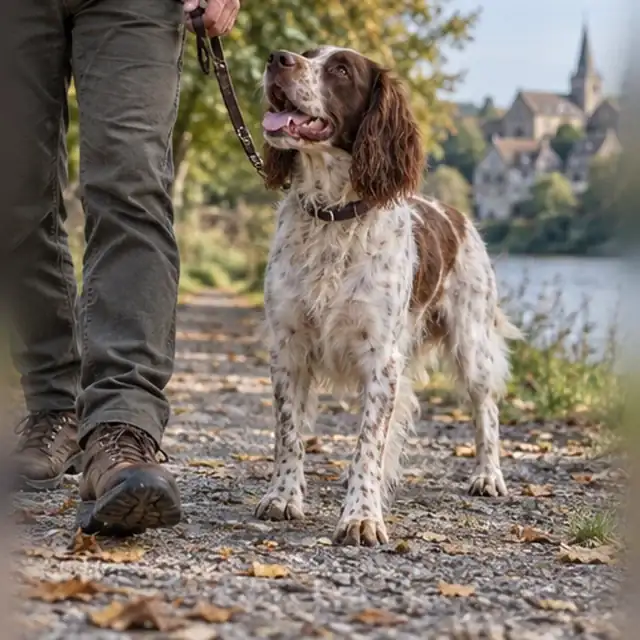
The French spaniel (Epañol française) is one of the largest spaniels: height about 55-61 cm, weight about 20-27 kg. Strong, muscular, with a thick, even coat of white color with brown spots. Friendly, friendly, patient and willing to please, therefore easy to learn. A hunting breed with great endurance and a need for movement.

The best choice for active people who like long walks and hunting. It feels comfortable in warm weather and in a wet forest. Not suitable for owners who are not ready for daily traffic. Loneliness is hard to bear.
High He needs long daily walks, off-leash runs in a safe area, and mental challenges. It is difficult for him to sit at home all day.
Willing to cooperate, attentive and patient. Works well for a reward and soft approach. Hunting talent is developed by fetching, searching and working with the sense of smell. Rough methods damage trust.
A thick, medium-length coat with loose hair on the ears, paws and tail needs brushing several times a week. After walking through the bushes, the skin is examined for ticks and burdock root. Ears are cleaned regularly. Nails are trimmed.
Usually friendly and patient, willing to play with children. Due to its size and energy, it can accidentally knock down a baby, so an adult controls joint games. Children are taught to behave calmly with the dog.
Generally friendly with other dogs. As a hunting dog can chase birds and small animals, cats and rodents are introduced gradually. Early acquaintances reduce the risk of conflicts.
Estimates help compare breeds. For zooaggression, 5/5 means less tendency to aggression towards dogs. The behavior and health of a particular dog depend on many factors.
Very attached to people, willing to cooperate and happy to be around.
Diligent and friendly, easily learns using soft methods.
Generally friendly, but the hunting instinct needs attention with small animals.
There is no comparable survival estimate for the breed in the British cohort used. The absence of the mentioned risk does not prove the absence of hereditary diseases.
Thick hair with a feather needs regular combing and inspections after walks.
Breed Screening: Little is known about hereditary diseases of the French Spaniel breed. The breeder is asked for documents with the results of examinations of both parents and current recommendations of the club.
Musculoskeletal system: the growth and load of the French Spaniel breed should correspond to its age. Lameness, pain, or reluctance to move require a veterinary examination.
Heart and eyes are included in the list of annual examination. Narrow examinations, for example by an ophthalmologist or a cardiologist, are prescribed as needed. Ask the breeder what tests the parents have passed.