Human orientation
He is attached to people, but at work he is more focused on the trail and the pack.
THE PAW CATALOG
Origin: France
French breed of hounds for pack work on large animals. The standard was first published in 1965, the current edition was adopted in 1997. Selection is focused on working qualities: smell, voice and endurance in the race, and not on appearance. An admixture of English hounds in the head is considered a defect, which shows the desire to preserve the French type.
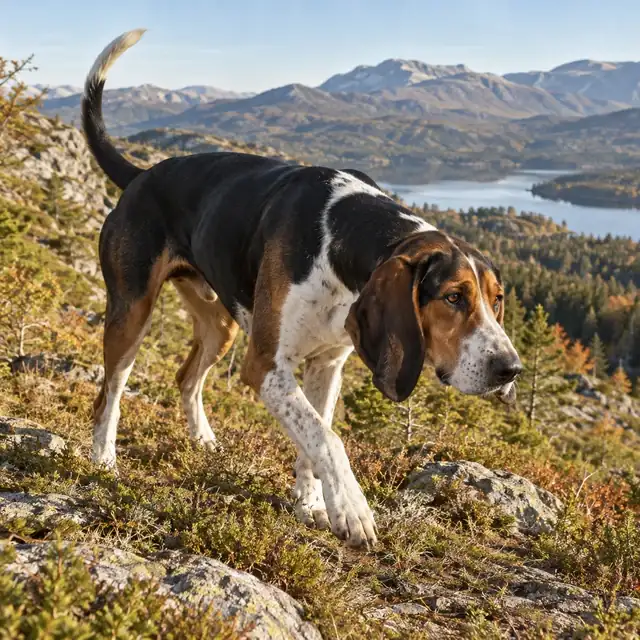
French tricolor hound - a large (62-72 cm in males, 60-68 cm in females) hound with a black coat, rich red tan and white. Intelligent expression in the eyes, a strong sense of smell and the voice of a pack hunter. Created for hunting large game in a pack, so it feels best in a hunting farm. As a house companion, it requires a lot of effort and patience.
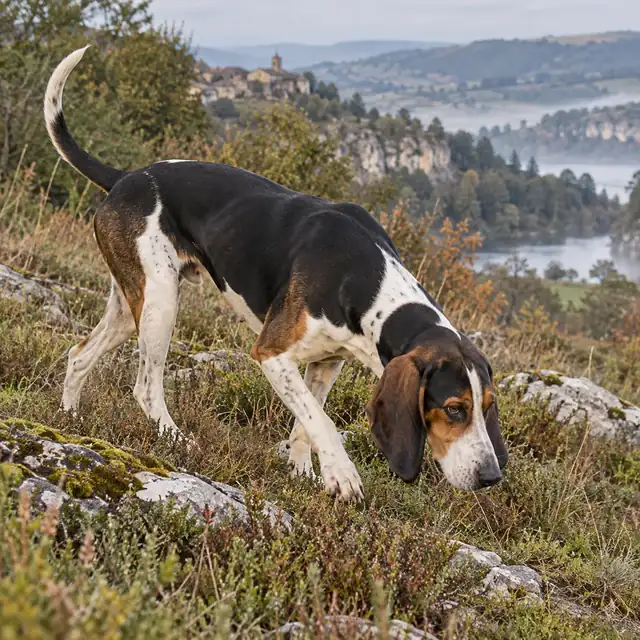
Suitable for hunters or owners of a country house with a large fenced area. In a city apartment, such a dog will be unhappy: loud, energetic and attached to the smell. Prolonged loneliness causes howling and destruction.
Very high. He needs long daily runs, sniff work and safe areas. Without load, it becomes noisy and nervous.
Intelligent, but independent. Walking on the trail, the owner may not hear, so the recall is trained from an early age and they are not released without a leash for a long time in an unfamiliar area. Classes are short, with a reward. Rudeness harms cooperation.
Short fine hair requires combing once a week. Long hanging ears are regularly inspected and cleaned. After the hunt, paws, skin and ears are checked for scratches and ticks. Nails are trimmed.
Generally good-natured, but large and energetic. Small children and the dog are not left alone. The child is taught to behave calmly around the hunting dog.
Accustomed to working in a pack, therefore usually tolerant of other dogs. Small animals are treated like a hunter, so cats, rabbits and birds are not left unattended.
Estimates help compare breeds. For zooaggression, 5/5 means less tendency to aggression towards dogs. The behavior and health of a particular dog depend on many factors.
He is attached to people, but at work he is more focused on the trail and the pack.
Smart, but independent; smell response needs patient work.
In a pack, it gets along well with dogs, and perceives small animals as prey.
There is no comparable survival estimate for the breed in the British cohort used. The absence of the mentioned risk does not prove the absence of hereditary diseases.
The short coat is easy, but the ears and paws need regular inspections.
Pedigree Screening: There is little reliable data on the hereditary diseases of the French Tricolor Hound breed, so the results of examinations of both parents should be requested in writing.
Musculoskeletal apparatus: for the "French Tricolor Hound" breed, the load is selected according to age and condition. Limping, pain or reluctance to move is a reason to consult a veterinarian.
Eyes and heart are checked during routine examinations. The frequency of special examinations is determined according to the recommendations of the club and the veterinarian. Do not delay new symptoms, such as blurred vision or shortness of breath, until your next appointment.